
Colombia launches national road map centred on formalization, the care economy and just transitions
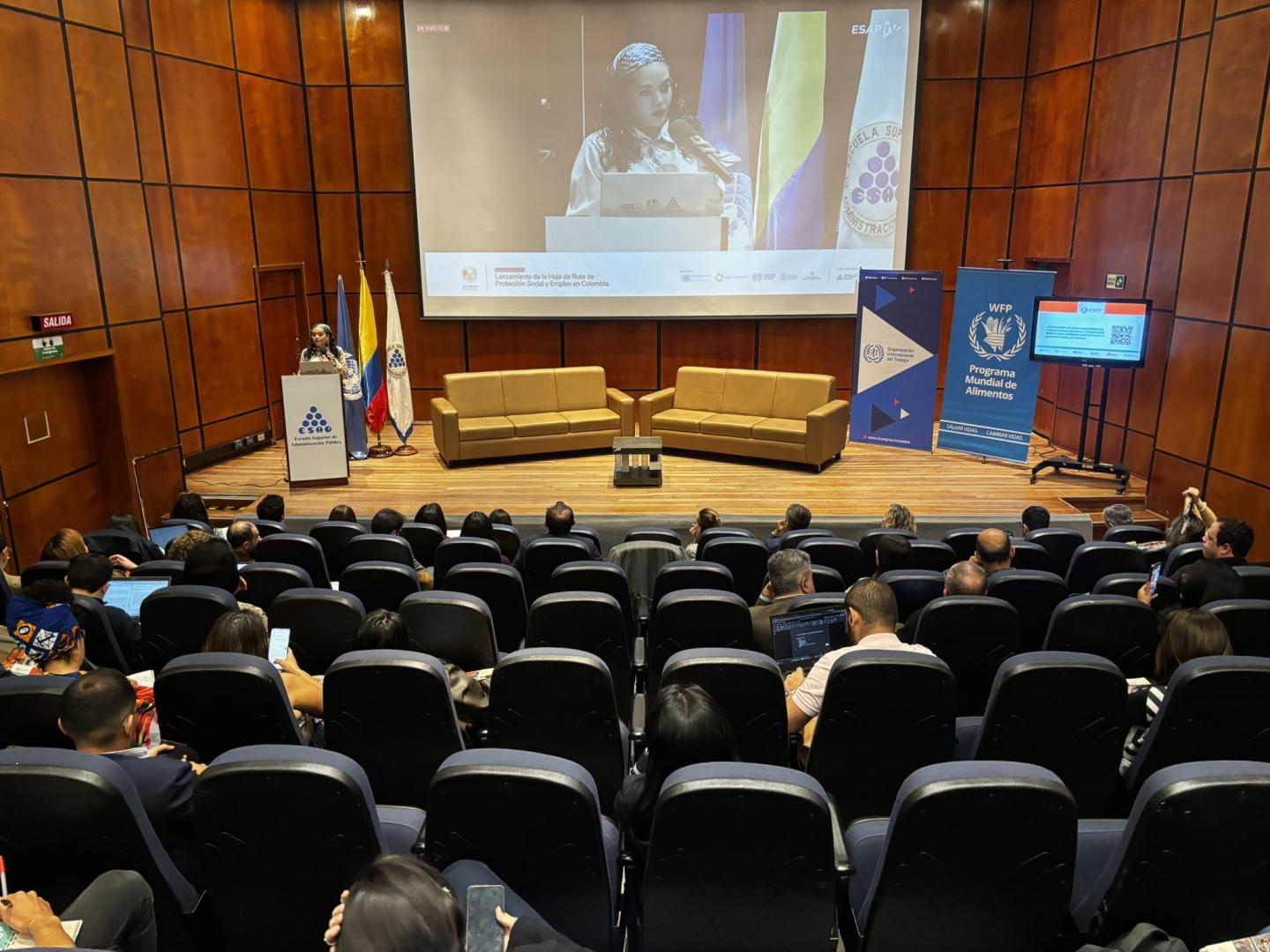
Bogotá, Colombia – Colombia has taken a new step towards linking employment and social protection by launching its national road map under the Global Accelerator on Jobs and Social Protection for Just Transitions. The road map sets out an integrated approach to decent jobs, productive inclusion and universal social protection, with a strong focus on sectors like care economy and on energy and digital transitions.
Launched on 23 April 2026, the road map was presented by the Department of National Planning (DNP), in collaboration with the World Food Programme (WFP) and the International Labour Organization (ILO), at an event that brought together representatives of government, workers’ and employers’ organizations, the United Nations system and other stakeholders. The road map was also supported by the academy through the alignment with the Rosario University and the Higher School of Public Administration (ESAP), where the launch was held.
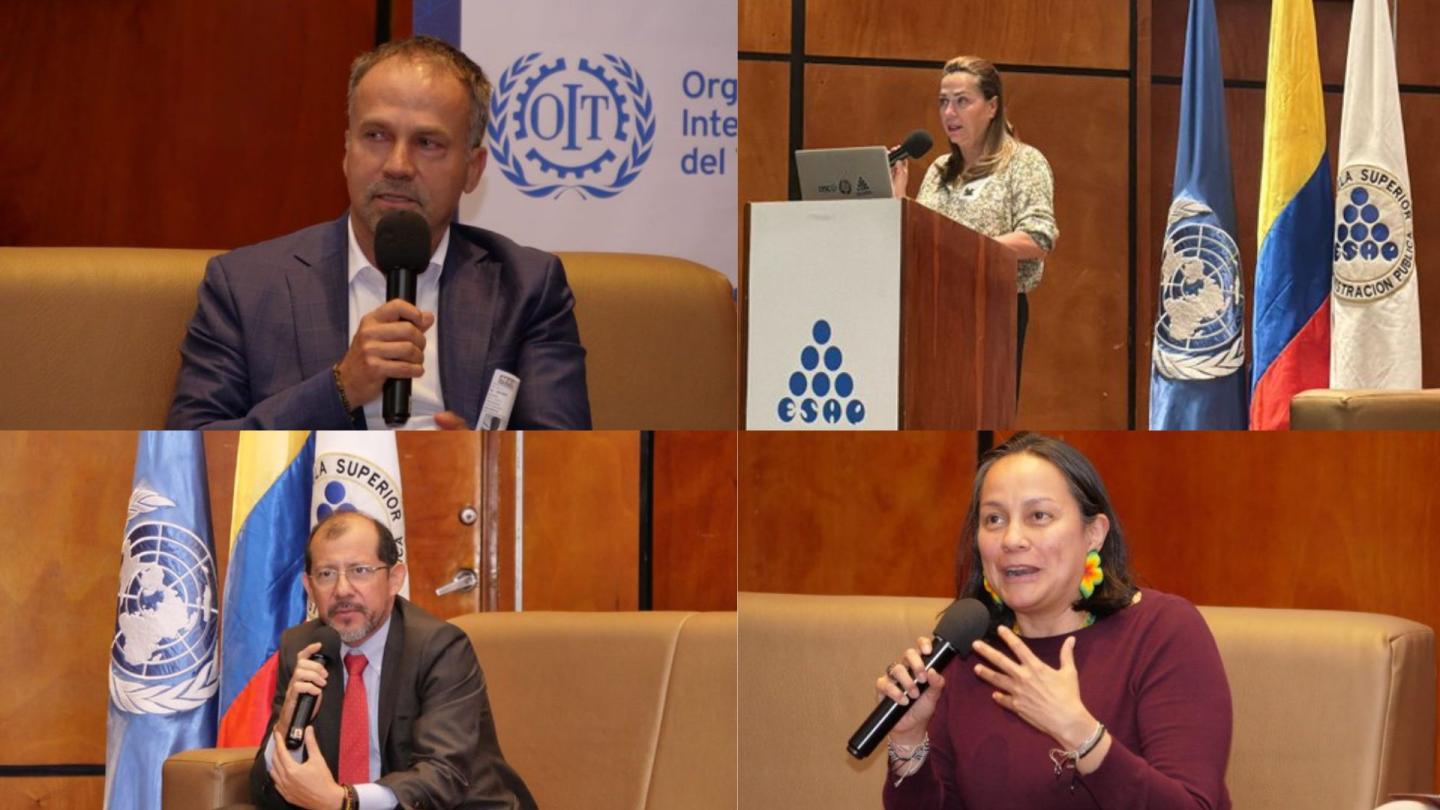
Led by DNP, the road map builds on Colombia’s progress in expanding access to health, education and other social services, while responding to structural challenges that continue to limit inclusion and resilience. It sets out a more coherent approach to decent work, productive inclusion and universal social protection, with a strong focus on the care economy and on energy and digital transitions as drivers of better jobs.
In Colombia, 55 per cent of workers are in informal employment, while one in five young people are not in employment, education or training. The road map responds to these gaps by better aligning employment, social protection, financing and institutional capacities.
At the launch, Ms Mireia Villar Forner, United Nations Resident Coordinator in Colombia, said the road map offers a practical response to persistent challenges affecting productive inclusion, social protection and employment, including informality, territorial gaps and care burdens. She stressed the need to better connect policies, financing and institutional capacities to deliver results.
Colombia’s road map identifies five accelerators for action:
- Productive integration of the popular economy
- Energy and digital transitions as enablers of decent work and quality employment
- Integrated system for poverty and social protection monitoring
- Co-investment by central and regional governments based on local governance
Care as a productive activity that contributes to decent employment and social equity

“The road map proposes clear phases, concrete goals, defined timelines, prioritization of territories, and strategies to advance dignified and decent work for all populations and across all territories…We invite everyone to take ownership of this Accelerator, which calls on us to build together a system of protection and employment that responds to the reality of our country, closes gaps, and ensures that no one is left behind,” stated Mr Magda Alberto, Deputy Director for Employment and Social Security at the National Planning Department (DNP) of Colombia.
The launch also highlighted Colombia’s National Care Policy, which seeks to guarantee the right to provide and receive care in dignified, high-quality conditions, promote the formalization of care services and support fair remuneration across the care economy.
“The National Care Policy guarantees the right to care in dignified and high-quality conditions and aims to formalize care services, ensure fair compensation, provide care for older adults, and build capacity in the care sector,” said Ms Anne Paola Mendoza, Deputy Director for Gender, Department of National Planning.
Speakers also emphasized the importance of investing in human capital, improving productivity and strengthening pathways to formal employment so that social protection systems not only support people in times of need, but also help them move into stable and productive livelihoods.
Read an overview of the road map here in Spanish.
Colombia joined the Global Accelerator in March 2024 and seeks to generate decent employment and expand social protection by addressing structural challenges and promoting labour inclusion, while also reducing urban–rural disparities