
HLPF side event highlights integrated action for decent jobs, social protection and shared prosperity
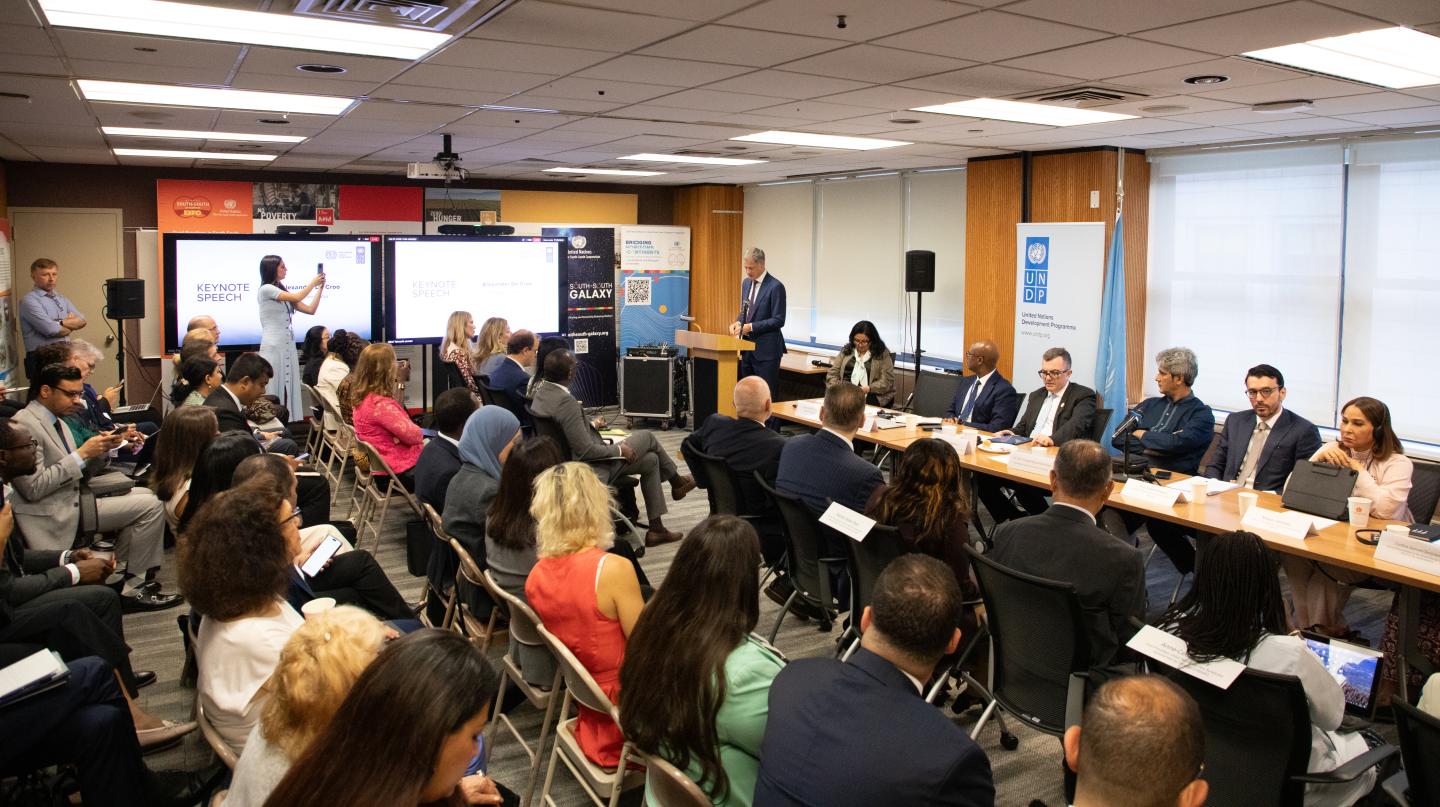
New York - At the 2026 High-Level Political Forum, UNDP and the ILO co-led a side event on how investments in water, energy, infrastructure and sustainable cities can be better designed to create decent jobs, expand social protection and support shared prosperity.
Held on 13 July 2026, the event, “Prosperity through decent work: connecting water, energy, cities and infrastructure to a sustainable and equitable jobs agenda,” brought together high-level government representatives, social partners, development partners and UN agencies to examine why economic growth continues to leave many workers behind — and what can be done to change this.
Discussions focused on the Sustainable Development Goals under review at the 2026 HLPF, including clean water and sanitation, affordable and clean energy, industry and infrastructure, sustainable cities and partnerships. Speakers emphasized that these goals are not only sectoral priorities, but essential foundations for decent work, and investments in these sectors must contribute to creating productive employment, extending social protection and strengthening inclusive economic transformations. Delivering on this agenda requires integration: across sectors, institutions, and policy instruments, to translate them into decent work and other developmental outcomes, which is what the Global Accelerator on Jobs and Social Protection for Just Transitions promotes.
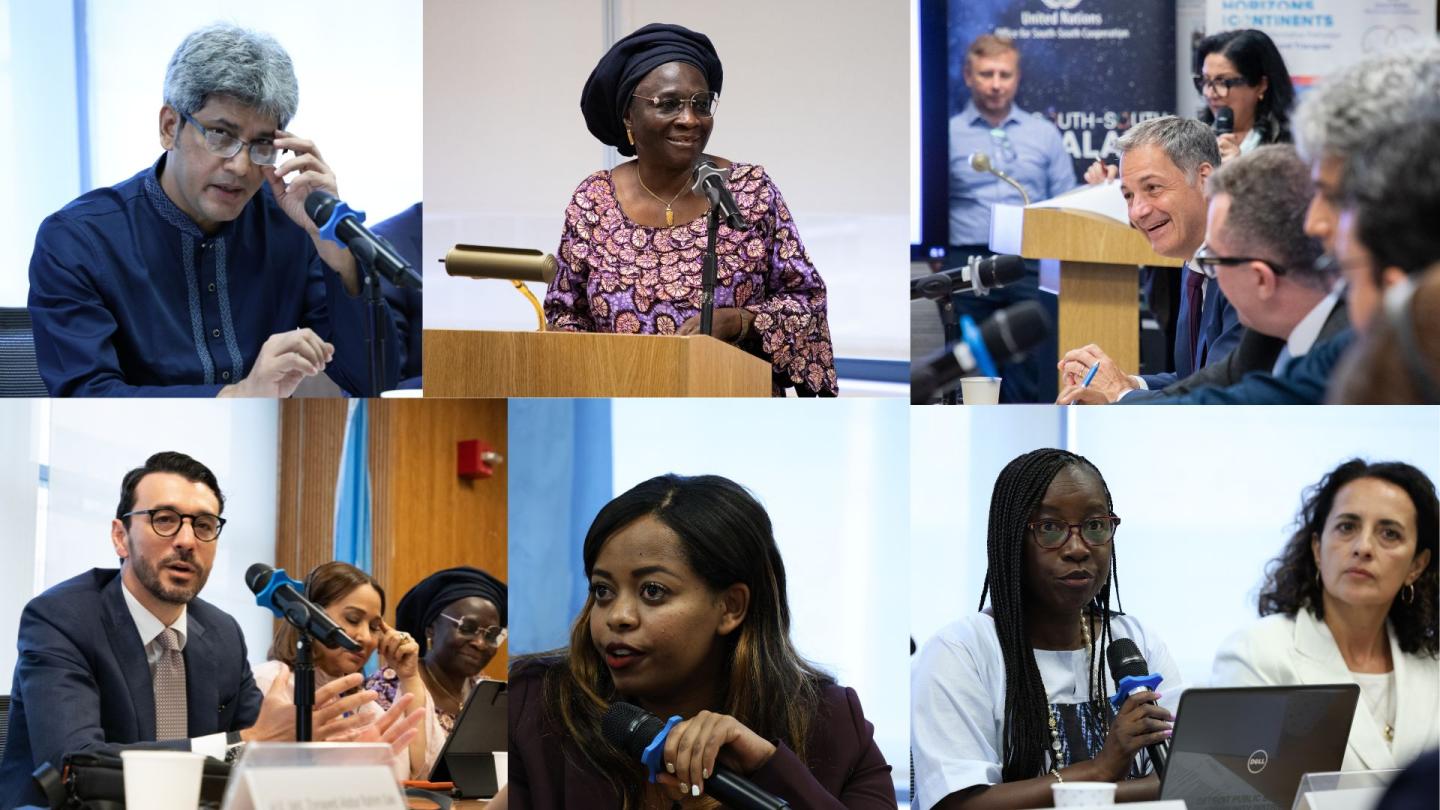
As a key vehicle for implementing the Doha Declaration, the Global Accelerator formed part of the discussions on demonstrating what integration looks like in practice across various pathfinder countries. Ms Cynthia Samuel-Olonjuwon, Special Representative to the UN and Director of the ILO Office for the United Nations, highlighted how governments are working with the UN system, international financial institutions, social partners and development actors to align investments in clean energy, infrastructure and innovation with decent job creation and the extension of social protection. “Advancing on the SDGs requires deliberate policy choices that connect economic investments with employment promotion, social protection, skills development, fundamental principles and rights at work, and social dialogue, that translate commitments into actions,” she emphasized in her remarks.
With 280 million people globally trapped in working poverty, Mr Alexander De Croo, UNDP Administrator, emphasized the importance of creating decent jobs, those that pay wages that bring people out of poverty, have safe working conditions, and are also sustainable to ensure people continue to remain employed. Capturing the ethos of the SDGs and their review at HLPF, as he remarked, “making development tangible should be our main objective”.
In such cross-cutting agendas, social dialogue is not optional but a prerequisite for success, to ensure that people are actively involved in shaping political decisions and not the recipients of their consequences. Ms Anne-Cécile Coly, Coordinator of the National Union of Autonomous Trade Unions of Senegal, and also representing the International Trade Union Confederation, highlighted how the Global Accelerator is supporting the ambitious, structural transformation agenda in Senegal, by placing decent work, social protection and social protection at the heart of development strategies. “The Global Accelerator road map was developed, with workers and employers, which helped guide policies towards common priorities of decent job creation and strengthening social protection... One key lesson that emerged is that social dialogue must be institutionalized and take place before major investment decisions, not after implementation has begun.”
Youth is a key priority group under the Global Accelerator, as they are among the most consistently impacted by unemployment, informality, and skills mismatches and have a lot at stake in the investments being made into their future. Representing the Major Group for Children and Youth, which recently joined the Global Accelerator, Ms Mahlet Zeleke Redi highlighted that the group joining the Global Accelerator Steering Group, is a “recognition that young people are not just beneficiaries of development but also partners in shaping policies, investment and any mechanism that determines our future.”
Putting the final piece of the puzzle together, Ms Marta Cali, Senior Policy Advisor of the Joint SDG Fund, highlighted financing, through multistakeholder initiatives like the Global Accelerator, is the critical architecture that creates the foundation for systems change. “There is a complex architecture of alignment across ministries, policies, and partnerships, that mobilizes greater financing…The Fund’s grants are meant to be a multiplier of larger investments, that lead to decent jobs and inclusive economic growth,” she highlighted. She stressed upon the need of not just creating jobs but rather strengthening the institutions, partnerships and policies needed, to pool together larger investments that can create systems change.
Speakers from Rwanda, Egypt, Albania, Bangladesh and the Dominican Republic emphasized that integrated approaches to development outperform isolated sectoral interventions by linking infrastructure, social protection, skills, financing, governance and productive sectors to deliver multiple economic, social and environmental outcomes. A common theme was that decent work should be a central objective of development, with investments designed to generate quality jobs through productive employment, skills development, social protection, local enterprise growth and stronger coordination across institutions. Together, the experiences highlighted that integrated planning and implementation can make development investments more efficient, inclusive and resilient while creating pathways to decent work and sustainable economic transformation.
The discussion underscored that across countries, poverty is increasingly linked not only to unemployment, but also to informality, low productivity and inadequate social protection. It stressed the importance of multilateral cooperation and stronger partnerships to ensure that investments reach those most at risk of being left behind, including women, informal workers and communities with limited access to services and economic opportunities.
By connecting sectoral investments to decent work and social protection outcomes, the event showed how integrated action can help turn SDG ambition into lasting prosperity and equitable opportunity for all.
Watch the entire event here.