News Release |

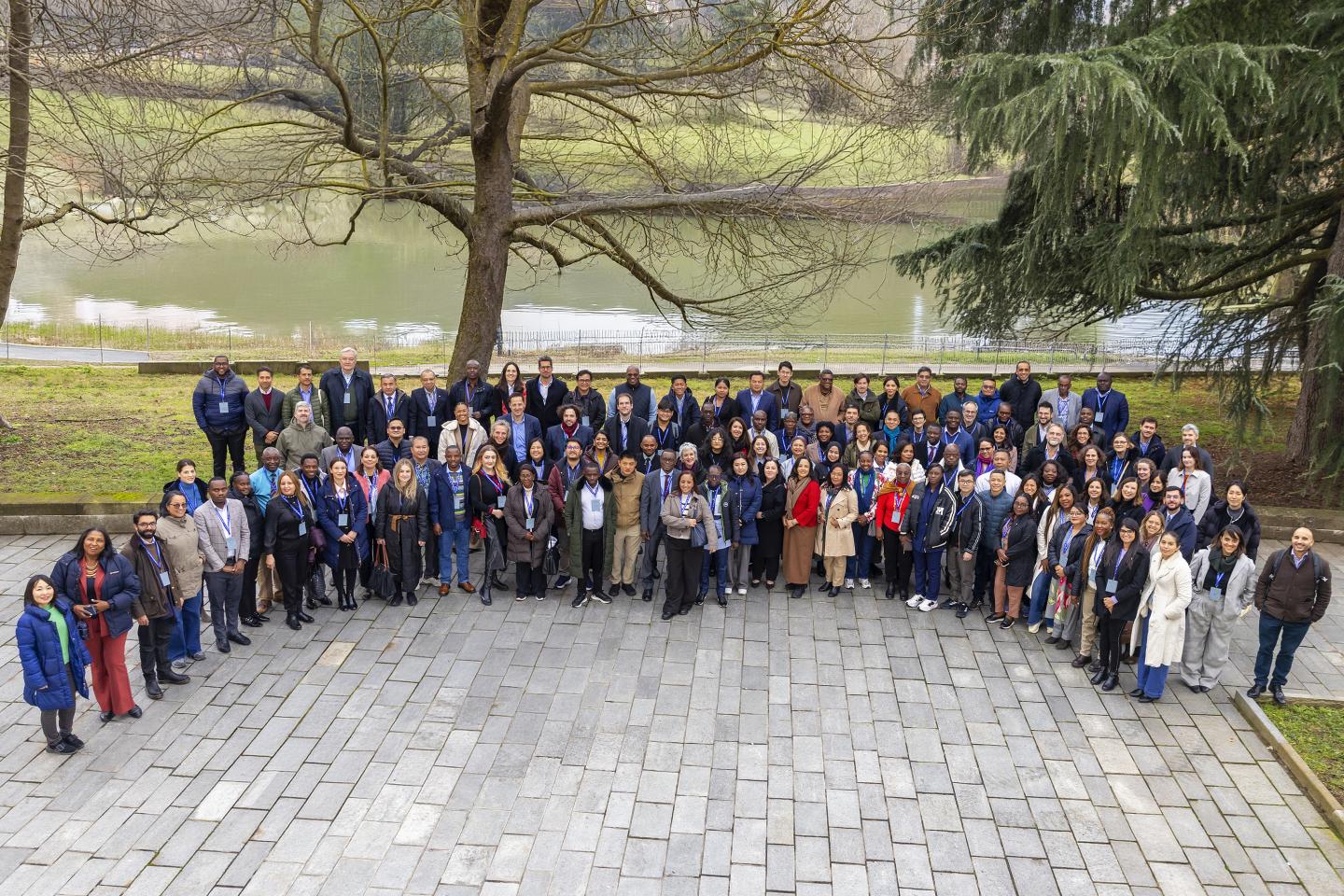
Turin, Italy - More than 120 participants from 19 Global Accelerator pathfinder countries gathered at the International Training Centre of the ILO (ITCILO) in Turin for the “Capacity Building and Knowledge Exchange Forum” from 9 to 13 February 2026, a week ahead of the World Day of Social Justice. The Forum, organized jointly by the GA Technical Support Facility and the Joint SDG Fund, brought together government representatives, workers’ and employers’ organizations, UN agencies, international financial institutions, development partners, private sector actors and donors to advance the implementation of initiative across the countries.

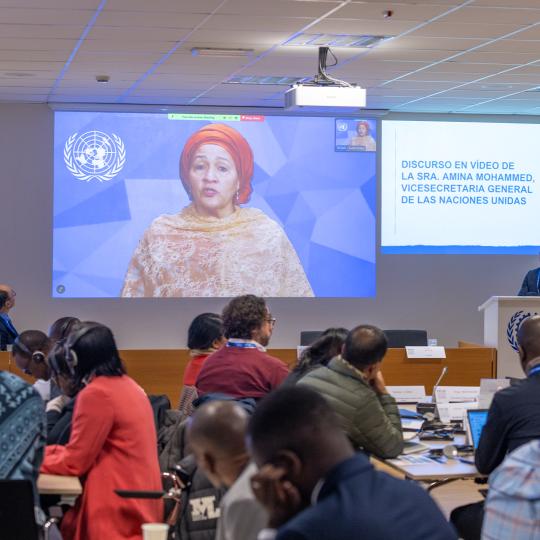
Opening the Forum with a video message, Ms Amina J. Mohammed, United Nations Deputy Secretary-General, stressed the importance of systems that protect people in times of crisis and transition, and noted that the Global Accelerator provides a framework to translate global commitments into concrete national results. Mr Sangheon Lee, Assistant Secretary General a.i., Jobs and Social Protection Cluster, ILO, underlined that in a context of global uncertainty, the strength of the Global Accelerator lies in its high-level political commitment and its inclusive governance structures rooted in national priorities. 

Video message and participants in a room

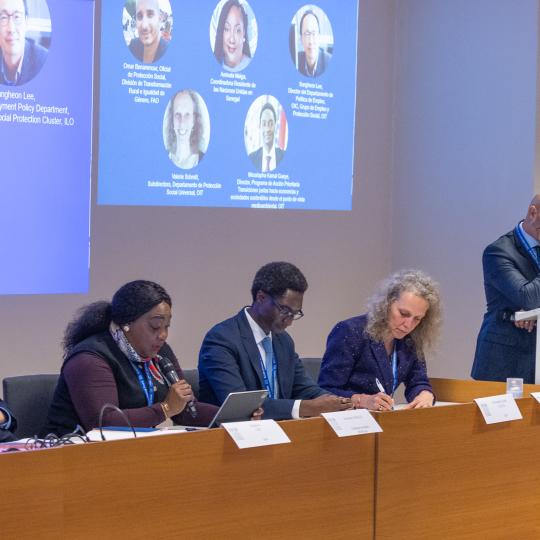
A high-level panel followed, which reinforced the importance of nationally owned, well-financed systems. Ms Valérie Schmitt, Deputy Director, Universal Social Protection Department, ILO identified social protection as a key lever for supporting major economic, social and environmental transformations and that the Global Accelerator is a collective action to support social justice. Mr Moustapha Kamal Gueye, Director, Priority Action Programme on a Just Transition, ILO, highlighted that decent work and social protection are central to ecological transitions , given that 1.2 billion jobs depend on healthy ecosystems. Drawing on Senegal’s experience, Ms Aminata Maiga, UN Resident Coordinator, emphasized the value of politically anchored roadmaps and coordinated partnerships for aligning public policy and financing with long-term development priorities. 

Through the week, sessions focussed on themes like policy integration, multistakeholder collaboration and multilateral coordination, and financing, that were enriched by the experiences of the pathfinder countries. 

Women and men at a dais

Integrated policies were the first core focus of the training, emphasizing that integration was about making policies work together for social development. Integration and coordination can occur in various forms – through macroeconomic policy options, policy design and implementation, and by integration at the level of institutions and implementation mechanisms. 

Country experiences illustrated these principles in practice. Ms Jona Dervishaliaj, Director, Ministry of Ministry of Health and Social Welfare, Albania shared how child wellbeing, long-term care and women’s employment were supported more effectively through integrated social protection, care service, active labour market and skills policies. Mr Souleymane Diallo, Director General of Planning and Economic Policy (DGPPE), Ministry of Economy, Planning and Cooperation, Senegal presented the country’s approach to assessing and maximizing the employment and social impact of public investments, including through the use of the Social and Macroeconomic Simulation for Development (SMSD) model to simulate impacts on youth employment and social protection extension. 

Ms Ayudya Vini Oktavia, Ministry of National Development Planning, Indonesia presented how the country is integrating the National Social Security System (SJSN) and the Integrated Socio-Economic Registration System (Regsoksek), to improve the identification of beneficiaries and the outcomes of national social protection, employment and skills policies. Social partners emphasized that integration must be grounded in effective social dialogue from policy design through implementation.

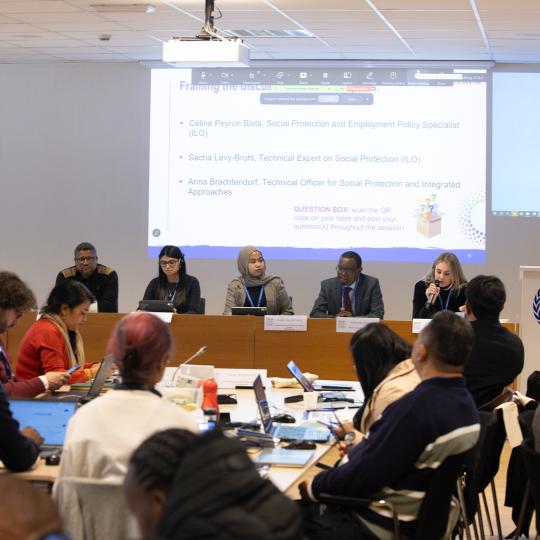
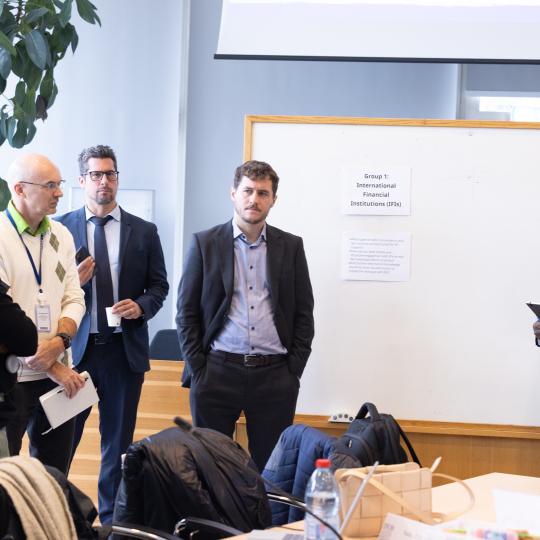
Women and men at a training

The second theme was on enhancing multistakeholder collaboration and multilateral cooperation, and how the Global Accelerator serves as a platform for strengthened coordination and alignment among stakeholders. The session explored the practical realities of collaboration on jobs and social protection and how each stakeholder participates in it, at the country level.

Ms Anthea Rietz, Ministry of Justice and Labour Relations, Namibia, reflected on how governments have established inclusive governance structures that engage with workers’ and employers’ organizations, civil society, and development partners to ensure national ownership of the initiative. Mr George Khaki, Executive Director, Employers Consultative Association of Malawi, highlighted the effective social dialogue between social partners which has helped reflect their aspirations in the national development strategy Malawi 2063 and in GA roadmap. 

Financial institutions are moving towards aligning their portfolios with the reduction of poverty, and investing in human capital development. Mr Oleksiy Ivaschenko, Senior Economist, Asian Development Bank, tabled the importance of aligning technical and financial cooperation with nationally defined priorities to reduce fragmentation and cited the example of Uzbekistan, where ADB is supporting the implementation of the new social insurance law.  

Participants noted that coordinated approaches — including clearer entry points for policy dialogue and investment preparation — can strengthen coherence between reforms and financing
 

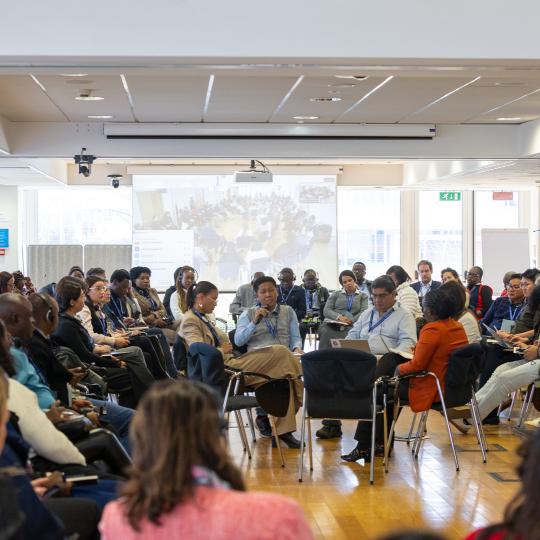
Women and men in a group session

A dedicated session on financing underlined how investments build a virtuous cycle and provide concrete pathways for development. Discussions underscored that when employment and social protection policies are designed systemically, they can generate multiplier effects across economic and social outcomes, contributing to productivity, increased consumption, and strengthening of the economy, rather than being viewed solely as fiscal costs. 

Country presentations further illustrated different pathways to mobilize and align resources. Mr Patrick Patriwirawan, Director, Department of Labor and Employment, Philippines described how the use of a legally anchored Programme Convergence Budgeting approach, to ensure that public expenditures align with employment objectives. Ms Kate Langwe, Director - Social Protection and Poverty Social Protection Division, Ministry of Finance and Economic Planning, Malawi outlined a phased, government-led roadmap financing, combining domestic resource mobilization, the introduction of social insurance, public–private partnerships and climate finance, with the objective of strengthening sustainability and reducing reliance on external funding.

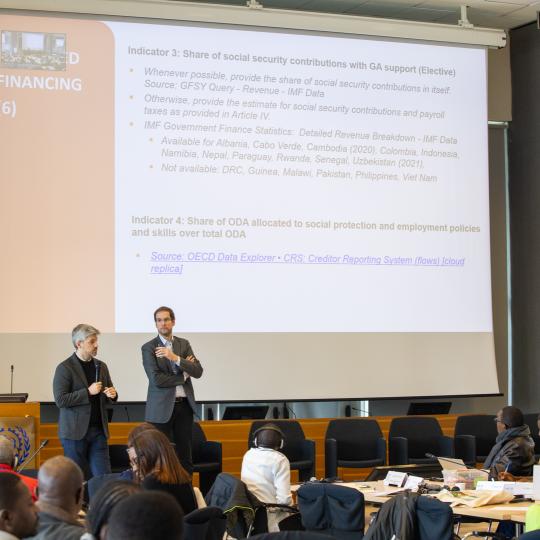
Analytical tools such as the SMSD model were presented as instruments to support scenario planning, ex ante impact assessments and evidence-based policymaking, helping governments visualize how investments and reforms affect jobs, informality, household incomes, income distribution and macroeconomic indicators. Participants also examined examples of private sector engagement, including partnerships to extend unemployment insurance, expand coverage in agricultural value chains and support vocational training, as well as the potential of climate finance to support roadmaps that integrate adaptation and mitigation priorities.

Men standing around a white board

The Forum also addressed monitoring, evaluation, and learning, to operationalize the initiative’s results framework and theory of change. Participants emphasized that the framework and theory of change are already in place; the priority now is their consistent and effective application. Several pathfinder countries have begun collecting baseline data and aligning national indicators with the Global Accelerator’s framework, marking a significant step toward systematically tracking employment outcomes, social protection coverage and financing trends.

Mr Serigne Djibril Diène, Economist, Ministry of Economy, Planning and Cooperation, Senegal stressed the importance of a clear theory of change to ensure coherence and accountability. Mr Sopheana Bronh, Secretary, Ministry of Labour and Vocational Training, Cambodia described an inclusive process involving multiple ministries and partners, highlighting the challenge of tracking concrete employment and coverage outcomes while distinguishing the Accelerator’s specific contribution within broader reform.

Two men on the dais

The week concluded with the launch of a Community of Practice aimed at sustaining peer learning, supporting implementation and problem-solving, and facilitating the mobilization of additional technical and financial support. 

As countries transition from roadmap design to scaled delivery, the Forum’s message was consistent: implementation now hinges on sustained collaboration, aligned financing, specialized technical assistance, and evidence-based delivery—ensuring that integrated policies translate into tangible gains in people’s lives.

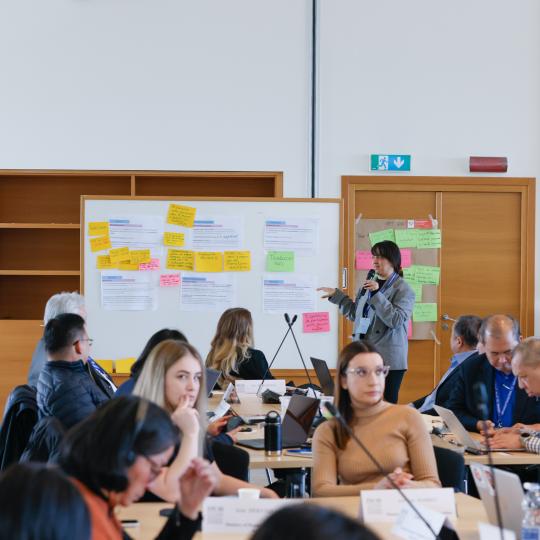
Woman speaking to a group