
Geneva – The Global Accelerator on Jobs and Social Protection for Just Transitions is hosting its first in-person Capacity Building Training and Knowledge Exchange Forum from 9-13 February 2026 in Turin. To kickstart the preparations for the Forum, it hosted the first online pre-learning session on 22 January, bringing together representatives from pathfinder countries, social partners, UN agencies, international financial institutions and donors to build a shared understanding of the initiative.
The session focused on the conceptual foundations and strategic ambition of the Global Accelerator, situating it within a rapidly evolving global context marked by economic slowdown, rising informality, climate shocks, demographic change and accelerating technological transformation. The Technical Support Facility of the Global Accelerator highlighted that while global unemployment rates remain relatively low, pathfinder countries are still facing the persistent challenges of high informality, working poverty and persistent gaps in social protection coverage. The Global Accelerator aims to tackle these challenges through integrated employment and social protection policies.
The speakers emphasized that decent work and social protection are mutually reinforcing, not substitutes. There has been progress in extending social protection coverage worldwide with over 50 per cent of the global population covered by at least one benefit, yet significant disparities remain across regions and population groups, particularly for children, women and informal workers. Achieving universal social protection by 2030 will require accelerated policy action, stronger financing strategies and closer alignment with employment, sectoral and development policies.
The presentations explored priority policy entry points under the Global Accelerator. Investment in the care economy was highlighted as a powerful driver of job creation, gender equality and social cohesion, with evidence showing its potential to generate nearly 300 million jobs by 2035, while expanding access to essential services, higher labour force participation, in particular for women, and ultimately leading to GDP growth and increased government revenue. With an estimated 1.9 billion children and 200 million older persons needing care by 2030, sustainable social protection systems are essential to finance professional care work and ensure access to care regardless of income or family status. The session noted that while the green and digital transitions can generate substantial job opportunities, these need to be accompanied by skills development and employment and social protection policies that support workers through transitions.
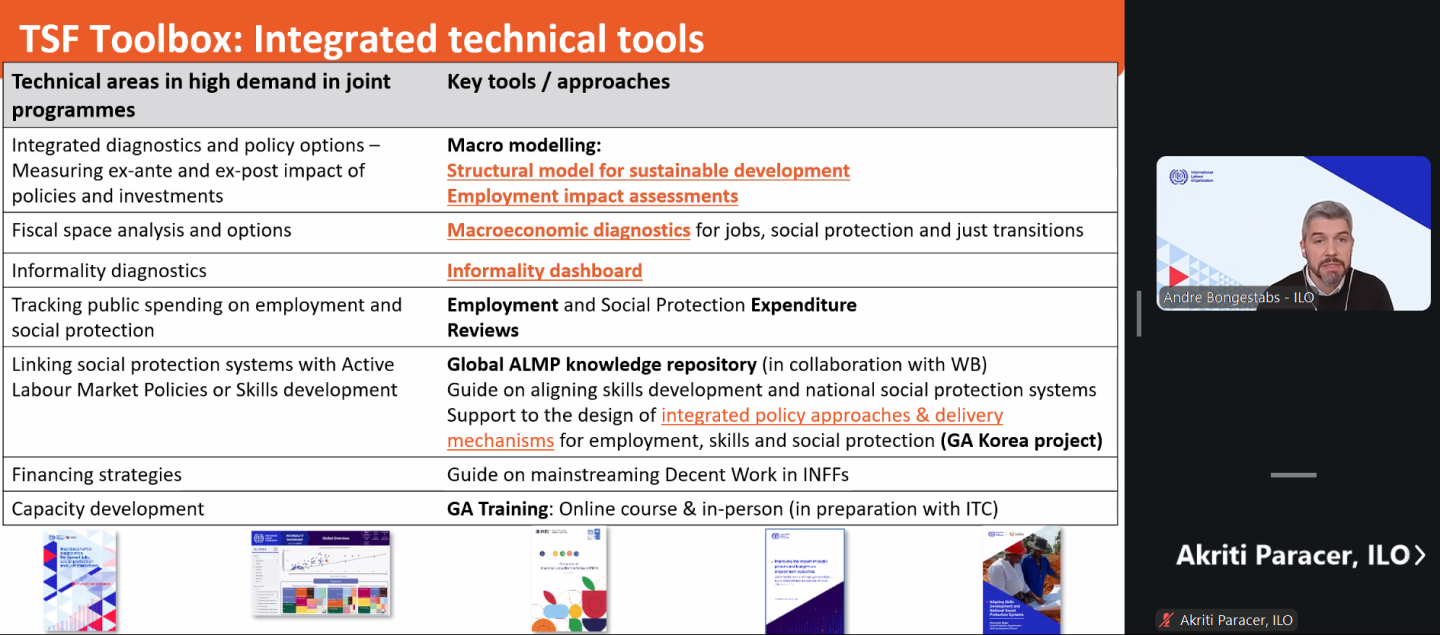
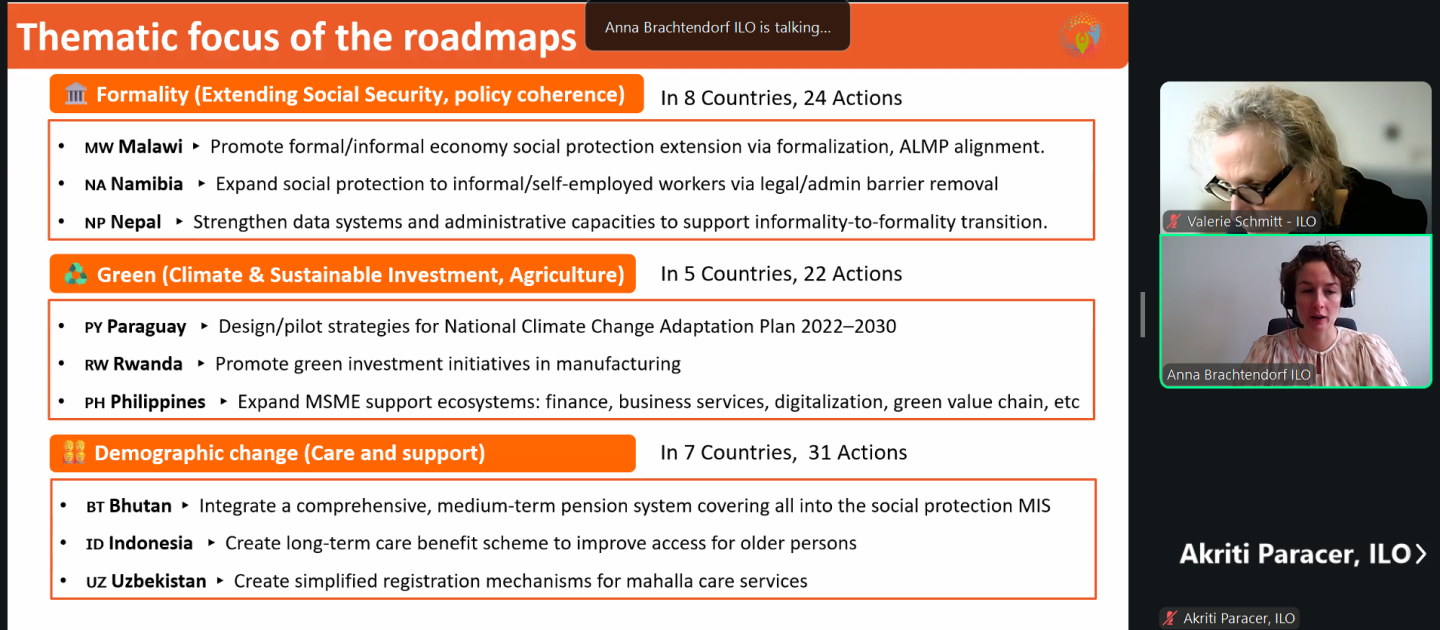
The session further reflected on the strength of the Global Accelerator, which is derived from the high-level political commitment, inclusive and well-established governance structures and forward-looking country-led roadmaps. The initiative’s model, anchored in national priorities and coordinated through multi-stakeholder steering mechanisms, has helped strengthen policy coherence, improve inter-ministerial coordination and deepen collaboration between the UN system and international financial institutions, including the World Bank.
Financing is a key pillar of the Global Accelerator and the session also briefly highlighted the role of catalytic funding through the UN and World Bank, that has helped lay the groundwork for further investments needed for employment creation and social protection expansion. While external funding is helpful for targeted interventions, participants were encouraged to plan how they can utilize the workshop in Turin, to conceptualize the financing strategies for the roadmaps, as part of their national budgets and financing frameworks, to ensure sustainability and scale.
This is the first of three pre-learning sessions that will help set a strong foundation for deeper engagement at the in-person training in Turin. Learn more about the in-person training here.
Watch the full training here.
A second pre-learning session, held on 27 January, focused on how countries design, implement, and sustain Global Accelerator national roadmaps. Drawing on experiences from Pathfinder Countries, it highlighted the need for evidence-based consultative roadmaps, that help countries define a coherent and prioritized agenda for acceleration, linking employment, social protection, sectoral and macroeconomic policies within national development frameworks. It also stressed upon the role of inclusive governance, coordination, and financing on top of joint programmes.
At the country level, the Global Accelerator is led by the government, with UN Resident Coordinator Offices playing a key role in coordinating UN system support and ensuring alignment between UNCT priorities and the Global Accelerator roadmap. Representatives from the UNRCOs in Nepal and Malawi presented an overview of the roadmap development process and explained how each country identified and selected priorities for acceleration. The RCO in Nepal underlined the participatory approach the country employed, by involving all stakeholders from the inception phase, to help build credibility and utilize the initiative as an integrator of existing policies. “The National Steering Committee has the government, social partners, and development partners which helped build consensus early and anchor the Global Accelerator institutionally. The initiative is helping implement key national priorities, such as the 16th Development Plan and the Least Developed Country (LDC) Graduation Smooth Transition Strategy,” said Mr Alvaro Nieto Martin, Partnerships and Development Officer, UNRCO Nepal.
The RCO in Malawi echoed the sentiment, while explaining how the country’s roadmap is anchored in evidence. To ensure that the priorities reflect needs on the ground, national data, labour market diagnostics, gender disparity and wage trends were utilized to frame the roadmap and priorities. “The roadmap didn’t introduce new priorities but instead identified acceleration entry points within the government’s defined focus sectors of agriculture, tourism and mining, that align with the long-term vision of Malawi 2063,” stated Mr Chimwemwe Msowoya, Development Coordinator Officer, UNRCO Malawi. He attributed the coordination mechanism, which encompasses political and technical engagement, as an enabler of the success so far, as it has helped maintain momentum and ensure a whole-of-government approach, during the political transitions. The session concluded with group discussions on roadmap design, coordination, implementation and financing solutions and challenges.
A third session was held on 29 January, which covered practical details, including the timetable, objectives, and expected outcomes of the in-person training. Participants were given a clear understanding of what they would learn in each session and how they could practically implement that knowledge in their country context.
Learn more about the in-person training here.