
Malawi endorses new Workers’ Compensation Bill for sustainable work injury protection

Lilongwe, Malawi - The Ministry of Labour, Skills and Innovation, in collaboration with social partners, the Employers Consultative Association of Malawi (ECAM) and the Malawi Congress of Trade Unions, successfully convened a tripartite plus stakeholders’ workshop to validate the new Workers Compensation Bill, on 21 April 2026.
The current Workers Compensation system governed by the Workers Compensation Act No. 7 of 2000 faces persistent challenges, including delays in compensation, disputes between employers and employees, and inadequate benefits that fail to meet sustainability standards. The proposed Bill is set to replace the Workers Compensation Act No.7 of 2000 and marks a significant milestone in strengthening Malawi’s social protection system. It introduces a comprehensive legal framework aimed at extending legal coverage of a modern work injury scheme to an estimated 4,271,923 employed persons through the establishment of a social insurance model Workers Compensation scheme. The Bill is also aligned with international labour standards, including International Labour Organization Convention 102 on minimum social security standards.
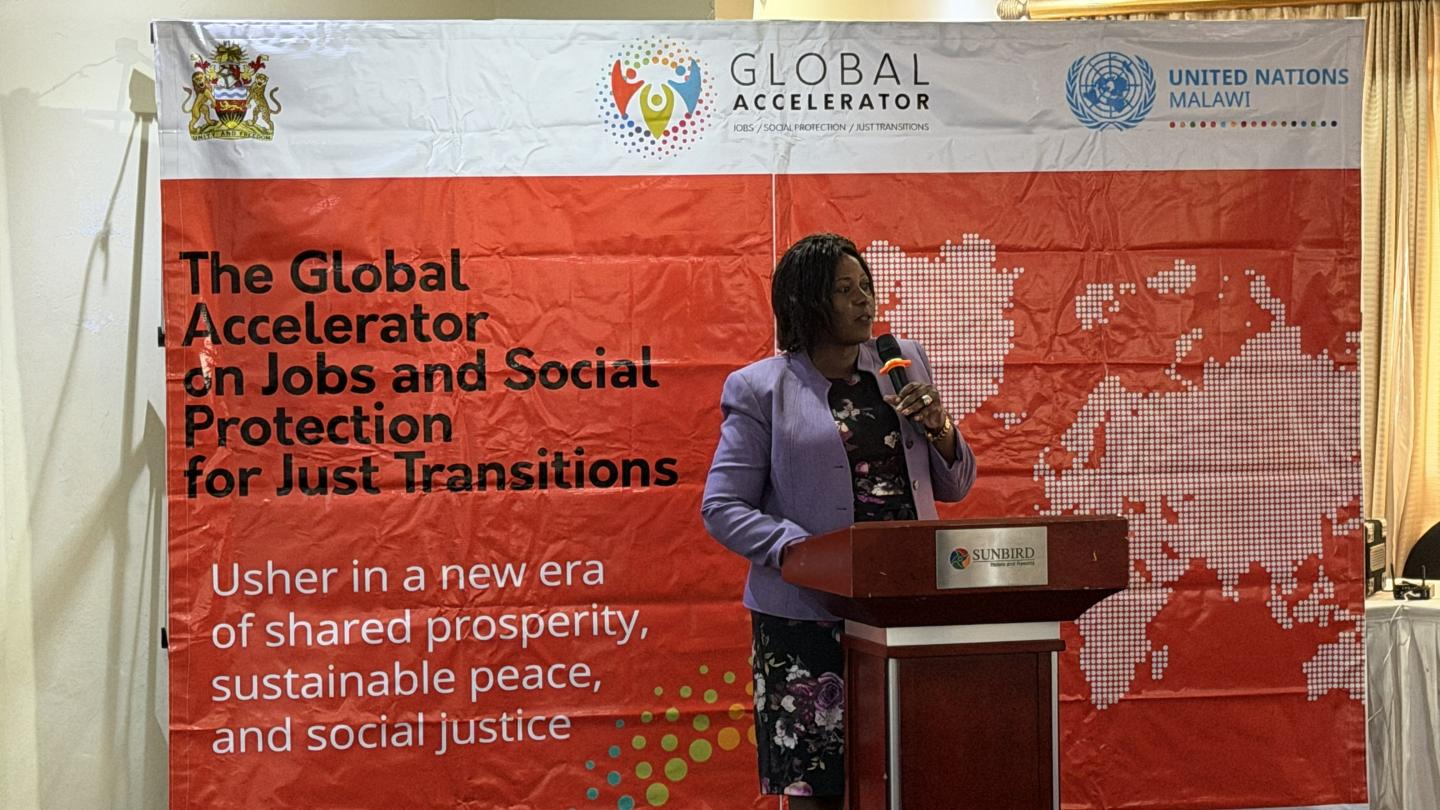
The validation workshop was officiated by Ms Nwazi Mnthambala, Secretary - Labour, Skills and Innovation, who commended the collaborative efforts of the government and social partners in advancing the reforms of the workers compensation system. She highlighted the inclusive and consultative process that engaged a wide range of stakeholders and expressed appreciation to the ILO for its technical and financial support under the Global Accelerator joint programme. She noted that, “The establishment of a Workers Compensation fund is long overview, in this regard, the revised Workers Compensation Law will contribute towards ensuring safety and promoting productivity of workers, which is key to achieving priorities of the Malawi Vision 2063."
Representing employers, Mr George Khaki, Executive Director, Employers Consultative Association of Malawi (ECAM), expressed the employers' readiness to support the operationalization of the social insurance-based workers compensation fund. He applauded the Ministry for steering the review of the workers' compensation legislation that reflects alignment to both international standards and evolving labour market needs. He urged the government to expedite the establishment of the social insurance-based Workers Compensation Fund and reaffirmed employers’ commitment to supporting its implementation, stating, “The review of the Workers Compensation Act is is long overdue, and the employers are looking forward to its implementation.” He further called for the Government to ratify ILO Convention 102 that provides a framework for establishment of a comprehensive social protection system. He extended appreciation to the ILO for its continued technical and financial support.
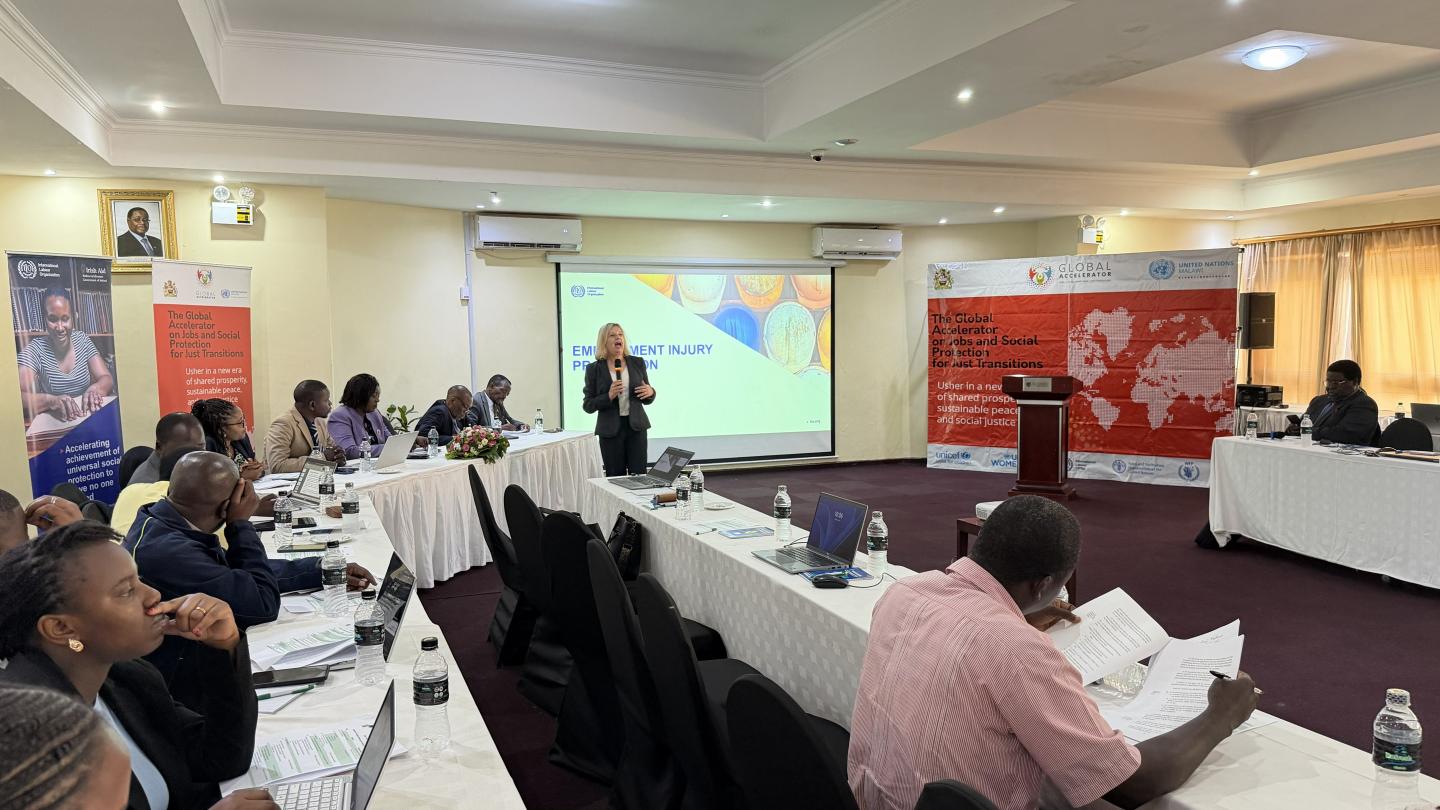
On behalf of workers, Mr Falison Lemani, Treasurer General of Malawi Congress of Trade Unions (MCTU), emphasized the importance of a strong workers' compensation system in addressing current labour market conditions and safeguarding workers’ rights. He encouraged swift implementation once the Bill is enacted into law.
The workshop also reviewed and endorsed the roadmap for the phased implementation of the Workers Compensation Fund, prioritizing organized sectors such as mining, construction, tea, tobacco, and sugar. Participants agreed on a clear action plan to finalize the Bill and submit it to the Ministry of Justice for legal review, before its eventual tabling in Parliament. The validation marks a critical milestone towards enhancing the social security system in Malawi, reinforcing a shared commitment among the government, employers, and workers to build a more inclusive and resilient labour protection system.
Malawi joined the Global Accelerator initiative in September 2022 and the initiative is supporting the country's new National Social Protection Policy.