
Pension Fund of Uzbekistan joins forces with Global Accelerator to develop the work injury insurance system
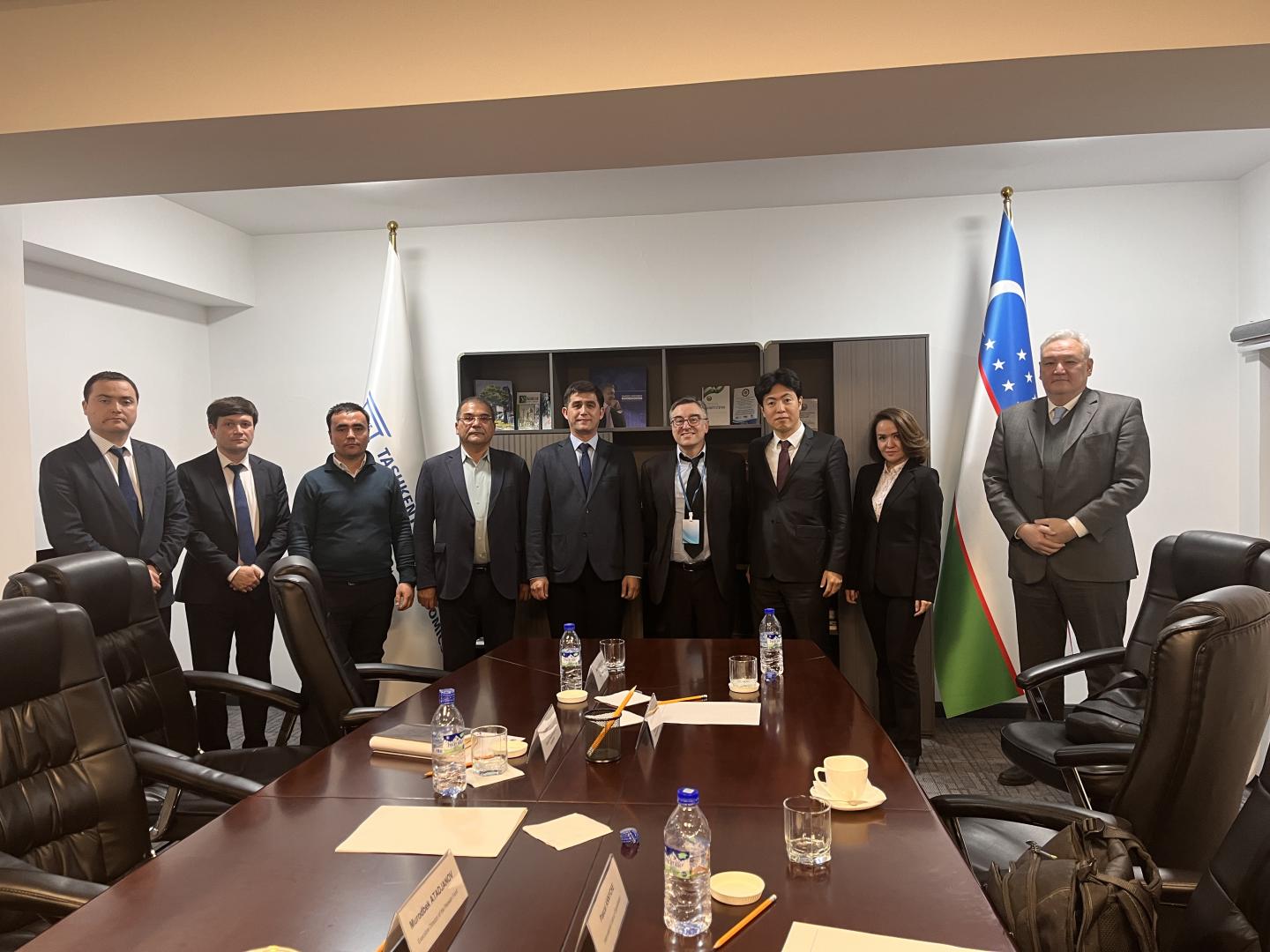
Tashkent, Uzbekistan - As part of the Global Accelerator project in Uzbekistan aimed at employment formalization, representatives of the Ministry of Employment and Poverty Reduction, the Off-budget Pension Fund, the National Agency for Social Protection, and ILO specialists reviewed the current work injury insurance system and discussed the need for legislative amendments at a meeting on 28 November 2025.
The parties committed to facilitating an informed dialogue to strengthen protection for all workers, with the goal of preparing proposals in 2026. This decision reaffirms Uzbekistan’s commitment to advancing Decent Work, promoting employment formalization, and fostering social justice.
Workplace accidents remain a significant risk in construction. According to the U.S. Bureau of Labor Statistics, 2.2 construction workers per 100 full-time workers sustain injuries annually, while 9.6 fatal cases per 100,000 workers were recorded in 2023. In countries with low compliance with safety standards, these figures are often higher.
In general, a work injury insurance scheme is a mandatory employer-funded program that provides benefits for employees injured or who become ill due to work-related causes. These types of provision include medical treatment, rehabilitation, wage replacement, and survivor’s pensions in case of fatal accidents. Employers are responsible for ensuring a safe working environment for their employees.
However, in Uzbekistan, challenges in worker protection remain amidst a relatively high level of informal employment. In the construction sector, which is particularly accident-prone, many informal workers work without work injury insurance coverage. According to a survey of over 11,000 construction workers conducted by the Ministry of Employment and Poverty Reduction and the ILO in 2022, 71% of construction jobs are informal.
“Current legislation applies only to registered formal employees,” noted Mr Kazutoshi Chatani, Senior Employment Specialist, ILO. “Self-employed workers—who make up 28% of the construction workforce—are excluded. Many unregistered employees, including short-term and informal workers such as day laborers, are also deprived of protection.”
Mr Murodbek Atadjanov, Executive Director, Off-budget Pension Fund under the Ministry of Economy and Finance, stated “We are ready to embark on stakeholder discussions to develop the work injury insurance scheme and consider possibilities for amendments to existing legislation.” He added that the Pension Fund is ready to participate in the preparation of proposals jointly with interested ministries and agencies of the Republic of Uzbekistan, with technical assistance from the UN Global Accelerator on Jobs and Social Protection for Just Transitions in Uzbekistan.
Mr Pascal Annycke, Social Protection Specialist, ILO stated that the ILO stands ready to support the Pension Fund in conducting costing and actuarial assessments for extending work injury insurance coverage. He welcomed the Fund’s new objective, emphasizing the importance of informed tripartite dialogue and sharing examples of successful reforms from other countries. He also congratulated the newly established actuarial analysis unit within the Pension Fund and reaffirmed the ILO’s commitment to building its capacity.
The Global Accelerator on Jobs and Social Protection for Just Transitions, which focuses on employment formalization, has been made possible through support from the UN Joint SDG Fund, with generous contributions from the European Union and the governments of Belgium, Denmark, Germany, Ireland, Italy, Luxembourg, Monaco, the Netherlands, Norway, Poland, Portugal, the Republic of Korea, Saudi Arabia, Spain, Sweden, and Switzerland. Their commitment plays a crucial role in helping countries like Uzbekistan turn ambitious SDG pledges into real, people-centred results on the ground.
Informal employment in construction
According to a survey of over 11,000 construction workers conducted by the ILO and the Ministry of Employment and Poverty Reduction in 2022:
- 56% are employees, of which about half have stable open-ended contracts and the rest are on project-based contracts.
- 26% of surveyed employees say their employers pay social insurance contributions.
- 28% of all construction workers were self-employed and ran their own business (with or without employees).
- 71% of construction jobs are informal