
Tripartite dialogue identifies a solution to expand work injury insurance for informal construction workers
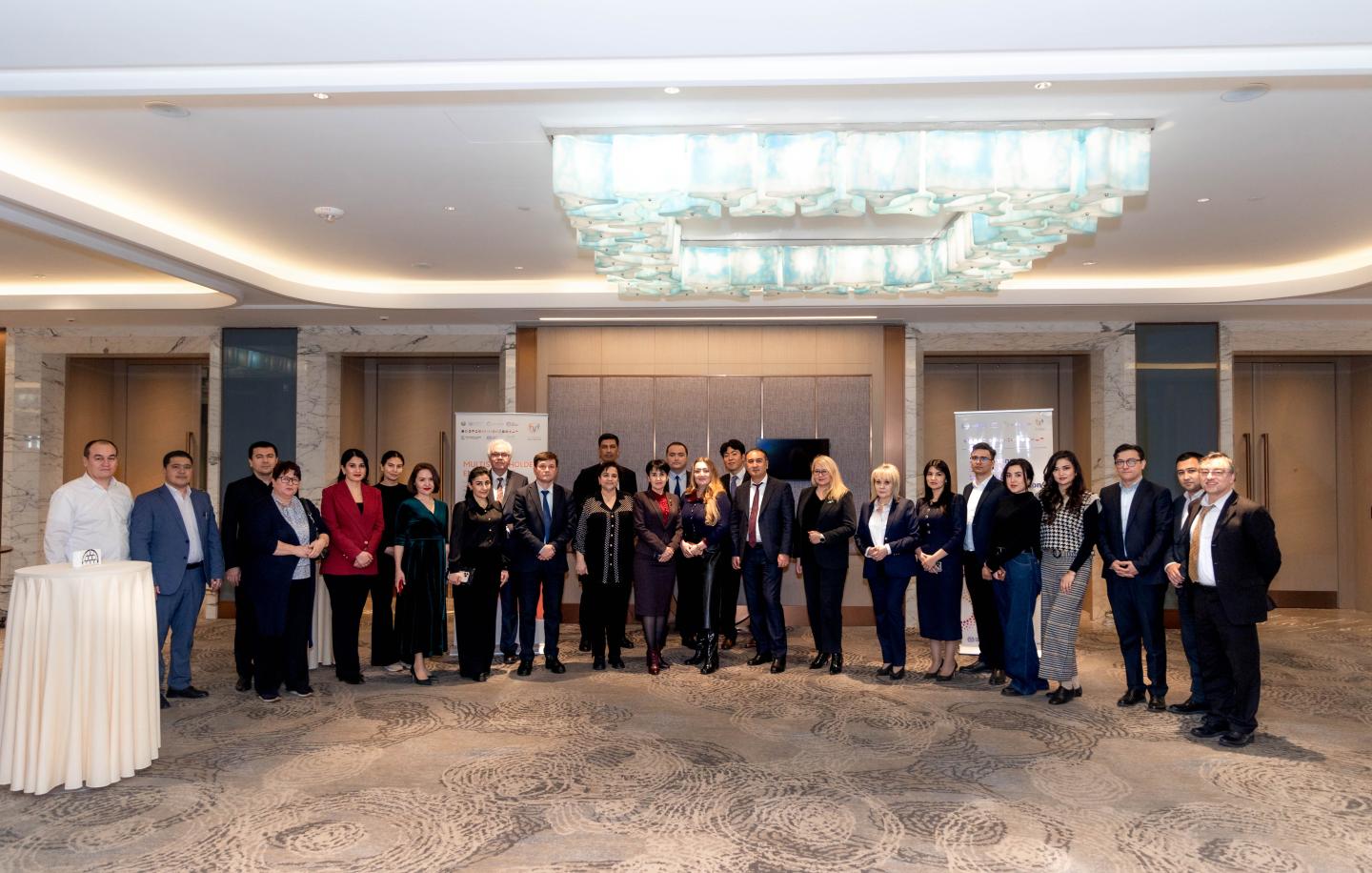
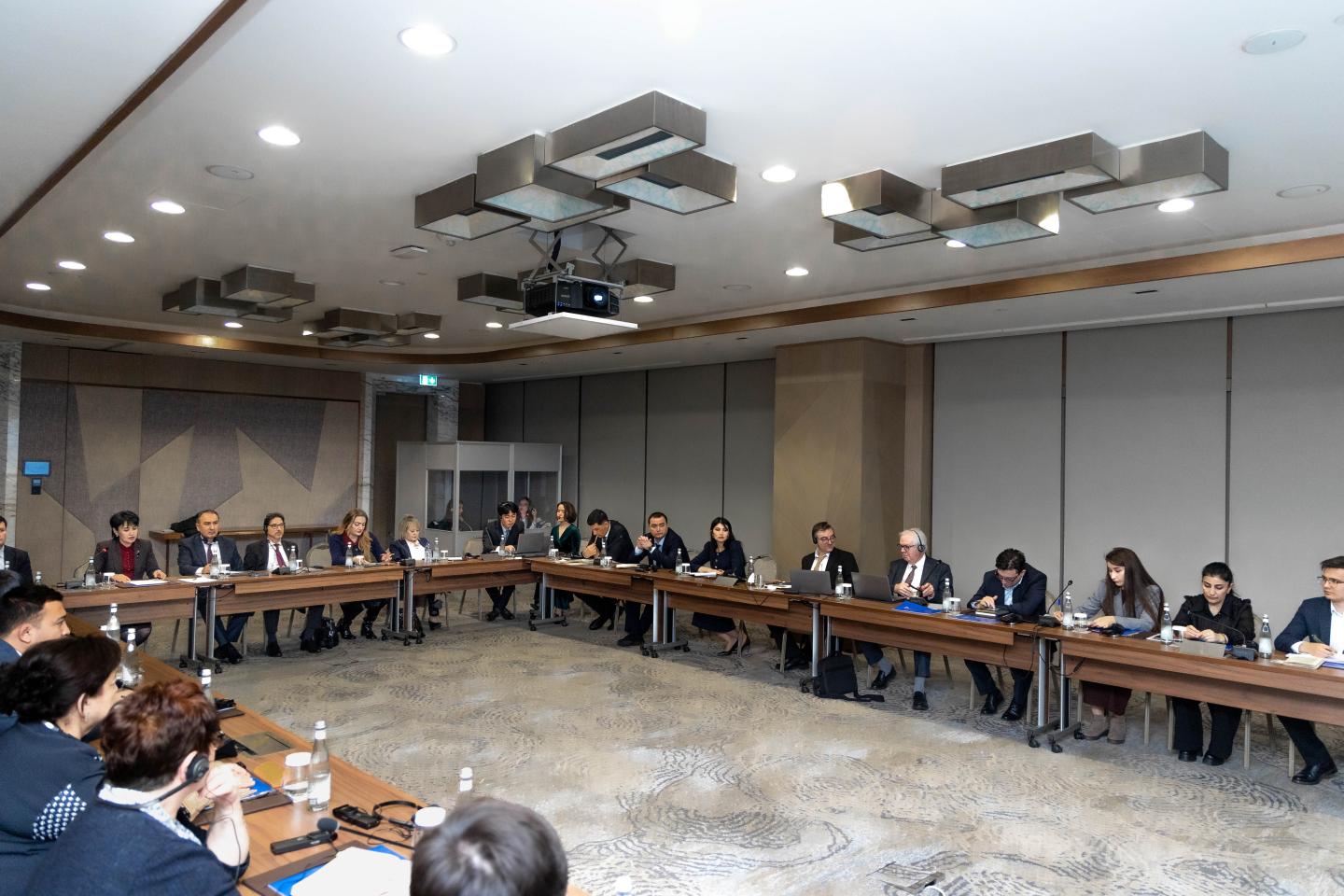
Tashkent, Uzbekistan — Representatives of the government, workers’ and employers’ organizations of Uzbekistan have agreed on a possible solution to address significant gaps in work injury insurance coverage among construction workers. A construction site–based work injury insurance scheme could protect all workers, including those in informal employment, against work-related injuries and occupational diseases. The agreement was reached during the Tripartite Roundtable Discussion on Work Injury Insurance for the Construction Sector, held on 4 February 2026.
The event brought together senior representatives from the Ministry of Employment and Poverty Reduction, the Federation of Trade Unions of Uzbekistan (FTUU), the Confederation of Employers of Uzbekistan (CEU), the Pension Fund, the National Agency for Social Protection, and the National Agency of Perspective Projects (NAPP). This dialogue builds directly on two previous rounds of tripartite meetings where stakeholders confirmed the urgent need to reform existing insurance schemes to better extend coverage to informal workers, particularly in the construction sector.
Protection gaps among construction workers
The time-bound nature of construction projects, multiple layers of subcontracting, and gaps in social insurance schemes contribute to widespread informal employment in Uzbekistan’s construction sector. While the current social insurance scheme covers registered employees, non-registered employees — typically temporary workers — as well as non-employees, such as contractors and self-employed workers, remain outside its scope. Employers’ liability insurance likewise does not cover non-employees or employees who are not registered as insured persons.
As Uzbekistan’s construction sector continues to expand rapidly, national stakeholders are prioritising measures to close work injury insurance coverage gaps affecting informal construction workers. Mr Yuri Sterk, Senior Coordinator of the ILO for Uzbekistan, echoed this view: “The protection of workers — especially those who contribute to our economy and society through infrastructure development — must be non-negotiable.”
Learning from international practices
To identify a viable solution, tripartite constituents examined international practices from Indonesia, Japan and Bangladesh, exploring how these countries protect informal and temporary workers in hazard-prone sectors such as construction, ready-made garments, and shipbreaking.
Indonesia and Japan: Project-based insurance and coverage for non-wage earners
Both Indonesia and Japan provide work injury insurance specifically designed for construction projects. Under this approach, a single construction site–based insurance policy covers all wage earners engaged in the insured project, including day labourers. Project owners or main contractors pay the insurance premium, which is calculated as a percentage of the total project cost. In Japan, insurance premium rates vary by the type of construction.
Non-wage earners (like self-employed workers) may also enrol in the employment injury insurance scheme by registering and paying contributions based on their self-declared income.
Bangladesh: Industry-led insurance
In the absence of a state social insurance scheme, Bangladesh launched a pilot industry-led Employment Injury Scheme in the export-oriented Ready-Made Garment (RMG) sector in 2022. This model is uniquely financed by international brands and retailers, which contribute 0.019 per cent of their order values to a central fund. Governed on a tripartite basis, the fund provides benefits in line with ILO standards, ensuring that workers receive protection in the event of occupational accidents. The model serves as a blueprint for extending protection to workers in other hazard-prone industries, such as footwear, leather and shipbreaking.
Identified solution for Uzbekistan
Participants discussed a viable solution for Uzbekistan, drawing on lessons from these country examples. They recognized the merits of a construction site–based insurance scheme, as it could effectively cover all workers on insured construction sites and address existing coverage gaps.
“A single insurance policy taken out by the main contractor would simplify insurance administration and eliminate omissions in coverage. This is a suitable solution for Uzbekistan’s construction sector,” said Ms Nodira Gaibnazarova, Head of the Occupational Safety Department of the FTUU.
Ms Eka Margishvili, Executive Director of the CEU, also expressed support for the model, noting: “This insurance model protects the main contractor and its subcontractors from financial liabilities in the event of accidents. CEU will inform construction companies and continue discussions.”
Noting the positive reactions of social partners to the construction site–based insurance proposal, Mr Sultanov Dilshod, Head of the Department of Finance, Economics and Financial Resources Management at the Ministry of Employment and Poverty Reduction, stated that the Ministry would explore the necessary regulatory changes in consultation with stakeholders.
Insurance company representatives acknowledged that construction site–based insurance is feasible and can be offered on a commercial basis. At a separate meeting, the NAPP — the regulator of Uzbekistan’s financial and insurance markets — also confirmed that this type of insurance is permissible under the current regulatory framework.