
UN System calls for country-level action through initiatives like Global Accelerator to deliver Doha commitments
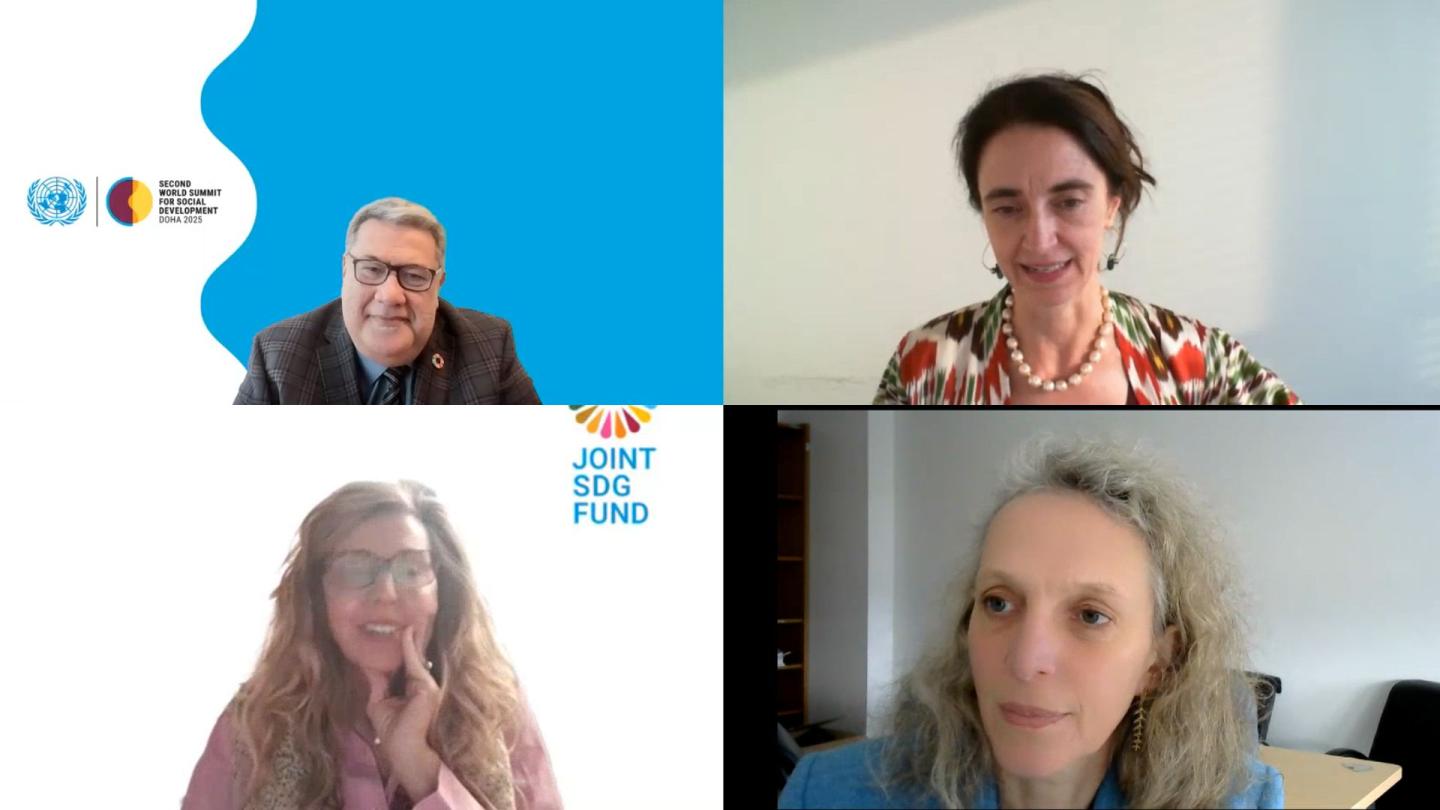
Geneva - The United Nations Development Coordination Office, in collaboration with the UN Department for Economic and Social Affairs has called for faster country-level action to turn the Doha Political Declaration of the Second World Summit for Social Development (WSSD2) into policies, financing and programmes that eradicate poverty, ensure full and productive employment and decent work for all, and strengthen social integration. The UN Resident Coordinators (RCs) and UN Country Teams (UNCTs) are expected to play a key role in supporting the implementation of the Doha Commitments, including through integrated policy advice and impactful joint-programmes that harness the full capacities of the UN system.
The message came during the “Transforming Doha Commitments to Actions at the Country Level” global webinar on 31 March 2026, convened by the United Nations Development Coordination Office (DCO) in collaboration with the UN Department for Economic and Social Affairs. The discussion brought together speakers from across the UN system to examine how the WSSD2 commitments can be integrated into national development plans and efforts to accelerate progress on the Sustainable Development Goals.
Speakers noted that the Doha Political Declaration reaffirmed global commitments to poverty eradication, decent work, universal social protection and social inclusion at a time of widening inequalities, demographic change, labour market insecurities, technological disruption and climate pressure. It also established a stronger follow-up framework, including a five-year review cycle in the General Assembly beginning in 2031, noted Mr Charles Katoanga, Director, Division for Inclusive Social Development (UN DESA).
Ms Valérie Schmitt, Deputy Director, Universal Social Protection Department at ILO, underscored the Global Accelerator’s role as a concrete mechanism to support implementation of the Doha Declaration, as it supports all three pillars of social development. It contributes the achievement of full and productive employment through the formalization of employment and enterprises and the increase of social protection coverage by 2 percentage points, which helps broaden the tax base and the social security contribution base.
“The Global Accelerator enables the scaling up of fragmented UN support in a country by working on a few, unified acceleration points to which multiple UN agencies can contribute. By joining forces, the UN can provide more strategic support with much greater impact in terms of jobs, social protection and financial leverage”, she stated.
Social inclusion is built into the Accelerator’s design: By engaging CSOs and social partners in design and implementation of the national road map through effective social dialogue, the policy advice and reforms that are conceptualized lead to sustainable results, given the broad buy-in from stakeholders.
The UNRCs play a critical role in identifying how national priorities, plans and cooperation frameworks intersect with Doha commitments and they can use the Declaration as a resource to inform programme design, policy choices and investment decisions.
“The Summit sent a clear message that social development and the social dimension of sustainable development must gain priority in the multilateral system…and to secure more predictable financing for social development,” stated Mr. Charles Katonga, Director, Division for Inclusive Social Development (UN DESA) on the key outcomes of WSSD2.
Mr George Gray Molina, Chief Economist at UNDP’s Bureau for Policy and Programme Support, highlighted the need to connect social protection, labour market measures and long-term development planning, particularly in countries facing persistent vulnerability.
Financing, one of the three pillars of the Global Accelerator, also featured strongly in the discussion. The implementation of the reforms under the Global Accelerator through UN and UN-WB joint programmes is funded by the Joint SDG Fund*. Ms Lisa Kurbiel, Head of the Joint SDG Fund Secretariat, stated that the Fund has mobilized nearly US $400 million and achieved a leverage ratio of 1:20 for every dollar invested. Drawing on examples from pathfinder countries like Indonesia, and other countries like Zimbabwe, she highlighted the role of innovative financing, partnerships and capital market instruments in advancing jobs, social protection and inclusive growth.
“The UN’s role is architectural. We are development experts who have the power of convening, through the Resident Coordinator, to bring together partners all leaning in for impact, creating a first-class opportunity to host capital investments.”, she underscored.
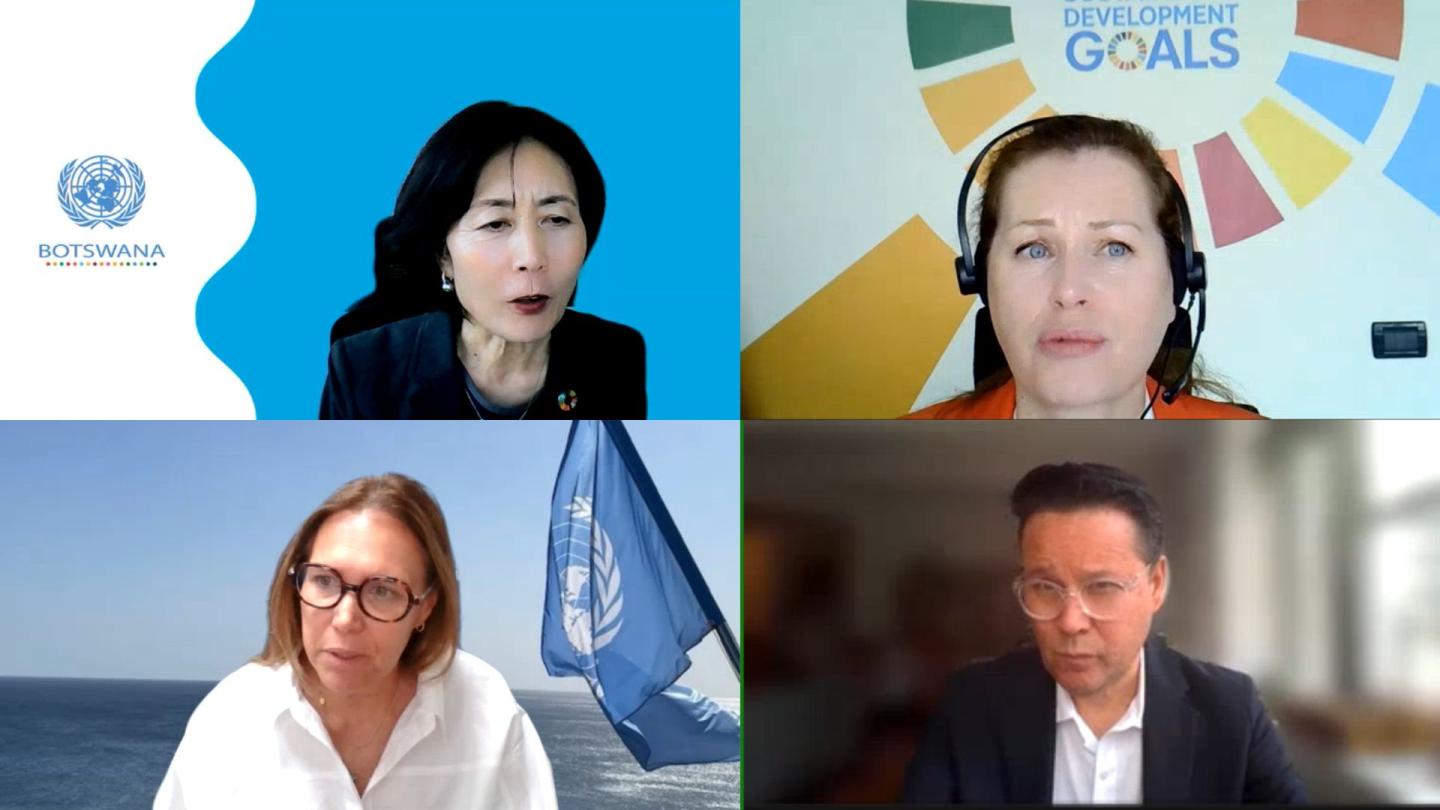
Resident Coordinators from Albania, Botswana and Cabo Verde shared country experiences, pointing to stronger government ownership, more coherent reform road maps and better inter-ministerial coordination. At the same time, they called for faster access to deployable expertise and innovative financing solutions to sustain momentum.
“The Global Accelerator puts the governments in the driving seat”, stated Ms Ingrid Macdonald, UNRC in Albania. She highlighted that through the Global Accelerator, UNRCs can unify agencies that are often competing on the same mandate, to further consolidate policy and programmatic platforms for partnerships and financing, and leverage bigger reforms. With the support of joint action by UNDP, UNICEF and ILO, sectoral and vocational training is being provided to women and youth, along with facilitating job placements, in line with Albania’s road map priorities.
In Botswana, ILO, UNDP, UNICEF and the World Bank are supporting the implementation of an M-GA project, on the thematic area of climate change. Ms Wenyan Yang, UNRC in Botswana, shared the country is integrating the Summit’s outcomes into its cooperation framework, mobilizing the Joint SDG Fund’s resources for a multi-agency social protection programme and seeking further mechanisms to scale impact.
Finally, the UNRC in Cabo Verde, Ms Patricia Portela de Souza highlighted the benefit of joint UN expertise and efforts, both at the HQ and country level, that have helped shape the country’s Global Accelerator road map. “(The GA experience) is really an example of how we can support the country in this systemic transformation that the country desires”, she concluded her remarks. Cabo Verde recently launched its Global Accelerator national roadmap, which centres on poverty eradication.
The webinar closed with a shared message underscored by Ms Helena Fraser, DCO director of policy and programming: the credibility of the Doha commitments will be defined by what happens next at country level. For the UN development system, that means helping countries turn political ambition into reforms that improve lives.
*The Joint SDG Fund has approved 47 joint UN and UN-World Bank country projects in 30 countries as part of the Global Accelerator, led by UNRCs and implemented by 9 UN entities.