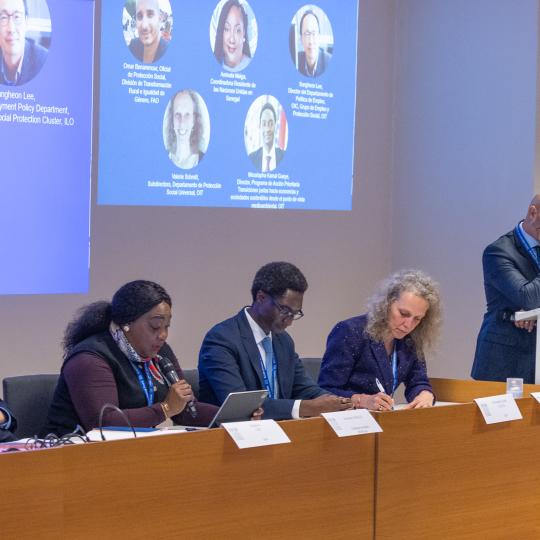
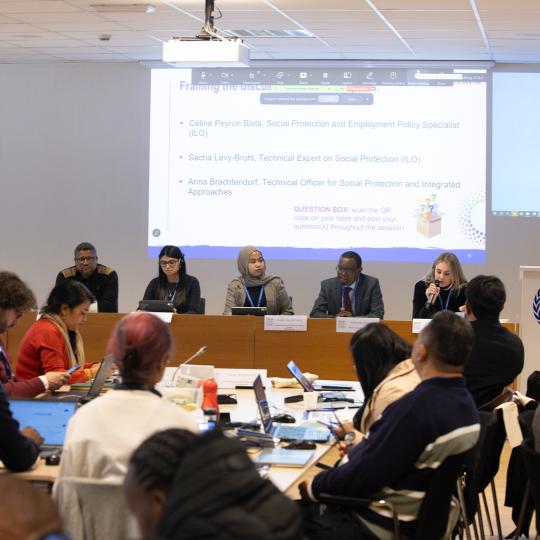
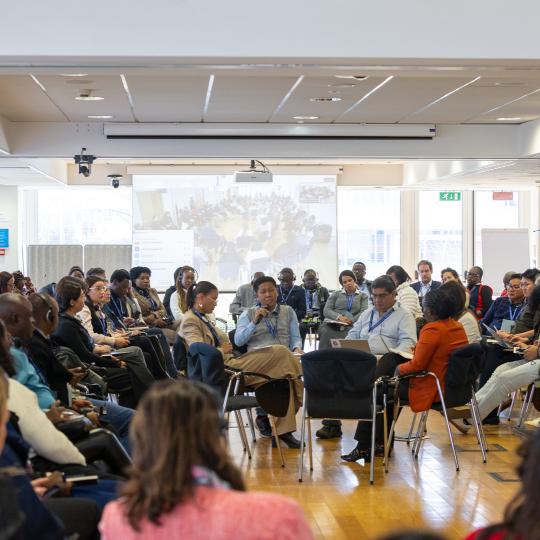
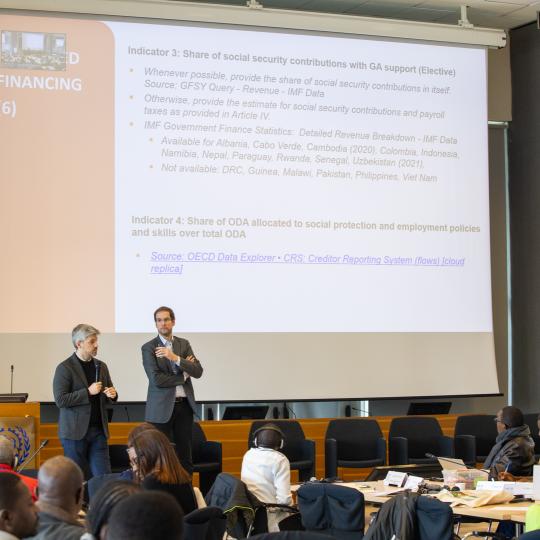
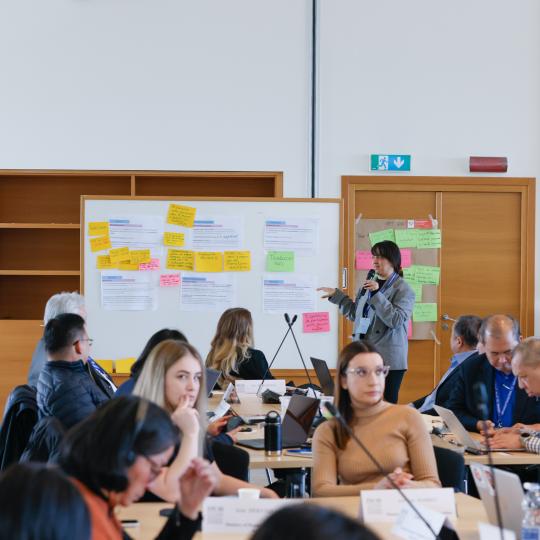
A dedicated session on financing underlined how investments build a virtuous cycle and provide concrete pathways for development. Discussions underscored that when employment and social protection policies are designed systemically, they can generate multiplier effects across economic and social outcomes, contributing to productivity, increased consumption, and strengthening of the economy, rather than being viewed solely as fiscal costs.
Country presentations further illustrated different pathways to mobilize and align resources. Mr Patrick Patriwirawan, Director, Department of Labor and Employment, Philippines described how the use of a legally anchored Programme Convergence Budgeting approach, to ensure that public expenditures align with employment objectives. Ms Kate Langwe, Director - Social Protection and Poverty Social Protection Division, Ministry of Finance and Economic Planning, Malawi outlined a phased, government-led roadmap financing, combining domestic resource mobilization, the introduction of social insurance, public–private partnerships and climate finance, with the objective of strengthening sustainability and reducing reliance on external funding.
Analytical tools such as the SMSD model were presented as instruments to support scenario planning, ex ante impact assessments and evidence-based policymaking, helping governments visualize how investments and reforms affect jobs, informality, household incomes, income distribution and macroeconomic indicators. Participants also examined examples of private sector engagement, including partnerships to extend unemployment insurance, expand coverage in agricultural value chains and support vocational training, as well as the potential of climate finance to support roadmaps that integrate adaptation and mitigation priorities.