
Transforming lives through fish farming: The story of Wamaka Youth for Development Cooperative
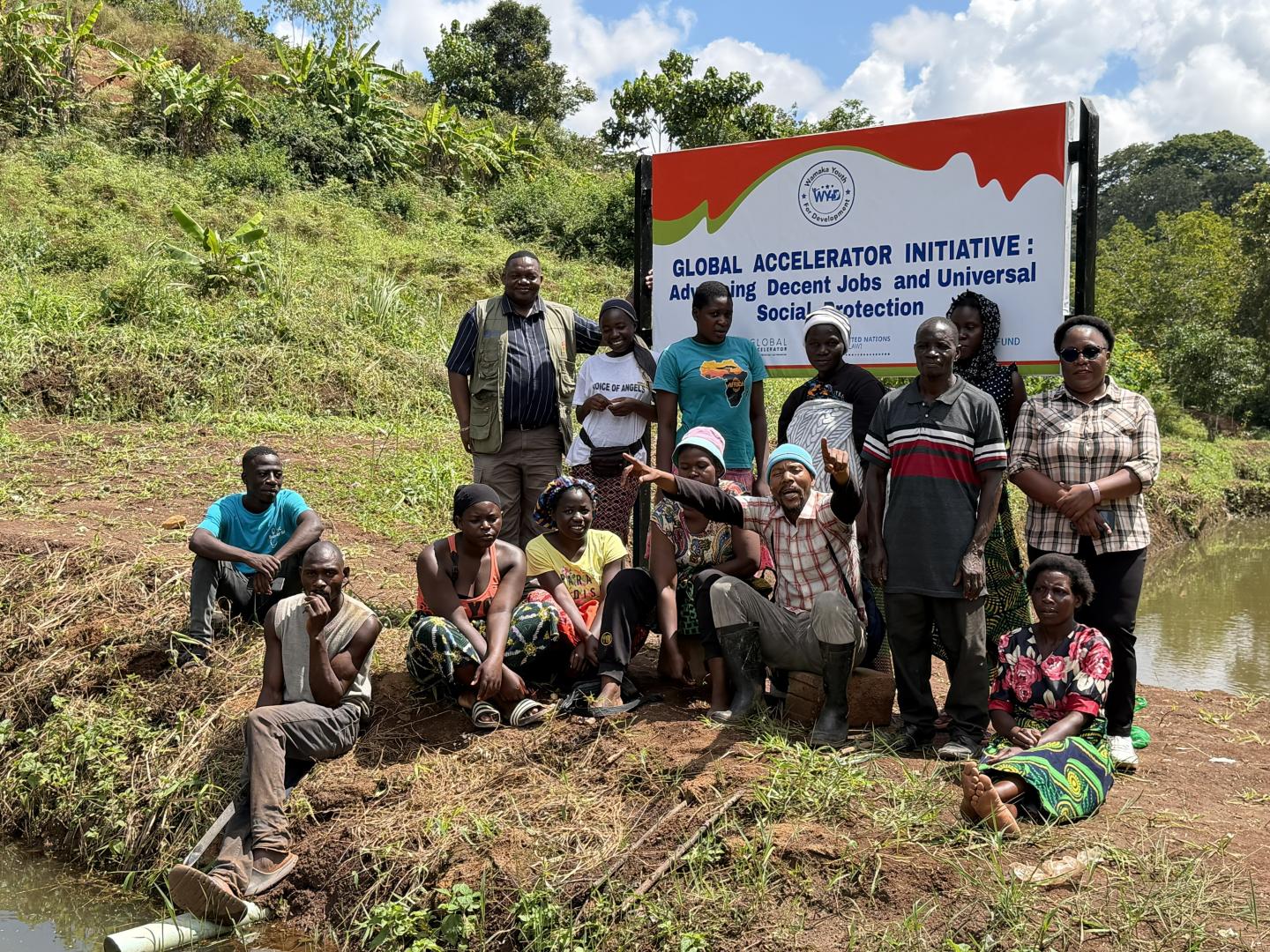
With support from the Global Accelerator joint programme, the Wamaka Youth for Development Cooperative is demonstrating how targeted investments in productive assets and skills development can create jobs, transform livelihoods, and strengthen rural economies. The renovation of six fish ponds was supported, increasing the number of operational ponds from five to eleven. Ten ponds are now fully stocked with 7,000 fingerlings, significantly boosting fish production capacity. Members also received technical and entrepreneurship training in fish farming, business management, and local stockfeed production.
As a result of these investments, the Cooperative has created 53 direct jobs for young people and community members while improving productivity and fish quality. The progress made by Wamaka has also attracted additional investment from the Agriculture Commercialization Project (AGRICOM) under the Ministry of Agriculture and Irrigation, which has provided an additional grant of MK130 million (USD 75,242.00) to support the development of two larger fishponds and the acquisition of value-addition equipment. The Cooperative will not only aggregate fish for market access but will also produce affordable fish feed locally, as such helping to reduce production costs for members. Within six months, the Cooperative expects to generate an annual income of approximately MK20 million (USD 11,575). In addition, the cooperative has engaged in coffee farming to diversify the income-generating sources for the cooperative members.
Behind these achievements are inspiring stories of resilience, determination, and economic transformation.
A Fishpond That Changed a Family’s Future – Loness Joshua
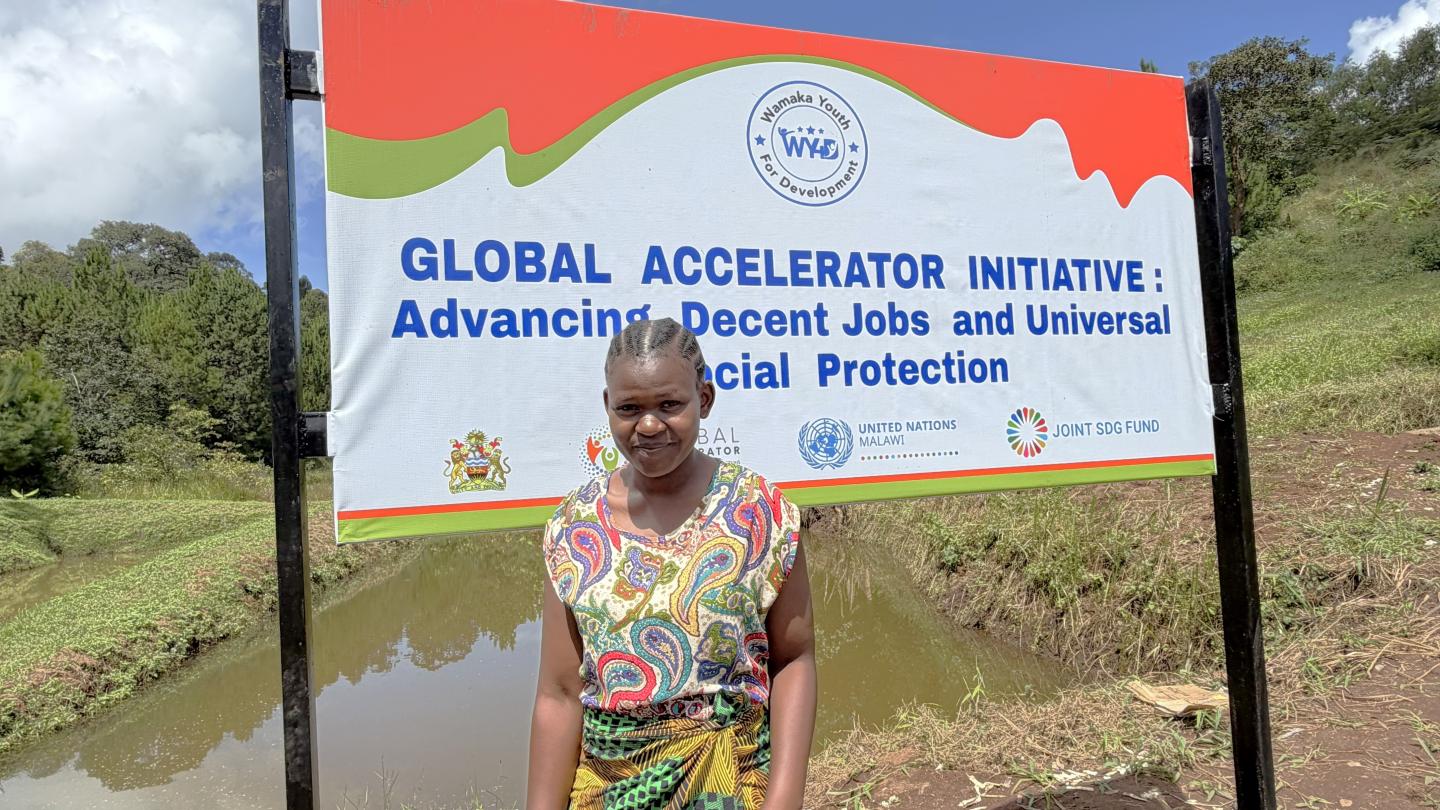
At 33 years old, Loness Joshua is a mother of two children, has been transformed through fish farming. She first constructed a fishpond in 2019, but due to limited technical knowledge and resources, it remained non-operational for years.
Everything changed when she joined Wamaka Youth for Development Cooperative. Through the training and mentorship provided under the Global Accelerator Initiative, Loness gained practical skills in fish farming and pond management. Her fishpond is now fully productive, supplying fish for both family nutrition and household income.
The additional income has enabled her to diversify into piggery farming, creating a more stable source of livelihood for her family. Beyond improving her own life, Loness has also created employment opportunities for four members of her extended family, whom she supports through shared profits from the business.
Today, she sees fish farming not only as a source of income but as a pathway to dignity, self-reliance, and hope for her children’s future.
“It’s Easier to Pay School Fees Now” – Alexander Kaunda
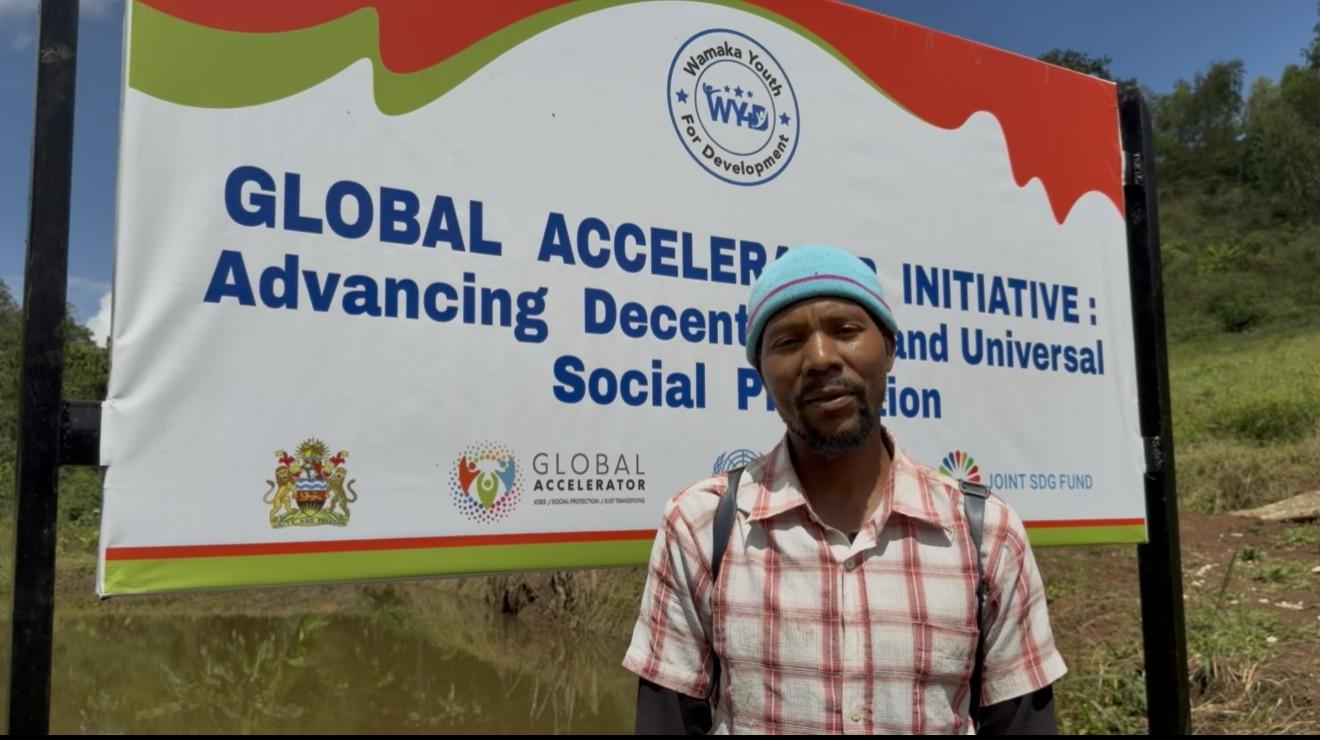
For Alexander Kaunda, fish farming has become a stepping stone toward financial stability and diversification. The 39-year-old father of three began fish farming in 2019 and joined Wamaka Cooperative in 2021.
Through the capacity-building support provided by the GA HIT Joint Programme, Alexander improved the productivity of his fishponds and gained new business skills, particularly in pricing and marketing his fish.
“One notable improvement after the training is that I am now able to price my fish better, which has increased my income,” he explains.
The increased earnings from fish farming have made it easier for him to provide for his family, especially paying school fees for his children. With higher returns, Alexander has expanded into banana farming and has also started a chicken farming project using proceeds generated from fish sales.
His story demonstrates how improved skills and market access can help small-scale farmers build resilient and diversified livelihoods.
The success of Wamaka Youth Development Cooperative provides proof of concept by demonstrating how investments in youth-led cooperatives can create lasting economic and positive social impact.
Through improved productive assets, technical training, entrepreneurship development, and market linkages, the Global Accelerator High Impact Track Joint Programme is helping communities move beyond subsistence livelihoods toward sustainable income generation and decent job creation, creating a fertile foundation for the extension of contributory social protection services.
For members like Loness and Alexander, fish farming is no longer just an activity, it is a pathway toward financial independence, food security, improved nutrition and a better future for their families and communities.