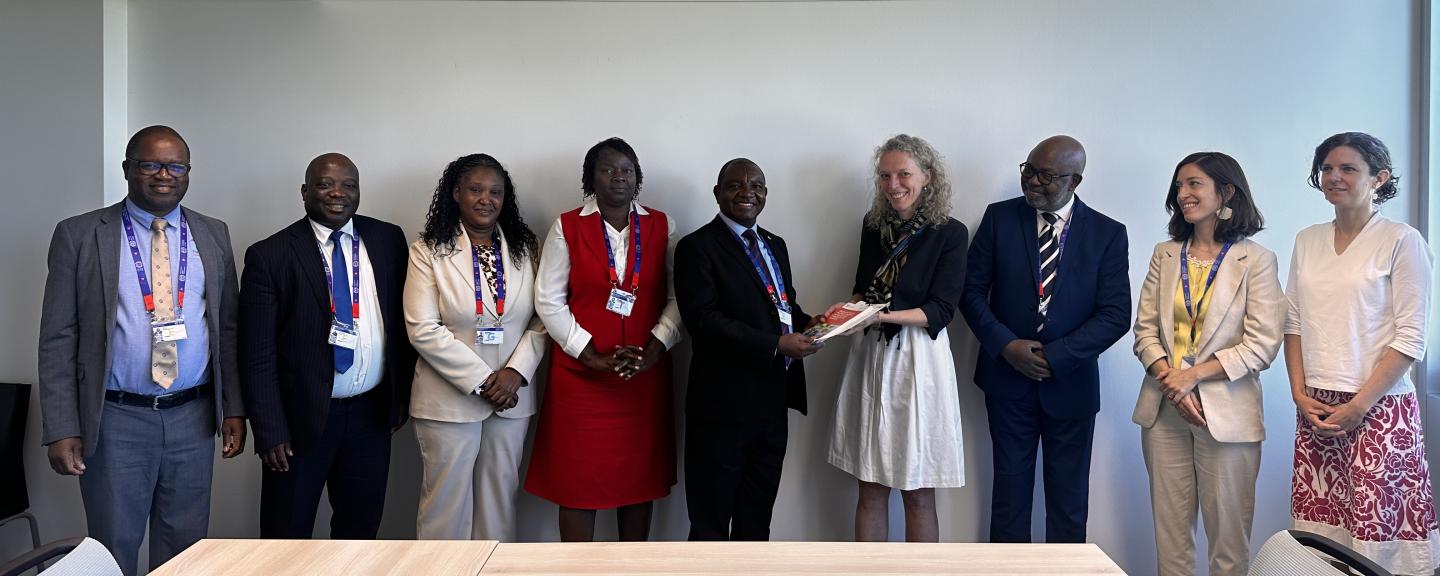
Zambia becomes the 20th pathfinder country to join the UN Global Accelerator
Lusaka, Zambia – Zambia becomes the 20th pathfinder country to join the United Nations Global Accelerator on Jobs and Social Protection for Just Transitions. Led by the Ministry of Finance and National Planning, the country submitted its high-level commitment to the United Nations Resident Coordinator on 9 May 2026, affirming its commitment to promoting decent work and universal social protection, with emphasis on poverty reduction, gender equality, a green economy and digitalization. This was reaffirmed by the Ministry of Labour and Social Security on the sidelines of ILO’s 114th International Labour Conference.
Through the Global Accelerator, Zambia will receive support to develop a national roadmap that will inform the upcoming Ninth National Development Plan (9NDP). Building on the country’s employment and social protection landscape, the initiative will focus on improving youth employment outcomes and facilitating young people’s transition from school to work. The initiative will also enable the country to continue strengthening its social protection system and expanding coverage, drawing on ILO Convention No. 102, for which the country has already undertaken the comparative assessments, in view of a possible ratification.
This will be driven by a whole of government approach and partnerships with the private sector, especially in the mining, agri food processing, and green energy sectors. The Global Accelerator aims to strengthen coordination across economic and social programmes in these key sectors—linking value addition, skills development, and market access with human development, health, and social protection policy measures.
In the lead up to the commitment, the Ministry of Finance and National Planning, together with the International Labour Organization (ILO) Lusaka Country Office, held an interministerial technical meeting in Kafue from 18–19 February 2026. The meeting brought together key ministries, including Labour and Social Security; Community Development and Social Services; Green Economy and Environment; Technology and Science; Small and Medium Enterprise Development; and Youth, Sport and Arts.
Stakeholders worked to align Zambia’s development priorities with opportunities under the Global Accelerator. In his opening remarks, Mr. Davison Mapiza, Director for Development Planning at the Ministry of Finance and National Planning, highlighted the Accelerator’s relevance to Zambia’s long-term development goals. He emphasized that its objectives closely match national priorities in job creation, human capital development, and social protection. “As we develop the Ninth National Development Plan, the Global Accelerator offers a vital opportunity to strengthen efforts toward a more resilient, equitable, and productive economy,” he said.
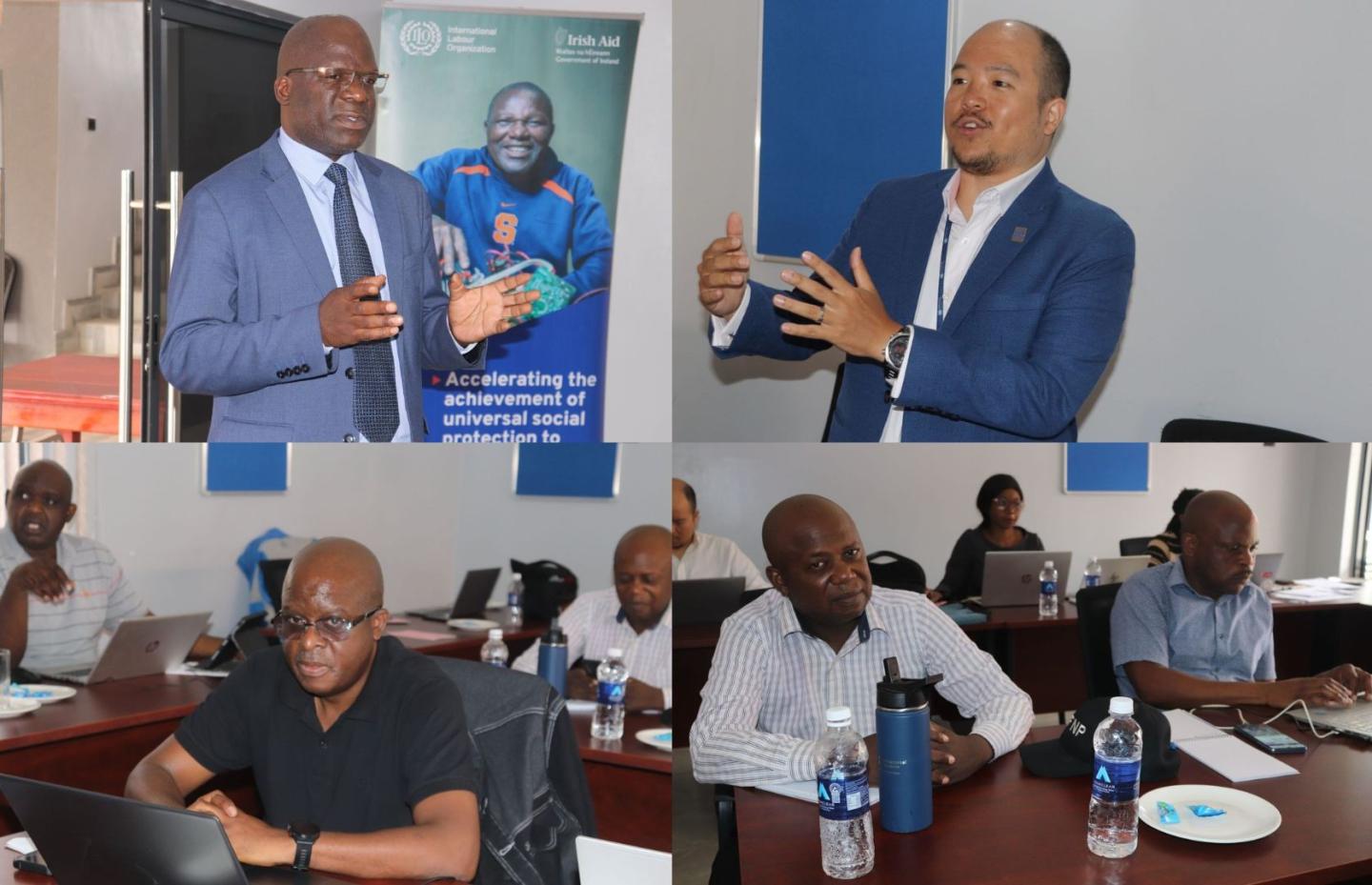
ILO Social Protection Manager, Mr. Finn Koh, noted that the Accelerator in Zambia will prioritize strategies that promote decent and productive jobs for young people, particularly in green, digital, and labour-intensive sectors. He added that the initiative will help build stronger, more responsive skills development systems to support smoother school-to-work transitions.
Mr. Koh also highlighted the importance of expanding integrated and shock-responsive social protection systems that protect vulnerable households while linking them to skills, decent employment, and livelihood opportunities. He urged institutions to ensure alignment with both the current Eighth National Development Plan (8NDP) and the forthcoming 9NDP. “Ensuring coherence will position Zambia for a strong and impactful engagement with the Global Accelerator. Together, let us build a more inclusive future,” he said.
The country’s commitment to the extension of social protection also complements its efforts in ratifying the ILO Convention on Social Security (Minimum Standards) Convention, 1952 (No. 102). The ILO has undertaken a comprehensive comparative gap analysis of Zambia’s social security legislation against the provisions of Convention No. 102, in close collaboration with the Ministry of Labour and Social Security. The findings corroborate substantial alignment of the social security system with minimum requirements of the Convention in several areas.