
Global Accelerator's 7th Steering Group meeting builds on momentum from the Knowledge Exchange Forum

Geneva - At the 7th meeting of the Global Accelerator Steering Group on 4 March, constituents reflected on how to build on the momentum created by the “Capacity Building and Knowledge Exchange Forum”, in Turin. To support countries in this, a new funding round will provide resources to start implementing newly developed roadmaps. A discussion on youth shone a light on how the Global Accelerator reaches this specific population group.
Sharing their reflections from the Knowledge Exchange Forum, representatives from Colombia, Guinea, Nepal and the Philippines highlighted the value of mutual learning, stronger connections between governments, workers, and employers in support of social dialogue, and efforts to break down policy silos.
Josephine Kolié, Deputy National Director, Ministry of Labour and Civil Service, Guinea, underlined the importance of learning from other countries’ experiences as Guinea begins developing its national roadmap. Patrick P. Patriwirawan, Director, Department of Labor and Employment, Bureau of Local Employment, Philippines, emphasized the relevance of discussions on financing, particularly as the country works to localize programme delivery, maximize financing opportunities and advance its ongoing convergence budgeting process. Juan Arturo González from the National Association of Employers of Colombia noted that on the issue of tackling the challenge of informality, the Forum had been useful to create stronger cohesion among the social partners, promoting a “whole of state” approach, and had heightened the urgency of agreeing on how to go about the policy response. Smritee Lama, Secretary of Foreign Affairs, General Federation of Nepalese Trade Unions, Nepal, highlighted the role of social dialogue in ensuring accountability within national steering committees.
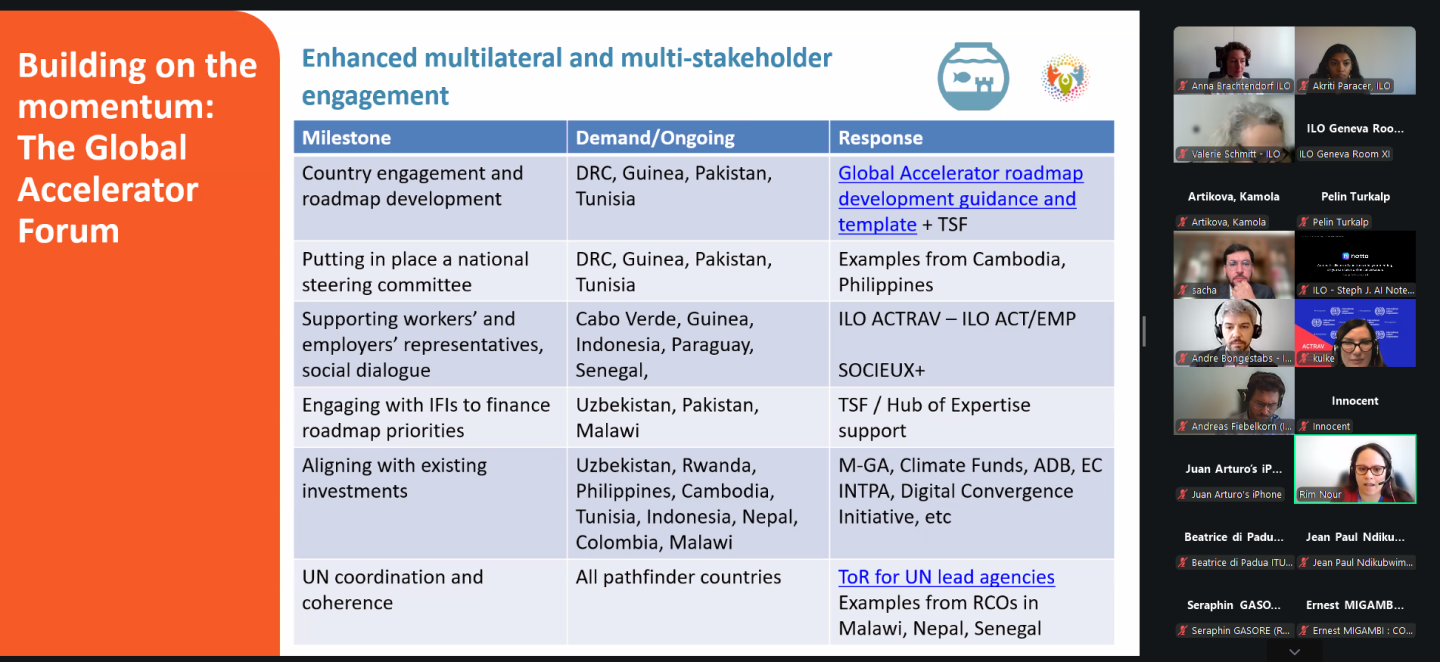
The Forum was also an opportunity for the Technical Support Facility (TSF) and its Hub of Expertise to provide concrete support, through practical sessions and sharing of methodologies and tools, for the implementation of the different pillars of the Global Accelerator: how to design and implement integrated policies; how to mobilize and make better use of financing for employment and universal social protection; and how to ensure that all partners are involved and contribute to the policy reforms and investments needed for just transitions. This support is provided by the United Nations country teams (through the GA and M-GA projects under the Joint SDG Fund) and by the Hub of Expertise, which offers specialized, on-demand technical expertise. Senegal has already benefited from support in applying the Structural Model for Sustainable Development, enabling it to assess ex ante the social impact of its investments.
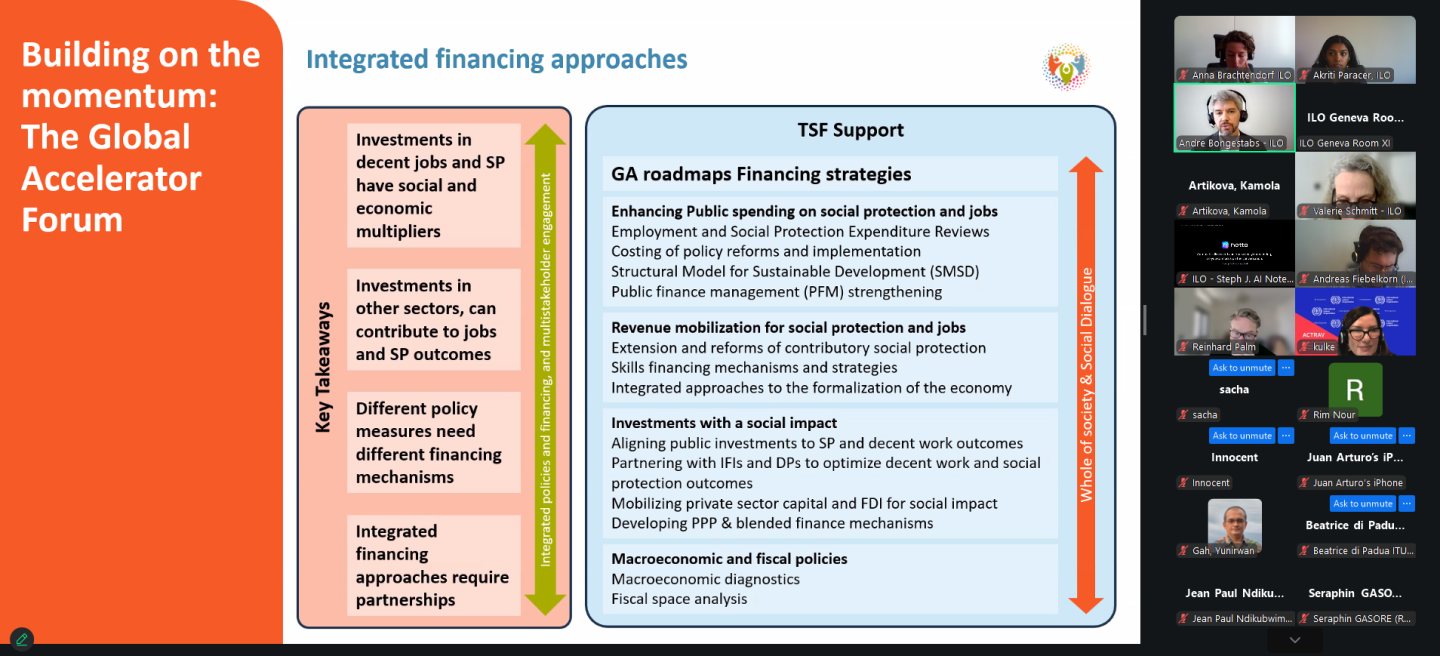
To help translate this momentum into concrete action, the TSF presented the parameters of a new funding round under the Joint SDG Fund. Countries that previously received seed funding will now be able to access strategic funding to implement their Global Accelerator national roadmaps and achieve high-impact results for people, enterprises and institutions. While the new funding round continues to prioritize policy reforms to extend social protection and create decent jobs, it also places stronger emphasis on financial leverage, demonstrating the catalytic potential of investments in UN joint programmes. There will also be a funding round launched by the World Bank’s Social Protection Response Umbrella Trust Fund to support jobs and social protection in fragile contexts and as a response to the climate crisis. Programmes under this funding round will be jointly delivered by the UN and the World Bank.
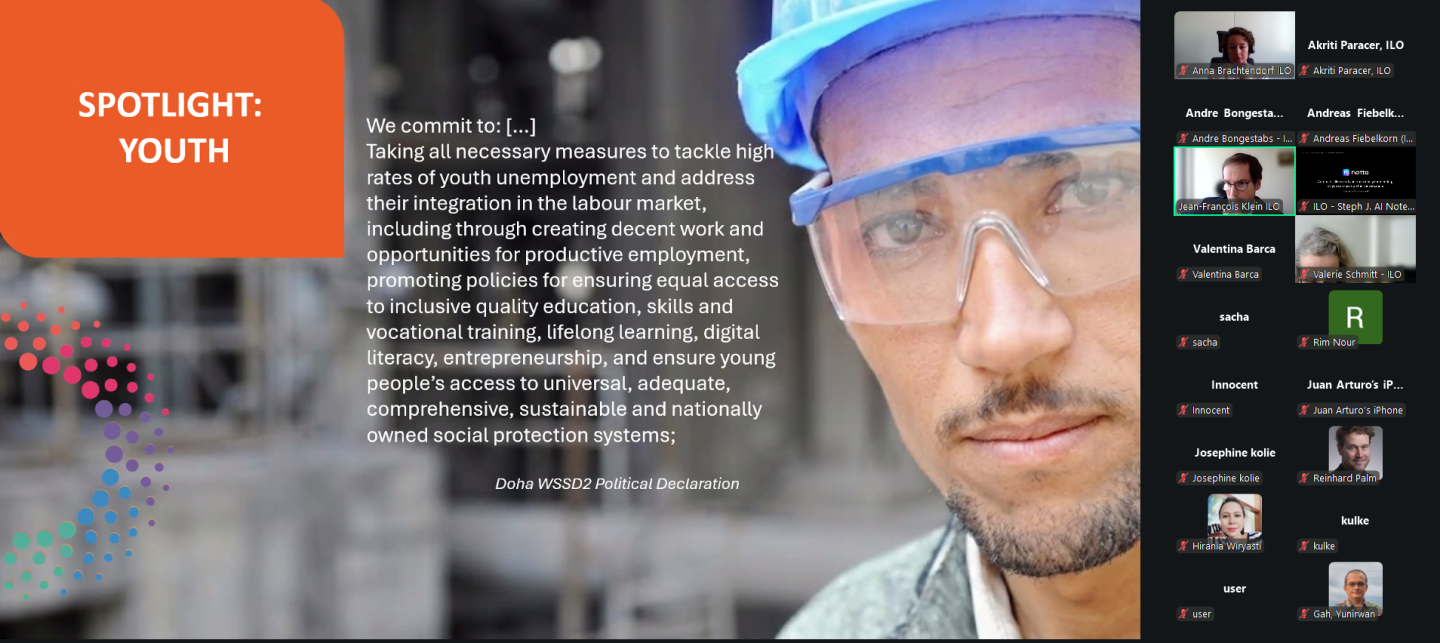
Finally, as part of the spotlight agenda item on youth, the TSF presented an overview of youth-related priorities, challenges and opportunities in Global Accelerator pathfinder countries. Joryan Rossati, Director of Planning, Ministry of Labour, Employment and Social Security, Paraguay, stressed the importance of youth-focused initiatives within the Global Accelerator in Paraguay. Tasira Mwaupighu, Deputy Director of Planning, Ministry of Labour, Skills and Innovation from Malawi explained how the Global Accelerator supports linking social protection programmes with Technical and Vocational Education and Training, creating pathways to productive inclusion and sustainable income generation. The government is also scaling up national apprenticeship programmes, strengthening recognition of prior learning, and improving the combination of classroom-based training and structured workplace experience in collaboration with employers. Matthieu Noirhomme, Social Protection and Health Systems Expert at Enabel highlighted the importance of structured youth participation in decision-making processes, as well as the potential for targeted approaches to job creation, social protection expansion and financing that respond to their needs. Taking action on this recommendation, the Steering Group Secretariat proposed to invite the Major Group for Children and Youth to become a member of the GA Steering Group.
Technical support from the Hub of Expertise remains fully at the disposal of pathfinder countries, and constituents are encouraged to reach out to UN Country Teams or via [email protected].