
Pathfinder countries explore how to link climate action with jobs and social protection with the Community of Practice
Geneva – The Community of Practice hosted its second learning session on "Climate and Environmental Change" in the context of the Global Accelerator on 20 October.
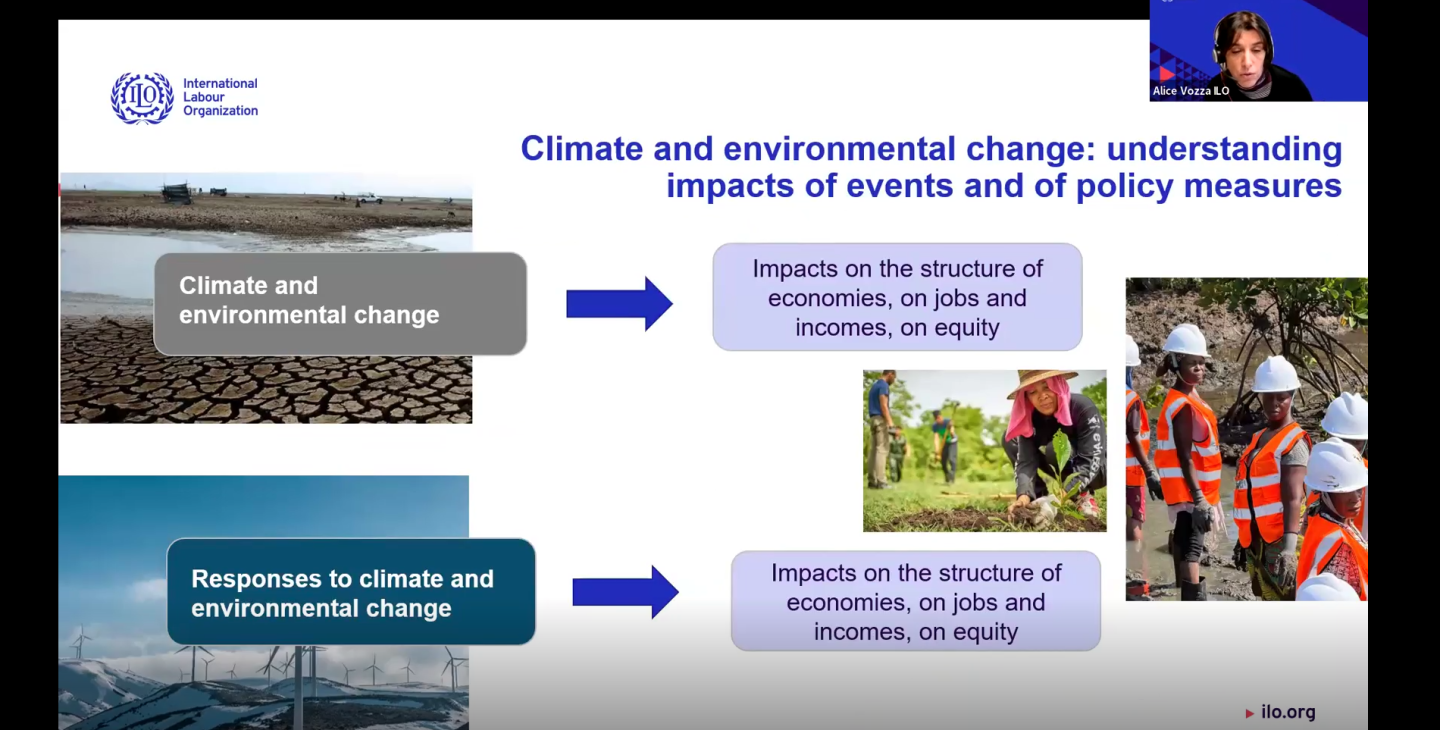
Climate change and wider environmental degradation are among the most significant global challenges facing economies, societies and the world of work. Climate change in particular acts as a ‘risk-multiplier’, as it intensifies shocks and disasters, reduces the resilience of workers and households and exacerbates existing vulnerabilities. Several of the pathfinder countries are climate-vulnerable and are addressing climate change and environmental risks through their roadmaps, making this a relevant session for the group.
Healthy ecosystems underpin nearly 1.4 billion jobs globally, and disruptions to them threaten people's employment and livelihoods. On behalf of the Technical Support Facility, the ILO and UNICEF set the context for the session by positioning the Global Accelerator within the larger just transition framework, what it asks of countries and findings from the cross-country roadmap mapping. They further highlighted the implications and ‘best practices’ for social protection, employment, jobs and skills. Pathfinder countries shared their reflections on the main driving question – what climate-related priorities they have included in their roadmaps and how they are engaging with climate actors or climate finance.
Key insights that emerged from the session were:
- Ignoring climate change and broader environmental degradation is not an option, as these strongly impact (and are impacted by) all economic sectors and by the jobs and social protection agendas at country level and globally. This is particularly true given the 2026 El Niño, which makes promoting a just transition towards environmentally sustainable economies and societies, which sits at the heart of the Global Accelerator's mandate, imperative for social justice.
- Roadmaps include policy priorities related to climate change at varying degrees. As some of the most climate-vulnerable countries, Colombia, Indonesia, Namibia, Nepal, Paraguay, and the Philippines have included substantive climate priorities in their national roadmaps. The TSF and Hub of Expertise offer key expertise and technical assistance that can guide countries on how to ensure that the extension of social protection and creation of decent jobs support the mitigation of and adaptation to a changing climate.
- Many options exist for climate-responsive employment and social protection, and countries will need to focus on what is feasible and has a high impact in their context, as was highlighted by the experiences from Côte d'Ivoire and Cambodia. The Nationally Determined Contributions 3.0, submitted by countries in 2025, emphasized inclusive governance and interministerial collaboration as a key lever for proactively integrating just transitions into national planning frameworks. Additionally, social protection needs to be adaptive and climate-responsive, which requires integrating climate considerations into the core design and financing of national social protection systems. Countries shared examples of integrated programmes and policies, and active engagement with climate funds for financing policies and programmes on jobs and social protection for just transitions, demonstrating how the Global Accelerator’s three pillars are strengthening national systems to respond to climate vulnerabilities.
- Multilateral climate finance has been steadily growing, yet social protection, skills and employment actors have to date accessed very little of this. Yet this trend is shifting and is also embedded in two new indicators that go alongside the Belem Declaration on Hunger, Poverty, and Human-Centered Climate Action (COP30). This shift provides additional opportunities for countries.
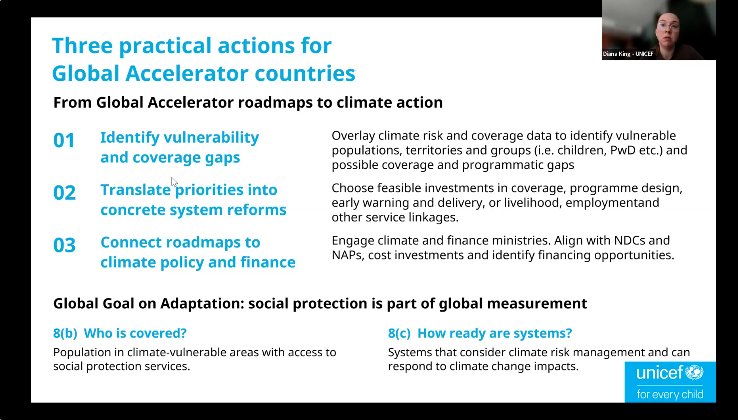
The session highlighted opportunities for pathfinder countries to strengthen links between climate action, jobs and social protection as they implement their roadmaps, drawing on shared learning, technical expertise and emerging climate finance opportunities.
Read the CoP's Knowledge Repository for more information here.