Asian Development Bank and United Nations join forces at Asia Pacific Social Protection Week to advance the Global Accelerator
Manila, Philippines – National ownership, stronger partnerships and better alignment of financing with decent jobs and universal social protection are helping Global Accelerator Pathfinder Countries move from roadmaps towards implementation.
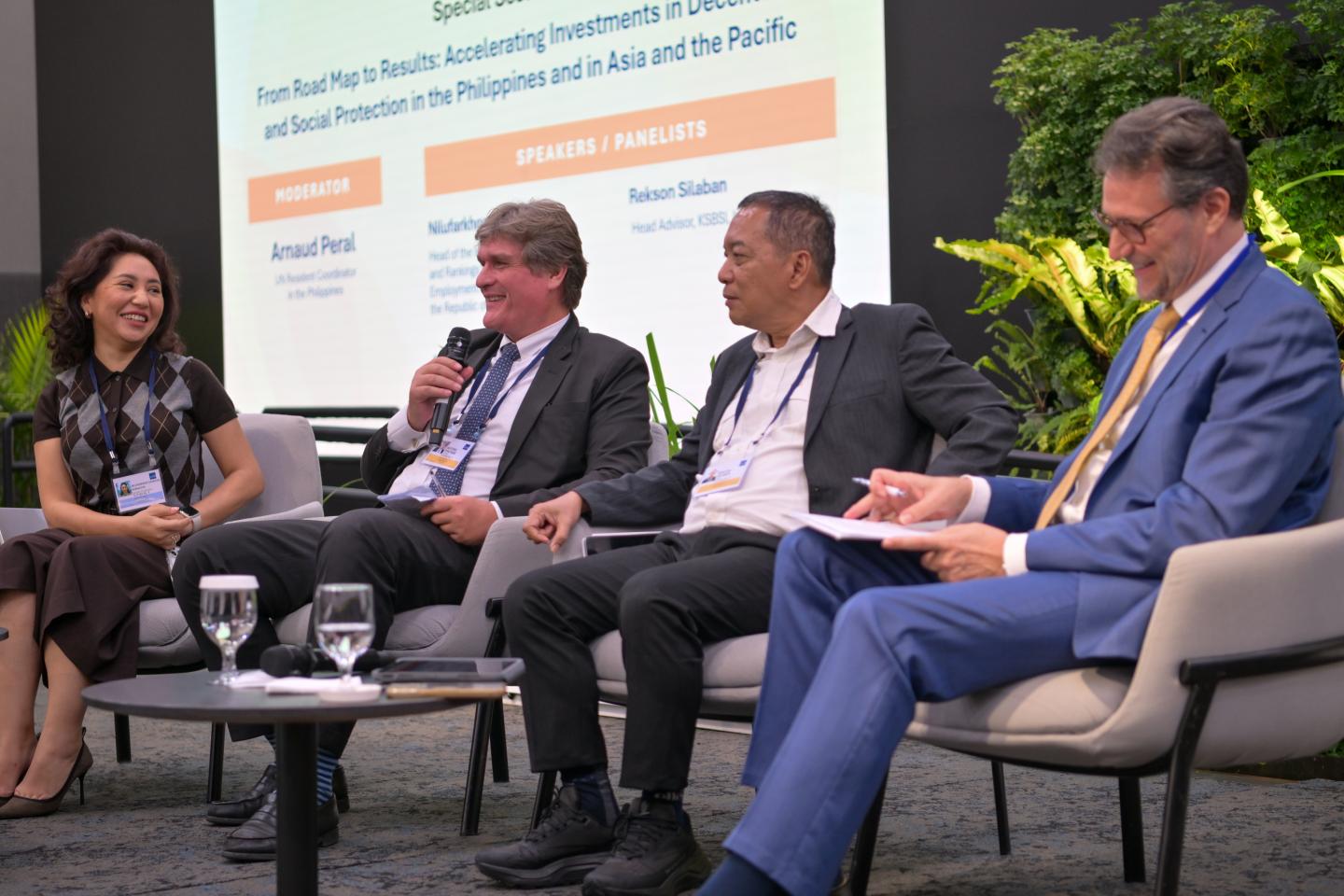
These messages emerged from the session “From Roadmap to Results: Accelerating Investments in Decent Jobs and Social Protection in the Philippines and across Asia and the Pacific”, held on 7 October during the Asian Development Bank’s (ADB) Asia-Pacific Social Protection Forum 2026 in Manila.
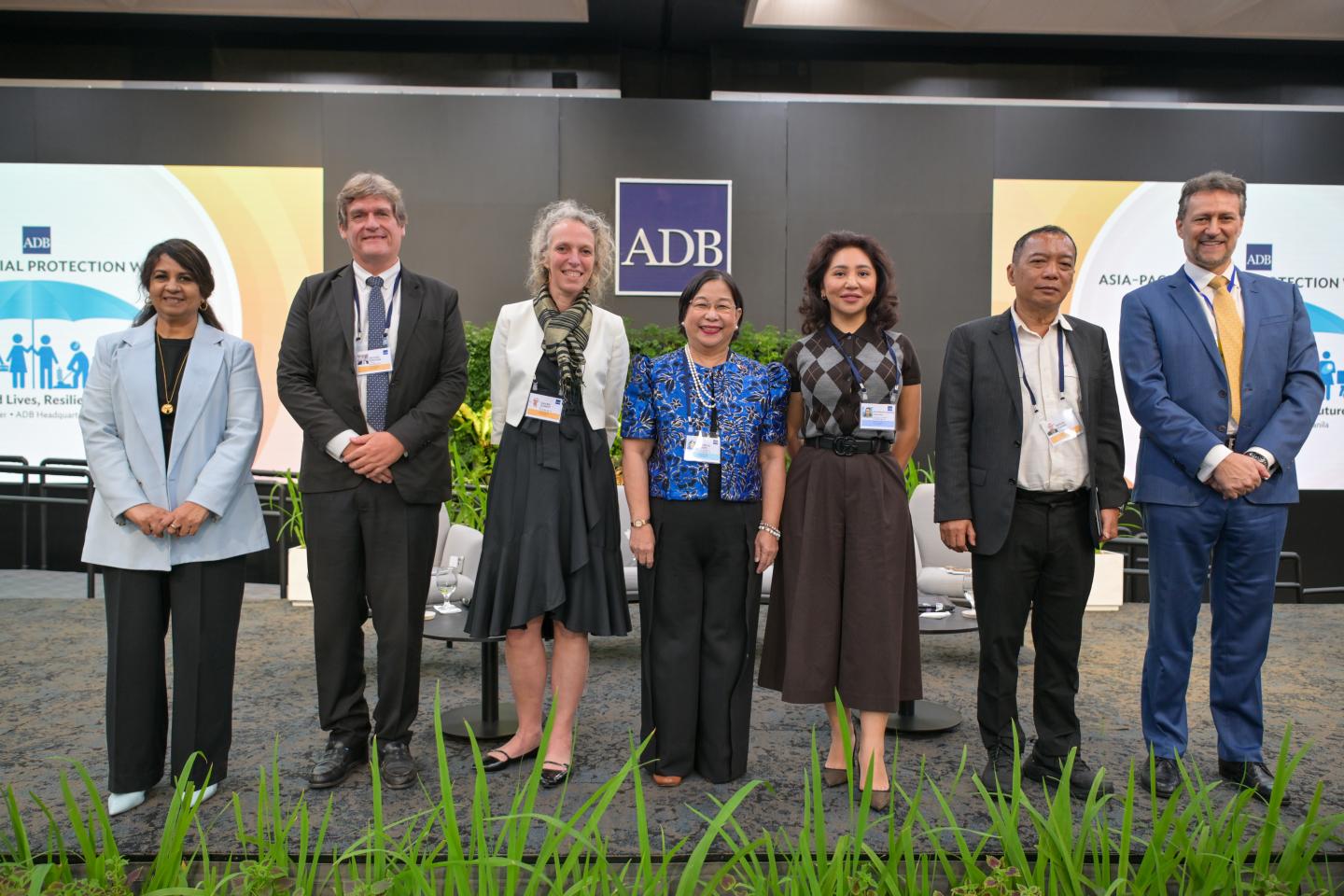
Co-organized by the Global Accelerator on Jobs and Social Protection for Just Transitions, the Philippines’ Department of Labor and Employment (DOLE) and ADB, the discussion explored how nationally owned Global Accelerator roadmaps in Cambodia, Indonesia, the Philippines and Uzbekistan translate priorities on jobs, social protection, skills and just transitions into reforms, investments and results.
Connecting national priorities with investment
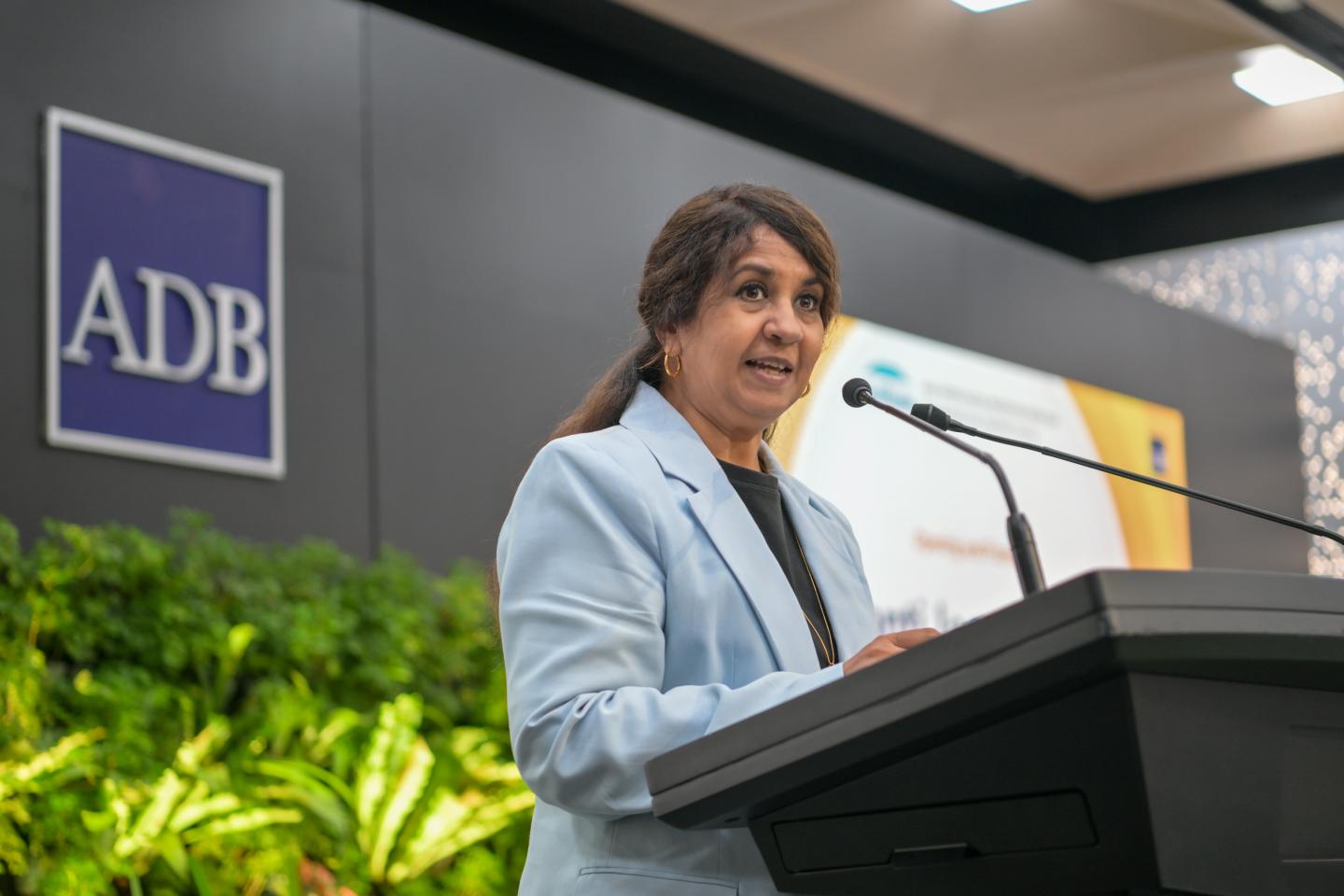
Opening the session, Shanti Jagannathan, Director, Human and Social Development Sector Office at ADB, emphasized the importance of bringing jobs, social protection and skills together rather than addressing them separately. National roadmaps can help turn this integrated approach into practical, time-bound measures, while providing a basis for aligning technical and financial support from development banks. She also stressed the importance of identifying initiatives that have demonstrated results and can be scaled, strengthening the evidence around their effectiveness, and using that evidence to adapt reforms as implementation progresses.
This points to an important opportunity for the Global Accelerator: connecting country-led priorities more systematically with the financing, technical assistance, knowledge and country engagement of development banks such as ADB.
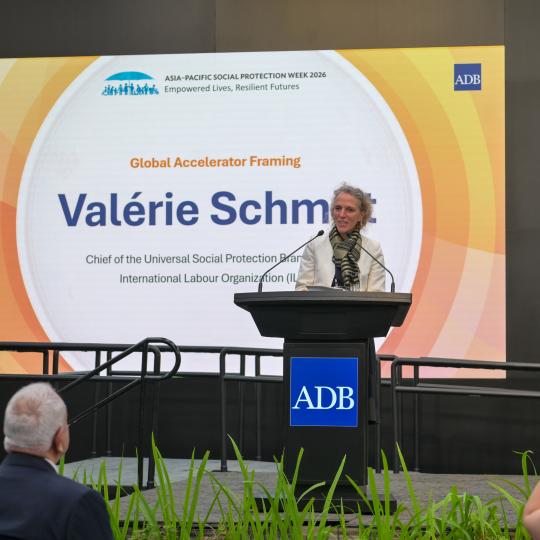
Ms Valérie Schmitt, Chief of the Universal Social Protection Branch at the ILO, highlighted the importance of considering decent jobs and social protection from the outset when investments are designed – including their effects on job quality, poverty and inequality, gender equality and workers throughout supply chains. “Investments in infrastructure, skills and public services have a stronger social impact when decent jobs and social protection are part of their design. The challenge now is to turn these priorities into implementation, supported by financing and evidence of what works.”
From roadmap to implementation
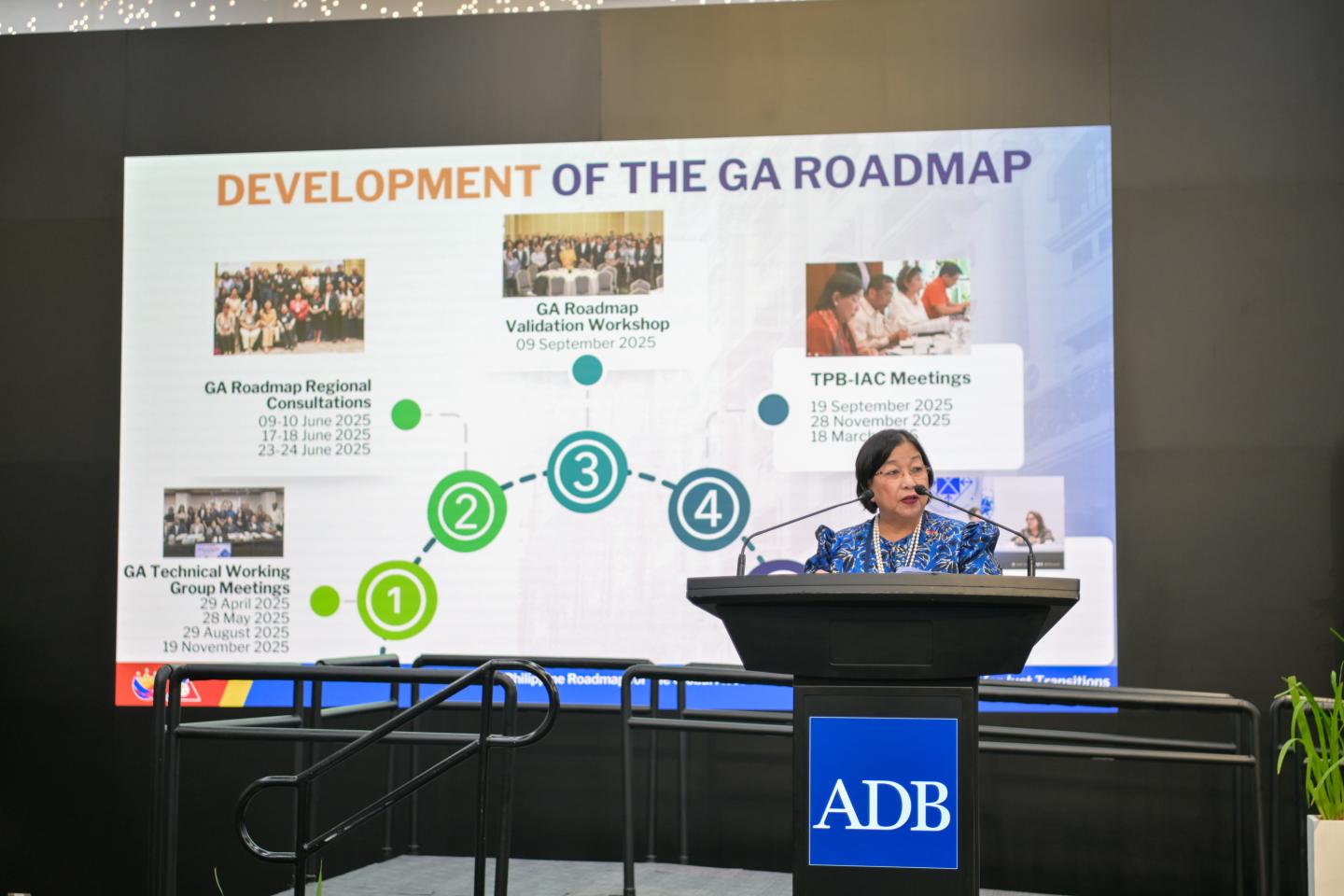
The Philippines provided a concrete example of this shift. Its recently signed Global Accelerator roadmap is anchored in the Trabaho Para sa Bayan Plan and focuses on sectors including construction and transportation, which are being reshaped by climate and digital transitions. Developed through extensive social dialogue among all stakeholders, the Philippine roadmap is a living document that can adapt to the country’s evolving priorities, as Ms Carmela Torres, Undersecretary, Department of Labor and Employment, highlighted. The Philippines’ roadmap and sectoral approach offered practical guidance to participants on how the Global Accelerator supports countries in advancing their national development plans.
Moderating the panel discussion, Mr Arnaud Peral, UNRC of the Philippines, remarked: “The Global Accelerator is a convener. It complements the government’s vision. Tackling complex issues like social protection requires a holistic approach, and the roadmap that has been developed with all stakeholders becomes a roadmap for the entire society.”
The panel discussion and Q&A showed that implementation takes different forms depending on national circumstances, but several common lessons are emerging. In Uzbekistan, Global Accelerator priorities are being connected with reforms on formalization, skills and social protection, including collaboration between the Government, ILO, ADB, IMF and World Bank on pension reform. Indonesia’s experience highlighted the importance of ensuring that social dialogue continues beyond roadmap development, with workers’ and employers’ organizations participating as priorities are translated into programmes, investments and financing decisions. Cambodia recognized the Global Accelerator as an operational tool, with its added value in bringing ministries and other stakeholders to the same table, strengthening coordination to advance the country’s national development plans.
Country ownership, collaboration and financing
The experiences shared in Manila reinforced five messages for implementation, as shared by Ms Valérie Schmitt.
First, country ownership is the foundation for action. Each country has adapted the Global Accelerator’s approach to its national context, which looks like prioritizing sectoral approaches in some cases and policy approaches in others. The foundation of the initiative is country ownership which drives the course of action.
Second, coordination is fundamental to success. The initiative involves several ministries, institutions, social partners, development and financial partners which requires effective coordination, to capitalize on their expertise and effectively utilize national resources.
Third, implementation depends on effective social dialogue. Engagement with workers’ and employers’ organizations must continue as roadmap priorities become policies, programmes and investments. The Global Accelerator is also bringing ministries responsible for planning, finance, and economy into social dialogue, in some cases for the first time.
Fourth, policy priorities and reforms need to be aligned with investments. Connecting national roadmaps with the operations and financing of ADB and other international financial institutions offers an opportunity both to mobilize resources and to strengthen the social impact of wider investments.
Fifth, integrate employment and social protection objectives into investment design. Development bank investments can have a major impact on job creation, working conditions and access to social protection. These effects must be considered from the design stage, with decent jobs and social protection treated as core objectives rather than later additions. As Pathfinder Countries move from roadmaps to results, sharing evidence of what works – and where challenges remain – will be critical to adapting reforms, scaling effective approaches and translating investment into stronger social protection systems and decent jobs.
Watch the full event recording here.