Indonesia
Indonesia is improving access to employment, social services and social protection for vulnerable groups, including the poor, women, children, persons with disabilities and those living in climate-vulnerable areas.
Key figures
Implementing agencies
- ILO
- UNDP
- UNICEF
- World Bank
The Global Accelerator uses ILOSTAT and UN data to provide internationally comparable data across the countries engaged, which is based on government data.
Roadmap
Roadmap
Roadmap in implementation. Endorsed in June 2025.
Governance
- Ministry of National Development Planning
Priorities
Strengthening inclusive and resilient social protection systems
- Strengthen integrated and interoperable social protection information systems. Improve socioeconomic registries, management information systems, and digital service delivery to enable more inclusive, efficient, transparent, and responsive social protection and employment services.
- Expand inclusive social protection and care services for vulnerable populations. Enhance access to integrated social protection and care services for women, children, youth, older persons, persons with disabilities, and other vulnerable groups, including stronger linkages to employment and livelihoods.
- Strengthen social protection responses to economic, climate, and demographic transitions. Enhance the adaptability of social protection systems to support individuals and communities affected by economic shocks, climate change, disasters, and the just transition to a greener economy.
Strengthening Skills Development and Employment for Inclusive Growth
- Promote industry-led skills development and lifelong learning. Strengthen sector skills councils, occupational skills development, reskilling and upskilling programmes, and sustainable financing mechanisms to ensure workforce skills remain aligned with labour market needs.
- Enhance apprenticeships and school-to-work transitions. Improve apprenticeship, work-based learning, and career development pathways to facilitate successful transitions into decent employment, particularly for young people.
- Support entrepreneurship and workforce preparedness for the just transition. Develop entrepreneurship, digital skills, and workforce development programmes that enable workers, enterprises, and communities to adapt to technological change, climate action, and emerging economic opportunities.
Global Accelerator and M-GA highlights
- Contributed to strengthening Indonesia’s social protection ecosystem and inclusive economic transformation through policy development, evidence generation, and digital transformation initiatives.
- Social protection coverage, which declined from 41 million workers to 39.7 million in April 2025, due to broader labour market trends, was brought up to 40.51 million by February 2026. The joint programmes contributed to this change by laying important policy and institutional foundations for more inclusive social protection expansion in the future.
- The Recommendations on Long-Term Care, Recommendations on Pension Security Reform and the Social Security Law reforms have been supported with technical inputs, all of which contribute to reforms aimed at enhancing the adequacy, sustainability, and inclusiveness of Indonesia’s social security system.
- Supported the Draft Policy Guideline on the Scalability Framework for Adaptive Social Protection in Indonesia, which proposes an operational framework for scaling up social protection responses during disasters and other emergencies, aligned with the National Long-Term Development Plan (RPJPN) 2025–2045 and the National Medium-Term Development Plan (RPJMN) 2025–2029.
- Supported the Draft Report on Estimating the Cost of Raising Children with Disabilities, which generates new evidence to develop Indonesia’s first minimum expenditure benchmark for the survival and livelihoods of children with disabilities and inform benefit levels for social assistance and social security programmes.
- Contributed to the development and adoption of Ministerial Decree No. 7/2026 on the National Action Plan for Persons with Disabilities (RAN-PD) 2026-2029, including securing the explicit inclusion of children with disabilities and their multidimensional and multisectoral needs within the regulatory framework.
- Through the M-GA, the Action Plan is further shaping disability-inclusive employment reforms with capacity development and policy initiative to strengthen public employment service systems, expand national expertise on disability management, and inform measures to improve implementation of disability employment quotas.
- To enhance the effectiveness and sustainability of social protection delivery, interoperability is being piloted between SEPAKAT, the integrated planning platform, and SIDIK, the national climate vulnerability index. By integrating socio-economic and climate vulnerability data, the initiative is strengthening data accuracy, reducing duplication, and enabling more coordinated service delivery.
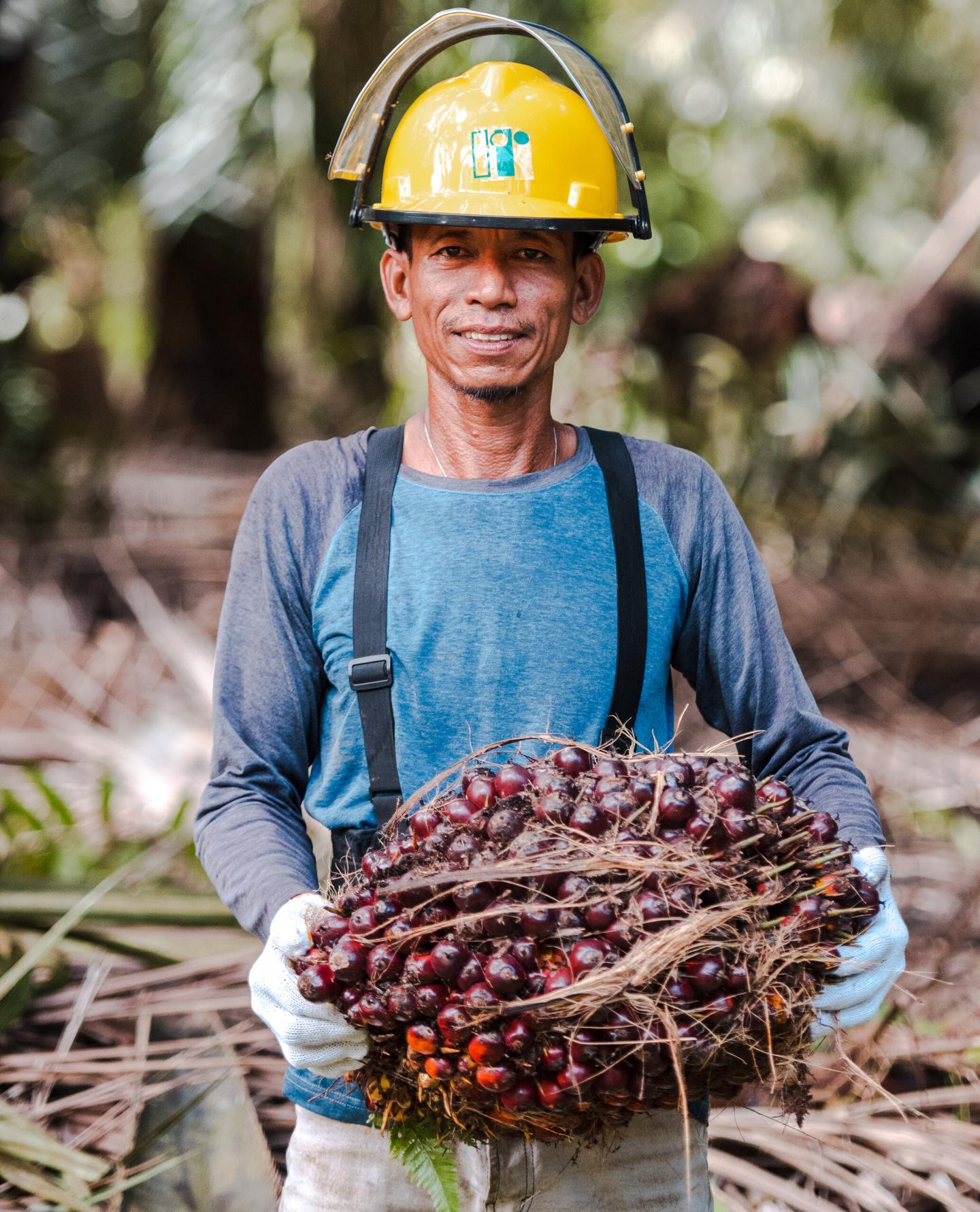
- Sector Skills Councils have been established which have played a leading role in strengthening workforce skills in the tourism sector and expanded to transportation sector.
- A National Apprenticeship Programme has been launched, targeting 250,000 youths. The Tripartite Recommendations on Quality Apprenticeships have been developed, piloted and integrated into the revision of the Ministerial Regulation on Apprenticeship. The Ministry of Manpower, responsible for the apprenticeship, is promoting the recommendations with promotional material developed by the joint programmes.
- Launched the Entrepreneurship Skills Development Fund, which enables micro-entrepreneurs to strengthen both technical and business competencies while improving access to financing and capital for business growth, leveraging co-financing from the Temasek Foundation and implemented in collaboration with UNDP’s Youth Ultra-Micro Entrepreneurs Empowerment Project
Projects
2 projects USD 2,300,000
Project
Financing
Status
Budget
Modern and adaptive social protection and skills development systems for transforming Indonesia
ILO · UNDP · UNICEF
2024–2026
GA
High-impact track · Round 1
Ongoing
USD 1,800,000
UN funding
Closing disability inclusion gaps in social protection and labour across the life cycle in Indonesia
ILO · UNICEF · World Bank
M-GA
M-GA · Round 1
Ongoing
UN: USD 250,000 World Bank: USD 250,000
Partners
- Government Ministry of National Development Planning; Ministry of Villages and Development of Disadvantages Regions; Ministry of Social Affairs; Ministry of Tourism; Ministry of Manpower
- Research and Academia Resilience Development Initiative, LPEM FEB – University Indonesia, The SMERU Research Institute, Southern African Social Policy Research Insights (SASPRI).
- Finance –
- Development partners –
Latest news
ILO