
Data and labour inspection for formalization: Lessons from the exchange between Paraguay and Spain
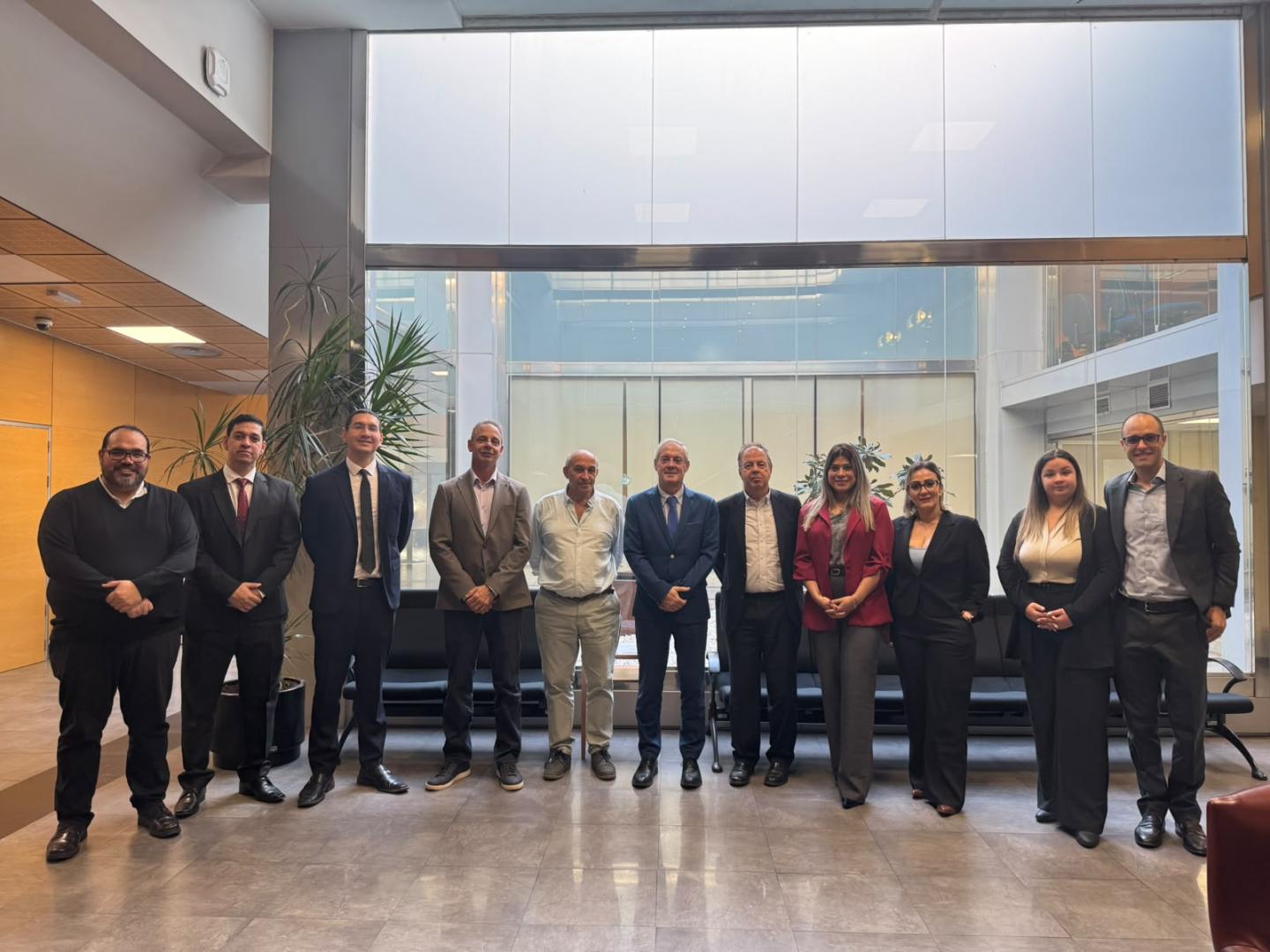
How can labour registries, social security and labour inspection help more people gain access to formal employment and social protection? This question is at the heart of a study visit to Spain by Paraguay’s Ministry of Labour, Employment and Social Security (MTESS), promoted by the International Labour Organization (ILO) and the World Bank within the framework of the M-GA initiative.
The mission brought together in Madrid MTESS specialists from the areas of employer and worker registration, labour inspection and information technology with their counterparts from Spain’s General Treasury of Social Security (TGSS) and State Labour and Social Security Inspectorate (OEITSS). The objective was to learn about experiences that could serve as a reference for strengthening the formalization of employment in Paraguay.
The exchange provided an opportunity to observe how different parts of the public administration can work in a coordinated manner. In Spain, the registration of enterprises and workers, affiliation with social security, the payment of contributions and inspection are all part of a system in which information plays a fundamental role. Data make it possible to detect potential non-compliance and guide inspection activities in order, for example, to promote the timely registration of workers with social security and ensure that the corresponding contributions are paid into the social security institutions.
One of the experiences examined was the RED System, which allows enterprises and professionals to carry out procedures related to registration, affiliation, worker registrations and deregistrations, and contributions electronically and easily. In addition to simplifying procedures, these systems contribute to improving the quality of the information available to the public administration.
The exchange also showed that information from different institutions can make inspectors’ work to promote formalization more efficient and effective. On the basis of a robust regulatory framework and data-sharing infrastructure, Spain uses data from tax agencies, business registries and access to social security benefits to establish analytical rules and identify situations requiring attention. These indications can guide notifications that first promote voluntary formalization with the social security system and then concentrate inspection resources on cases requiring further investigation.
This experience offers an important lesson: formalization is the result of a set of institutions working in a coordinated manner.
This experience offers an important lesson: formalization is the result of a set of institutions working in a coordinated manner. Effectively promoting formalization through labour inspection requires reliable registries, simple procedures for complying with obligations, secure information exchange, and an inspection system with the capacity both to identify risks and to verify actual working conditions in the field.
For the Paraguayan delegation, the visit provided an opportunity to identify potential areas for immediate action by adopting tools and practices that can be adapted to the country’s institutional context. Among the issues emerging from the exchange were improvements to the Employer and Worker Registry, greater interoperability between the MTESS and the Social Security Institute (IPS), the use of information to better target labour inspection, and the modernization of management systems.
The visit took place within the framework of M-GA, an initiative implemented in Paraguay by the International Labour Organization (ILO), the United Nations Development Programme (UNDP) and the World Bank, with support from the Joint SDG Fund and the World Bank’s Social Protection and Jobs Compass, in the context of the Global Accelerator on Jobs and Social Protection for Just Transitions.
The exchange between Paraguay and Spain demonstrates the value of technical cooperation and cross-country learning: the aim is not to replicate models, but rather to learn from concrete experiences, identify what works and analyse how those lessons can be adapted to each country’s institutional context.
When labour registries, social security and labour inspection work in a coordinated manner, the chances increase that more workers will gain access to formal employment, exercise their rights and benefit from social protection.
This blog was first published on the ILO.