From harvest to hope: How the Global Accelerator is transforming Eda Benson’s life in Malawi
With improved farming practices, increased productivity and a growing tailoring business, a 33-year-old farmer in Dowa East is turning her vision for a better future into reality.
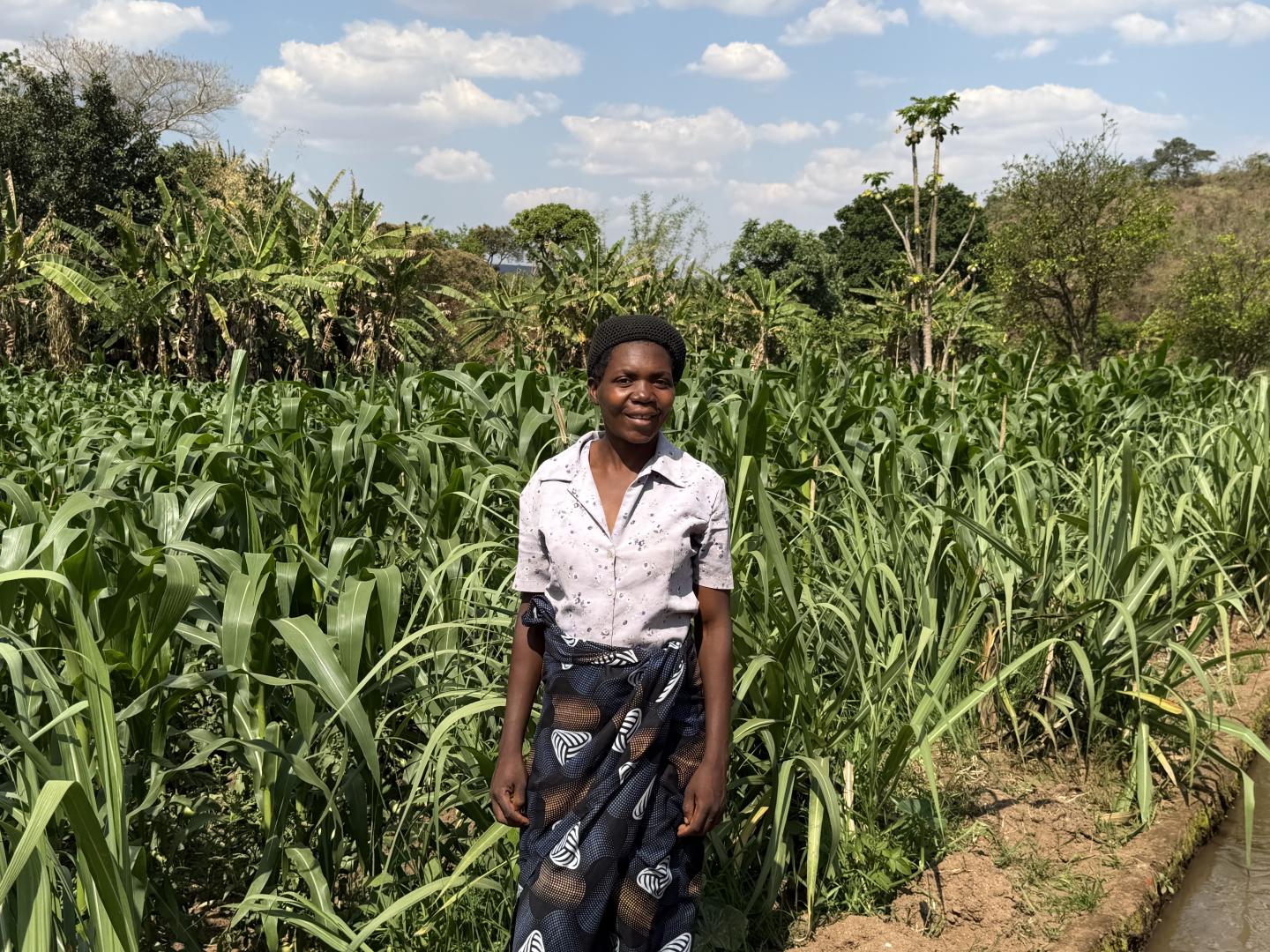
Malawi - At 33, Eda Benson is building more than a successful farming enterprise. As a divorced mother raising her six-year-old daughter, she is steadily creating a future defined by greater economic independence, improved living conditions and new opportunities for her family. For Eda, the journey began with a vision and the knowledge and support to turn that vision into action.
A member of Katengo Irrigation Scheme in Dowa East District, Malawi, Eda cultivates tomatoes, sugar beans and maize on two plots of land measuring two acres and half an acre, respectively. Like many smallholder farmers, she relies on agriculture to support her household and secure her daughter’s future. Before receiving support through the Global Accelerator High Impact Track (HIT) Joint Programme, however, her farming productivity and the income it generated limited what she could achieve.
She mainly sold her produce to middlemen at Dzareka Trading Centre, with whom she had established supply agreements. Although these arrangements provided a market for her crops, increasing productivity and earning sufficient income to meet household needs and invest in her aspirations remained important priorities.
From farming experience to a vision for change
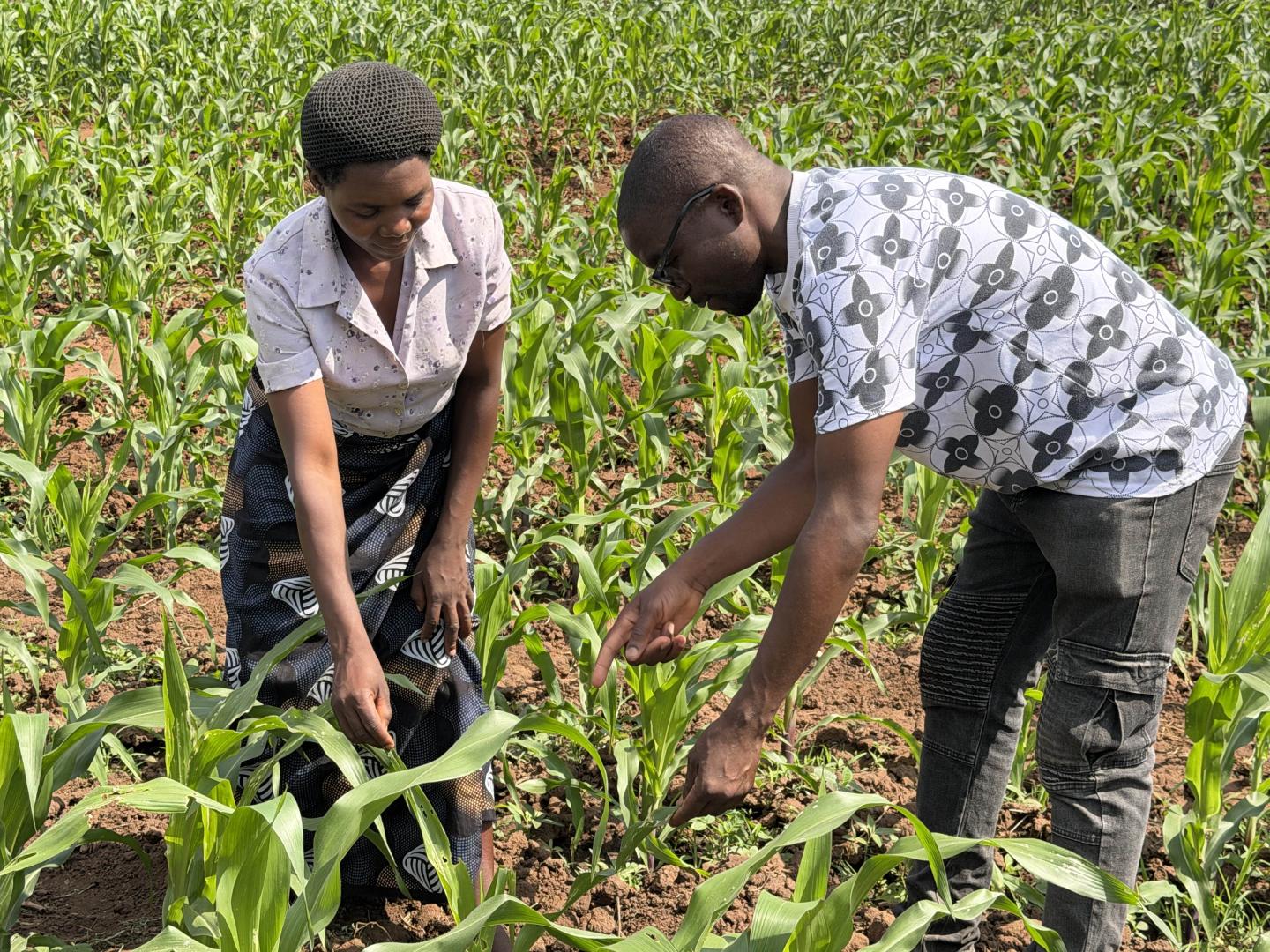
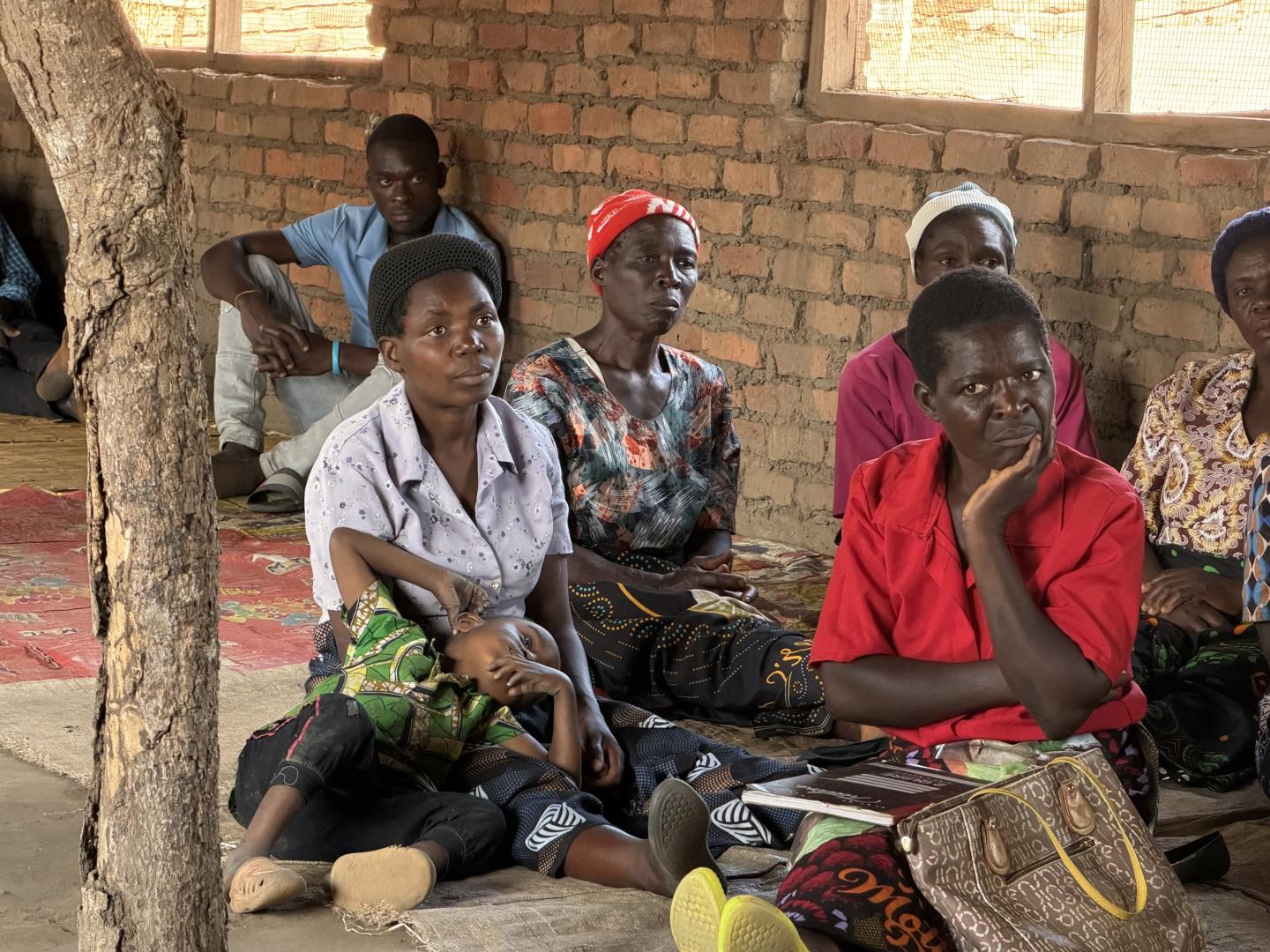
Eda’s turning point came through the Global Accelerator HIT Joint Programme, which supports employment creation and social protection through integrated agricultural value chain development. Through the programme, she received agricultural extension support and training from the District Agriculture Extension Department in Good Farming Practices, the Household Approach, the Smallholder Horticulture Empowerment and Promotion (SHEP) Approach, and Climate-Smart Agriculture.
The training equipped Eda with practical knowledge to improve her farming practices, make more informed decisions and plan for her household’s future. Importantly, it encouraged her to look beyond the immediate farming season and develop a longer-term vision for herself and her family.
“After the training, I was able to set my three-year vision, which included improving productivity, constructing a house roofed with metal sheets, enrolling in a tailoring course and buying a sewing machine,” she narrated.
For Eda, the vision was not simply about producing more crops. It was about using agriculture as a pathway to financial security, better housing and the development of skills that could generate income beyond the farming season.
A harvest that changed the numbers
The results of Eda’s efforts became evident during the 2025-2026 farming season, when her agricultural productivity increased substantially.
During the 2024/2025 farming season, she harvested five 50-kilogram bags of maize and 15 kilograms of sugar beans. Following the extension support and training, her harvest rose to 20 bags of maize, each weighing 50 kilograms, and 50 kilograms of sugar beans in the 2025/2026 season.
This represented a fourfold increase in maize production, from 250 kilograms to one tonne, while her sugar bean harvest more than tripled.
The increased production translated into tangible economic gains. Eda earned MK1,350,000, approximately USD 770, from her farming activities. Rather than using the income solely for immediate consumption, she channelled it into investments intended to improve both her agricultural productivity and her household’s long-term well-being.
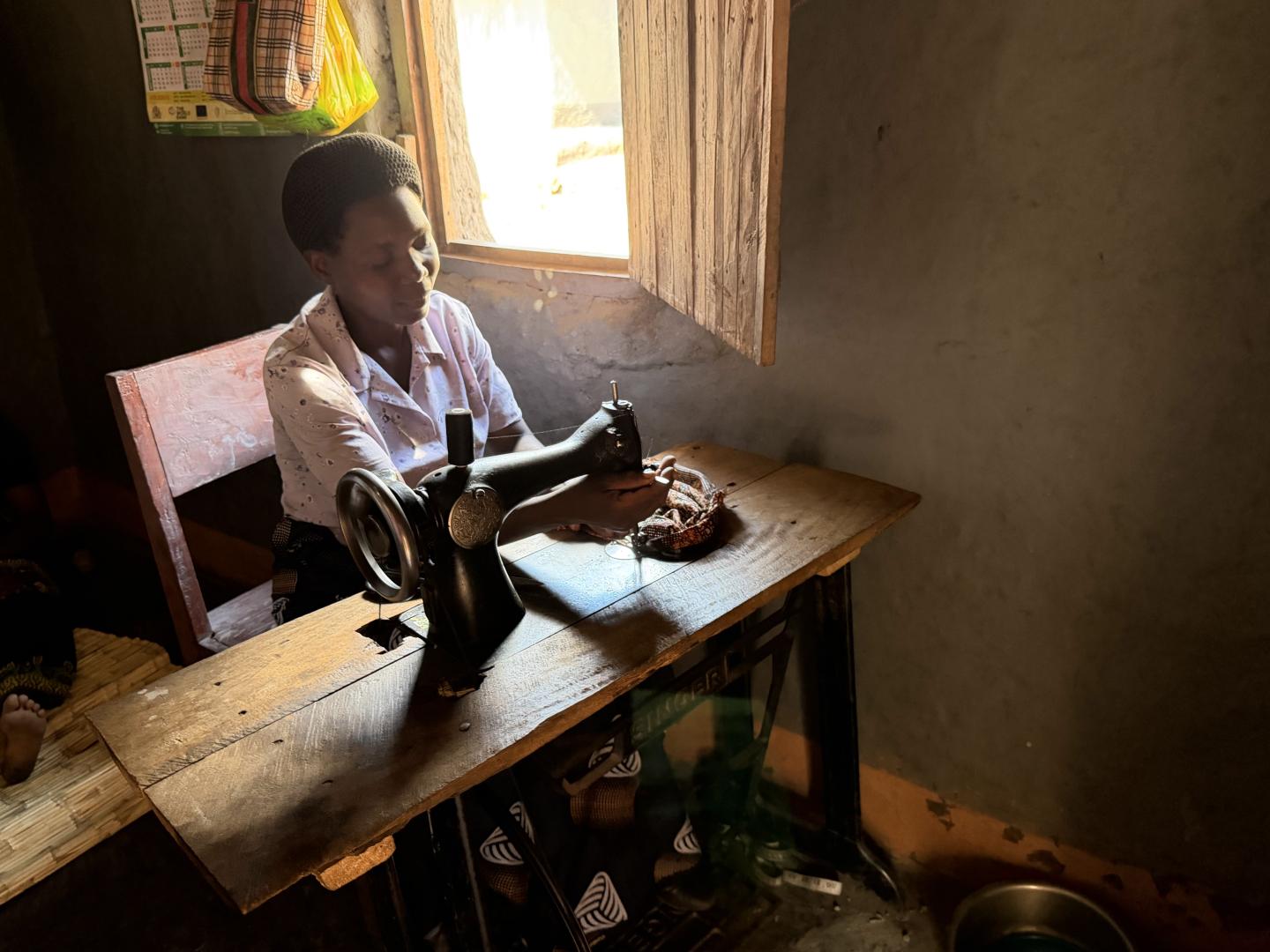
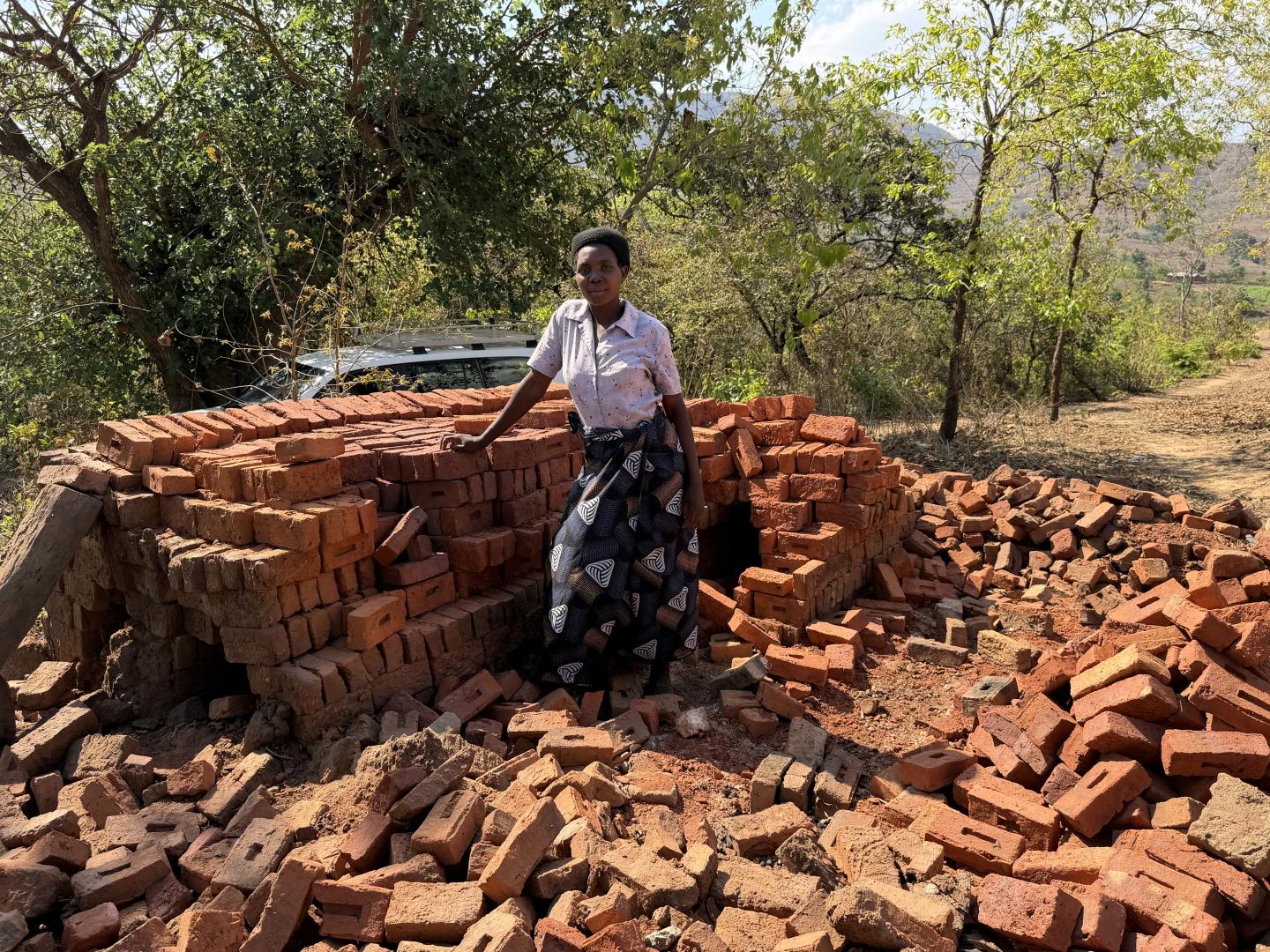
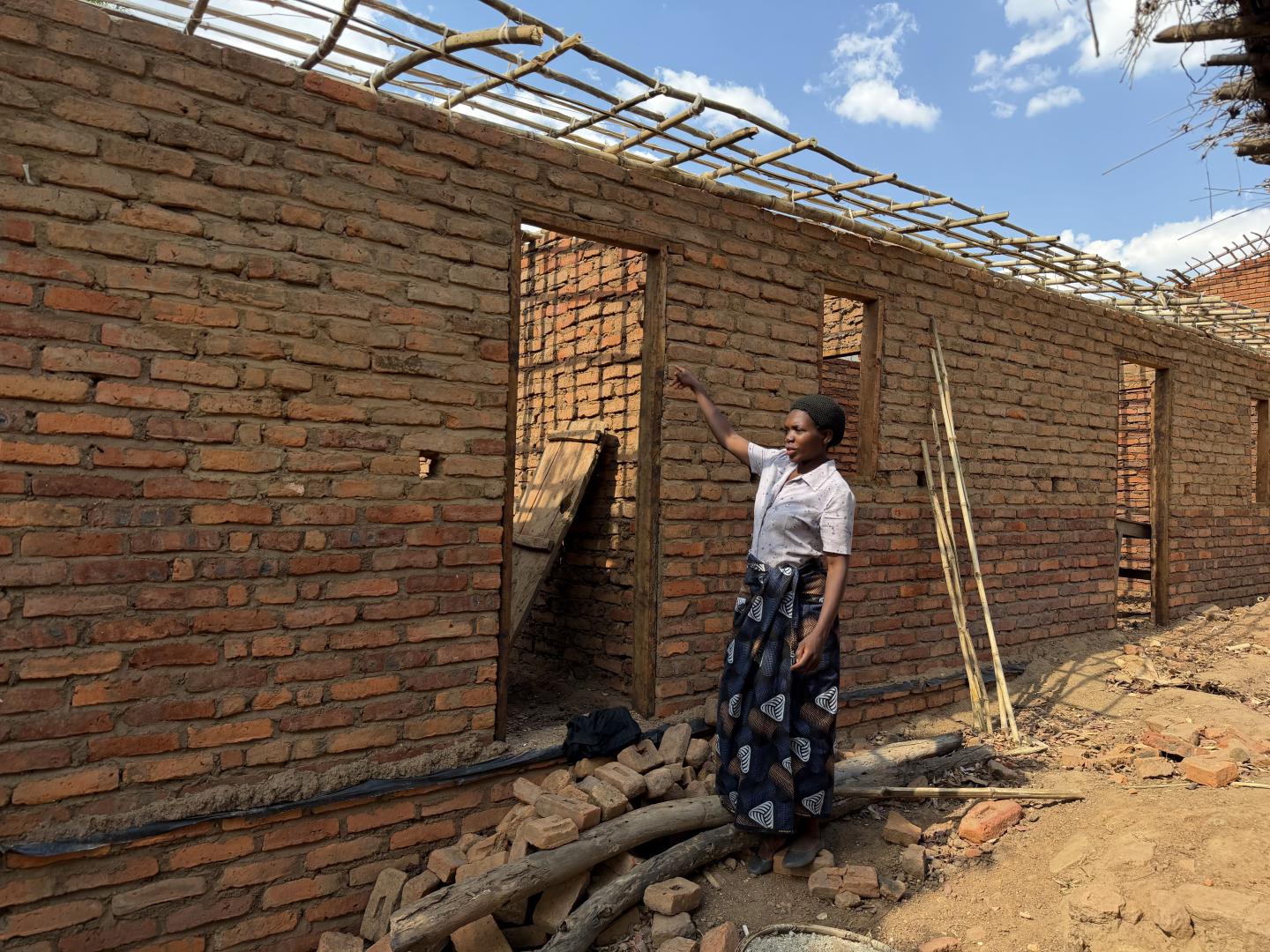
She purchased fertilizer to prepare Mbeya, a locally used soil fertility mix combining inorganic fertilizer, organic matter and manure. She also began moulding bricks and constructing a bigger house, while investing in a sewing machine and enrolling in a tailoring course.
Each investment represents another step towards the future she envisioned during her training: a more productive farm, a better home and an additional source of income.
Beyond the farm: Building a second source of income
For Eda, the benefits of improved agricultural productivity extend beyond the fields. Her investment in tailoring is helping her diversify her livelihood and reduce her dependence on farming alone.
Although she has not yet completed her tailoring course, she has already begun earning money from occasional tailoring jobs. This additional income provides an important opportunity to supplement her farm earnings while she continues to develop her skills.
“I am a testimony to the impact of support provided through the Agriculture Extension System. With the increased income from farming, I have been able to cater for household needs, send my child to school and action my three-year vision,” Eda said.
She added: “I am still perfecting my tailoring skills since I have not completed my training, but I am still able to make some money doing some odd tailoring jobs.”
Her experience illustrates how investments in agricultural extension can generate benefits that extend beyond crop production. When farmers are equipped with practical knowledge and encouraged to plan for their households, increased agricultural income can support education, housing improvements, skills development and enterprise creation.
For Eda, farming and tailoring are becoming complementary livelihood activities. Agriculture provides the foundation for investment, while tailoring offers the prospect of additional earnings and a more diversified household economy.
A stronger household, one aspiration at a time
Eda is part of the Katengo Irrigation Scheme, which has 109 members (66 women and 43 men). Her experience demonstrates the potential of targeted agricultural extension support to help smallholder farmers translate improved practices into higher productivity and more secure livelihoods.
Her progress also highlights the importance of approaches that consider the household as a whole. By combining Good Farming Practices, Climate-Smart Agriculture, the Household Approach and the SHEP Approach, the programme helped Eda connect decisions about farming with her broader economic and family aspirations.
Eda’s story reflects the wider ambition of the Global Accelerator on Jobs and Social Protection for Just Transitions: to advance inclusive economic opportunities by strengthening the links between productive sectors, decent work and social protection. Through the High Impact Track Joint Programme in Malawi, support to agricultural livelihoods is helping participants explore how greater productivity and market-oriented production can contribute to employment creation, income generation and household resilience.
Eda’s progress also shows why the sustainability of these interventions matters. Continued access to extension services, appropriate agricultural inputs, reliable markets and opportunities to develop complementary skills can help farmers build on their gains and sustain their progress over time.
Looking ahead with renewed hope
As Eda tends her current maize and tomato crops, she is looking towards the next harvest with optimism. Her immediate priorities are to complete her tailoring course and finish roofing her new house with metal sheets, two goals that would bring her closer to fulfilling the vision she established after the programme’s training.
Her journey is still unfolding. The house is yet to be completed, and her tailoring training remains unfinished. But the difference between where she began and where she stands today is already evident, higher agricultural productivity, increased earnings, investments in productive assets, a developing alternative livelihood and tangible progress towards her personal goals.