Malawi
Malawi is using the Global Accelerator to promote inclusive economic growth by accelerating job creation in key sectors, reducing informality in the labour market through the enhancement of skills development and social protection coverage, and improving the adequacy of benefits through a reform of the existing social protection system
Key figures
Implementing agencies
- ILO
- UN Women
- World Bank
The Global Accelerator uses ILOSTAT and UN data to provide internationally comparable data across the countries engaged, which is based on government data.
Roadmap
Roadmap
Roadmap in implementation. Endorsed in December 2024.
Governance
- Ministry of Labour, Skills and Innovation
- the Ministry of Finance, Economic Planning and Decentralization
Priorities
Increasing agricultural productivity and commercialization
Industrializing the mining sector
Fostering the tourism industry
Strengthening the quality and adequacy of social protection system
Global Accelerator and M-GA highlights
- A legal review of the Workers’ Compensation Act of 2000 has been supported to reform the country’s existing employer liability and workers’ compensation system. Once enacted, the Act will extend legal coverage to 4.27 million workers, improving working conditions, expanding social protection coverage, and enhancing occupational safety and health standards.
- A phased rollout of the workers compensation social insurance scheme is also being supported, which will improve working conditions, occupational safety and health and productivity.
- A nationally owned Labour Market Information System (LMIS) that will transform labour market data into timely, accessible and actionable intelligence for policy and decision-making is being established. In conjunction, the government is institutionalizing Employment-Impact Assessments in public investment, both of which will are foundational to evidence-based policymaking.
- Developed two harmonized curricula for the horticulture and dairy sectors, to further skills development and job creation along the entire agricultural value chain.
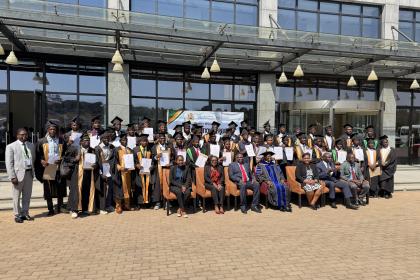
- The national Recognition of Prior Learning system was operationalized, building government capacity with 105 RPL assessors and the first 505 graduates of the RPL programme had their skills and competencies formally recognized, strengthening their employment credibility and creating future training, employment, business and career progression opportunities.
- The Agriculture Extension System (AES) has been strengthened with climate-smart, market-oriented, and gender-transformative approaches. These innovations have been institutionalized and delivered through existing government systems, which has strengthened government ownership and created a sustainable platform for nationwide scale-up. The trained extension officers have supported an additional 34,888 farmers.
- The Agriculture Extension System supported cooperatives and farmer organizations have generated more than MWK 1 billion (USD 576,00) in agricultural sales, creating 12,120 jobs, and realizing a 60% improvement in productivity.
- The revision of the National Action Plan for Women Economic Empowerment was supported which is actively used by government entities to guide implementation in District Development Plans.
- Supported evidence-generation on linkages and referrals between social protection and agrifood systems and developed a short course to strengthen capacities among government and other practitioners on this linkage. This is to promote national ownership and institutionalization of evidencebased approaches.
- Promoted youth employment along the aquaculture value chain by supporting the Wamaka Youth for Development Cooperative, which seeks to increase fish production for a youth led aquaculture cooperative in Nkhata Bay from 3,600 kg/year to 12,800 kg/year by 2026.
- Employers Consultative Association of Malawi (ECAM)-brokered apprenticeships at 20 agribusinesses benefited 200 youth.
- Reached out to 1,200 female entrepreneurs, to increase access to finance and financial services, for growing agricultural enterprises, and creating jobs in a sustainable manner and at scale. This resulted in the creation of gender-responsive clinics for small and medium-sized enterprises and tailored financial products being offered by NBS Bank.
- Cooperatives capacitated under the programme have also benefited from national agriculture financing instruments such as Agriculture Commercialisation (AGCOM), reflecting linkages between strengthened institutions and existing government financing mechanisms.
Projects
2 projects USD 2,600,000
Project
Financing
Status
Budget
Accelerating sustainable financing for employment creation and social protection programmes in the agriculture sector
ILO · UN Women · World Bank
2025–2027
M-GA
M-GA Pathfinder · Round 2
Ongoing
UN: USD 530,000 World Bank: USD 270,000
Accelerating employment creation and social protection through integrated agriculture value chain development
ILO · UN Women
2024–2026
GA
High-impact track · Round 1
Ongoing
USD 1,800,000
UN funding
Partners
- Government Ministry of Labour; the Ministry of Finance, Economic Planning and Decentralization; Ministry of Labour, Skills and Innovation; Ministry of Agriculture, Irrigation and Water Development; Ministry of Gender, Children, Disability and Social Welfare; Ministry of Industrialization, Business, Trade and Tourism
- Research and Academia Lilongwe University of Agriculture and Natural Resources
- Finance IFAD, World Bank, NBS Bank, Standard Bank
- Development partners Ireland, Norway, Germany, Korea Republic, China, Iceland and the European Union
Latest news
ILO