
Malawi strengthens national ownership to sustain Global Accelerator gains on jobs and social protection
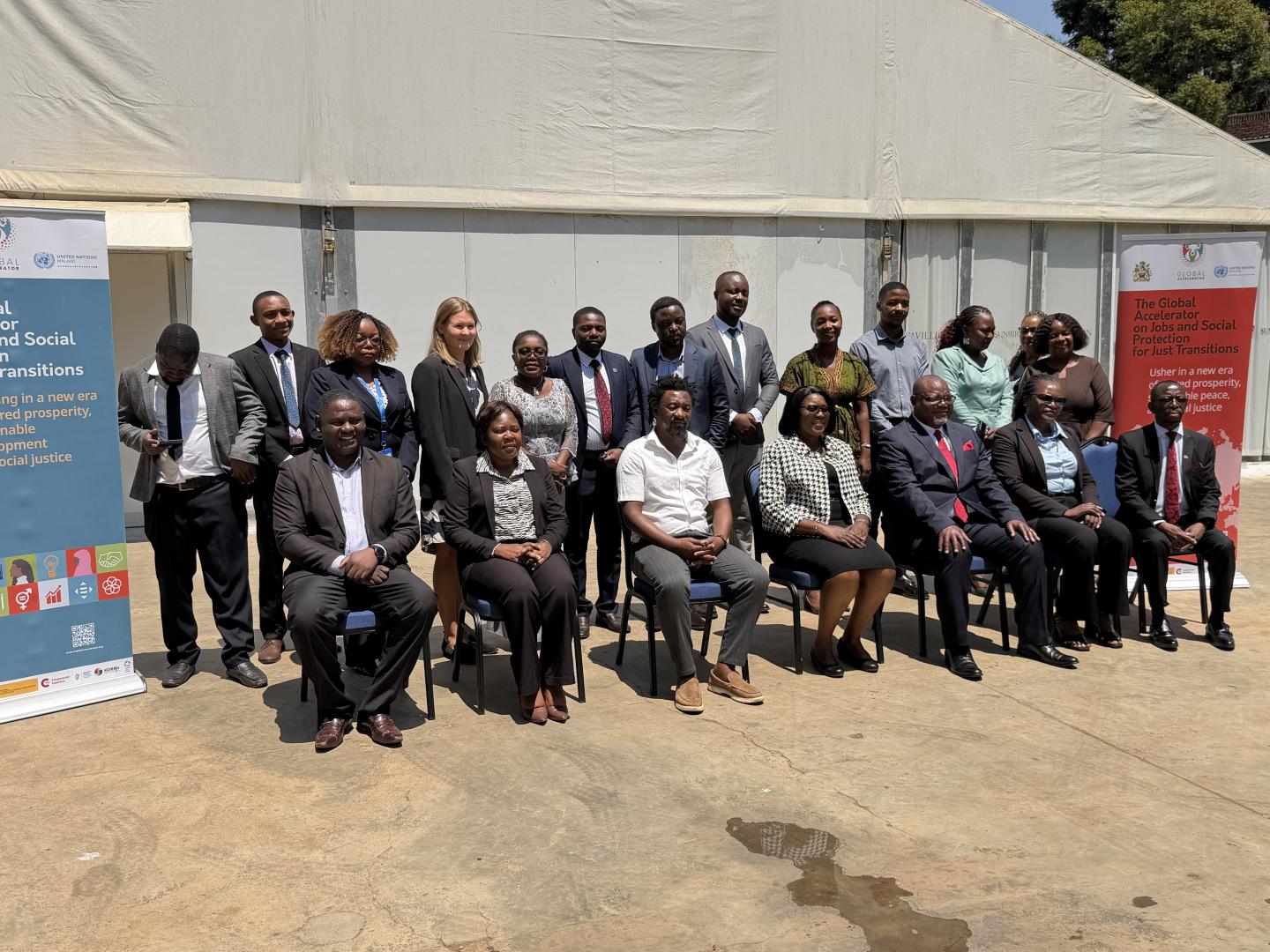
Lilongwe, Malawi — The Government of Malawi has reaffirmed its commitment to institutionalising the gains of the Global Accelerator on Jobs and Social Protection for Just Transitions, signalling a decisive shift from project implementation to nationally led systems that will continue delivering jobs, skills and social protection long after the programme's first phase concludes.
The commitment was reinforced during the Second National Steering Committee Meeting of the Global Accelerator National Roadmap, co-chaired by Ms Nwazi Mnthambala, Secretary for Labour, Skills and Innovation, and Ms Kate Langwe, Director of Poverty Reduction and Social Protection, Ministry of Finance, on behalf of the Secretary to the Treasury, with participation from Mr Francis Zhuwawo, Secretary for Youth, Mr Jean Munyenyembe, Secretary for Tourism, senior officials from the Ministry of Finance, representatives of ILO, FAO, UN Women, employers, workers' organisations and other government institutions.
The meeting reviewed progress under Malawi's Global Accelerator National Roadmap, endorsed the Joint Programme progress report and agreed concrete actions to embed successful interventions into government systems, budgets and institutional mandates.
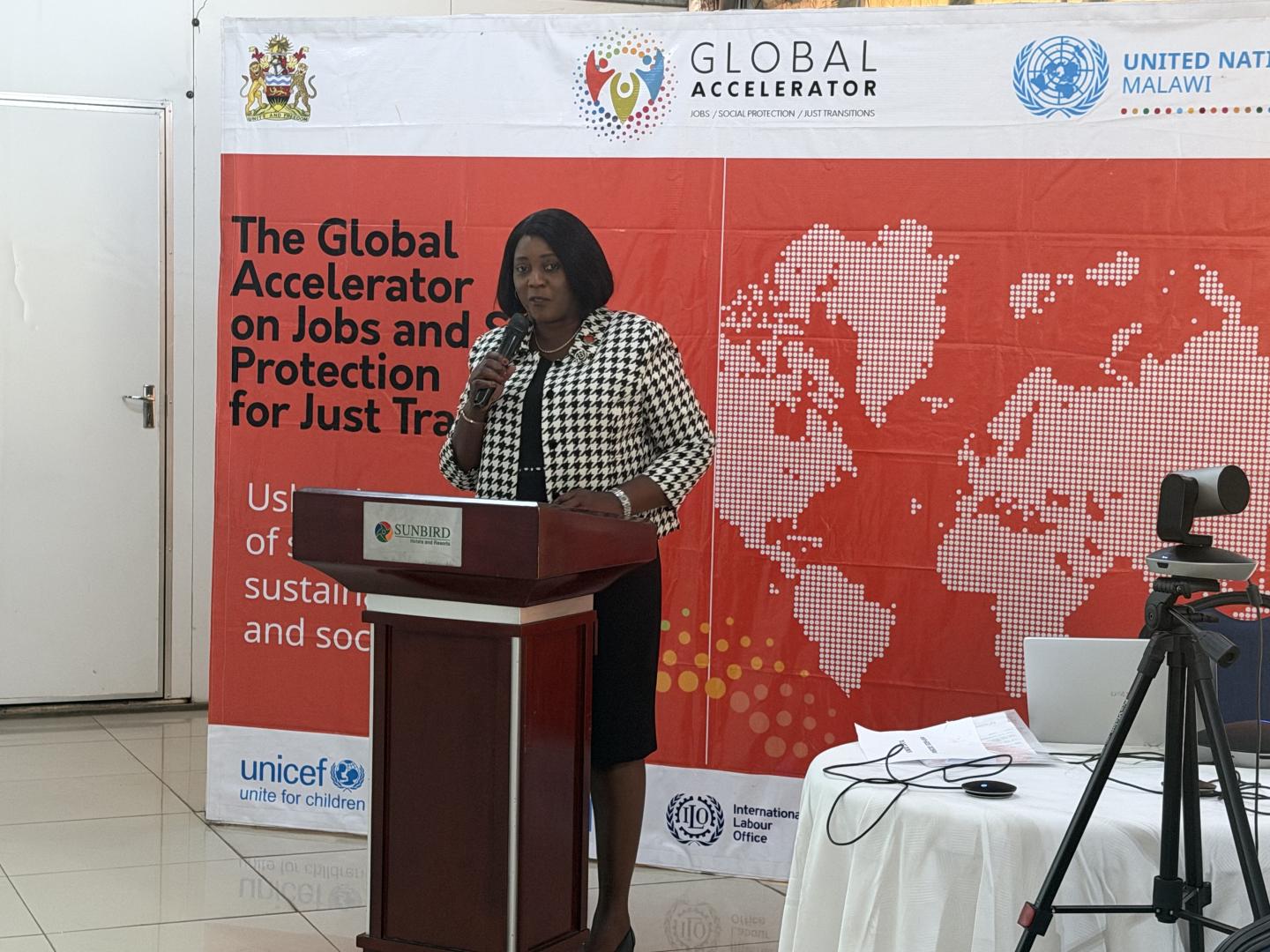
Government leads the transition to national ownership
As Malawi approaches the completion of the first High Impact Track Joint Programme, Government leaders made it clear that the country's priority is no longer simply implementing activities but ensuring that successful interventions become permanent national systems.
"Our focus must increasingly shift towards sustainability, institutionalisation and national ownership," said Ms Nwazi Mnthambala, Secretary for Labour, Skills and Innovation.
She stressed that the programme's achievements should not remain dependent on temporary project structures or external financing but should instead become part of Government policies, programmes and implementation systems.
The Steering Committee committed to:
- reinforce successful interventions integrated into government policies and institutional mandates;
- incorporating funding for priority interventions into ministerial budgets;
- strengthening coordination across ministries to scale proven approaches;
- accelerating reforms that strengthen workers' rights and occupational safety; and
- improving accountability through stronger monitoring and measurable targets.
These commitments reinforce Malawi's position as one of the Global Accelerator's Pathfinder Countries, demonstrating Government leadership in aligning global commitments with national development priorities.
Tangible results across jobs, skills and social protection
Since Malawi joined the Global Accelerator initiative in 2022, the programme has delivered results across employment creation, skills development, social protection and agricultural transformation.
Speaking virtually, Mr Wellington Chibebe, ILO Country Director for Zambia and Malawi, highlighted achievements that demonstrate the programme's growing national impact.
"Following two years of implementation, sustainability and scalability of successful interventions beyond the programme's closure remain key challenges," he said. "Government must continue leading these successful interventions, with the United Nations remaining a committed partner."
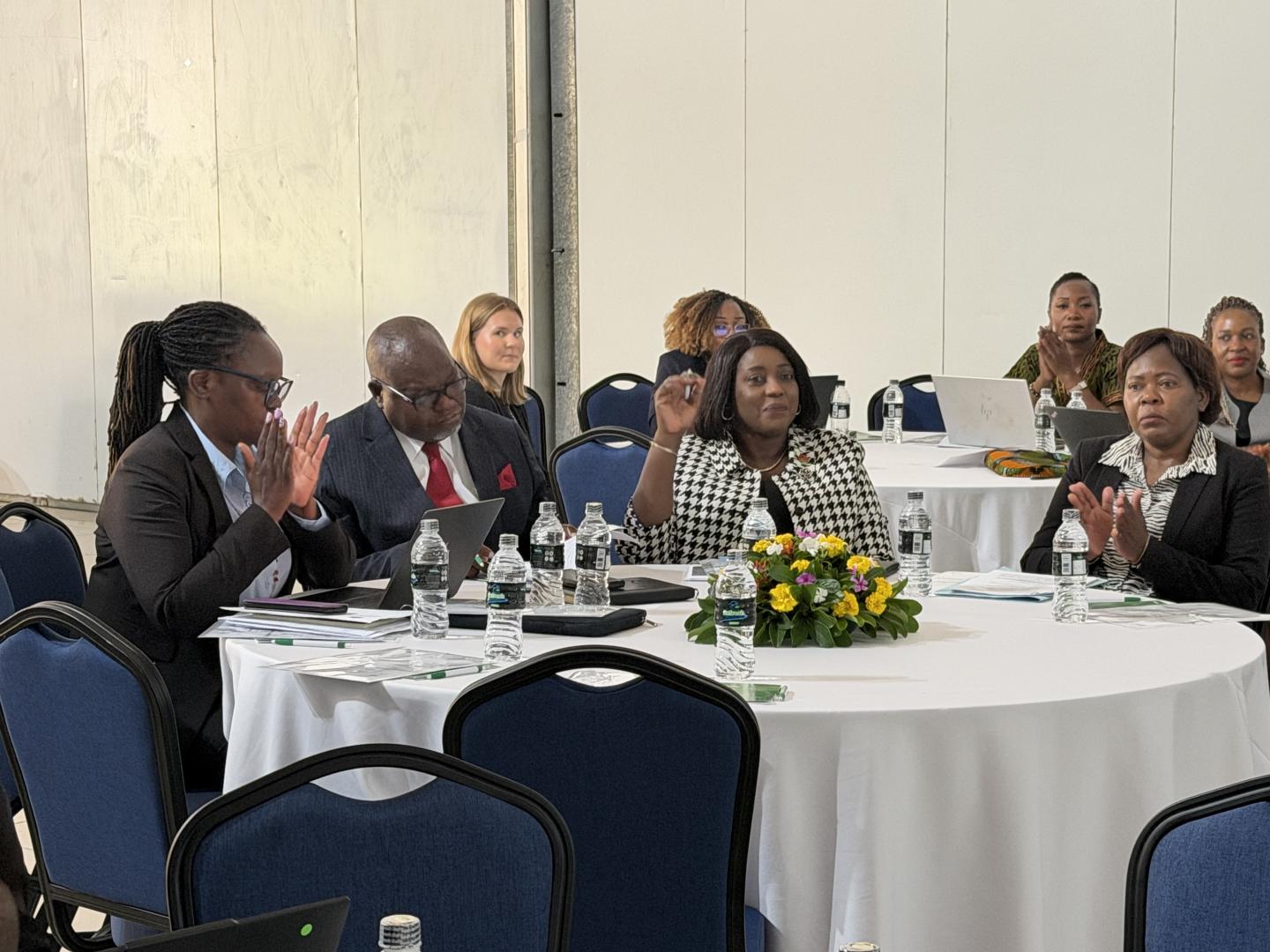
From pilot projects to national systems
A recurring theme throughout the discussions was how successful interventions can move from project-based implementation to nationwide adoption. The Steering Committee agreed that ministries should identify interventions suitable for scaling up and integrate them into future Government budgets.
Ms Kate Langwe, Director of Poverty Reduction and Social Protection, Ministry of Finance, representing on behalf of the Secretary to the Treasury, emphasised that implementation must now be matched by sustained action.
"We must respect the timelines agreed for implementing the responsibilities and action points from this meeting," she said.
She also called for stronger collaboration with the private sector and continued cooperation between Government and the United Nations to sustain the programme's achievements. The Committee further recommended presenting priority financing needs to the Ministry of Finance to support continued implementation beyond the programme's first phase.
Strengthening the private sector's role
The meeting also underscored the central role of employers in sustaining job creation. Mr George Khaki, Employers' Consultative Association of Malawi (ECAM) Executive Director welcomed the programme's progress while calling for greater attention to institutional capacity and labour market reforms.
"National ownership should extend beyond the continuation of activities to include the transfer of technical expertise and the strengthening of institutional mandates," he said.
Expanding opportunities across sectors
The discussions recognised that while agriculture has served as the initial entry point for implementation, future interventions should broaden opportunities across tourism, mining and other productive sectors.
Mr Jean Munyenyembe, Secretary for Tourism emphasised the importance of ensuring tourism receives greater attention in future programming, while Government and UN partners agreed to strengthen coordination in developing interventions for additional priority sectors.
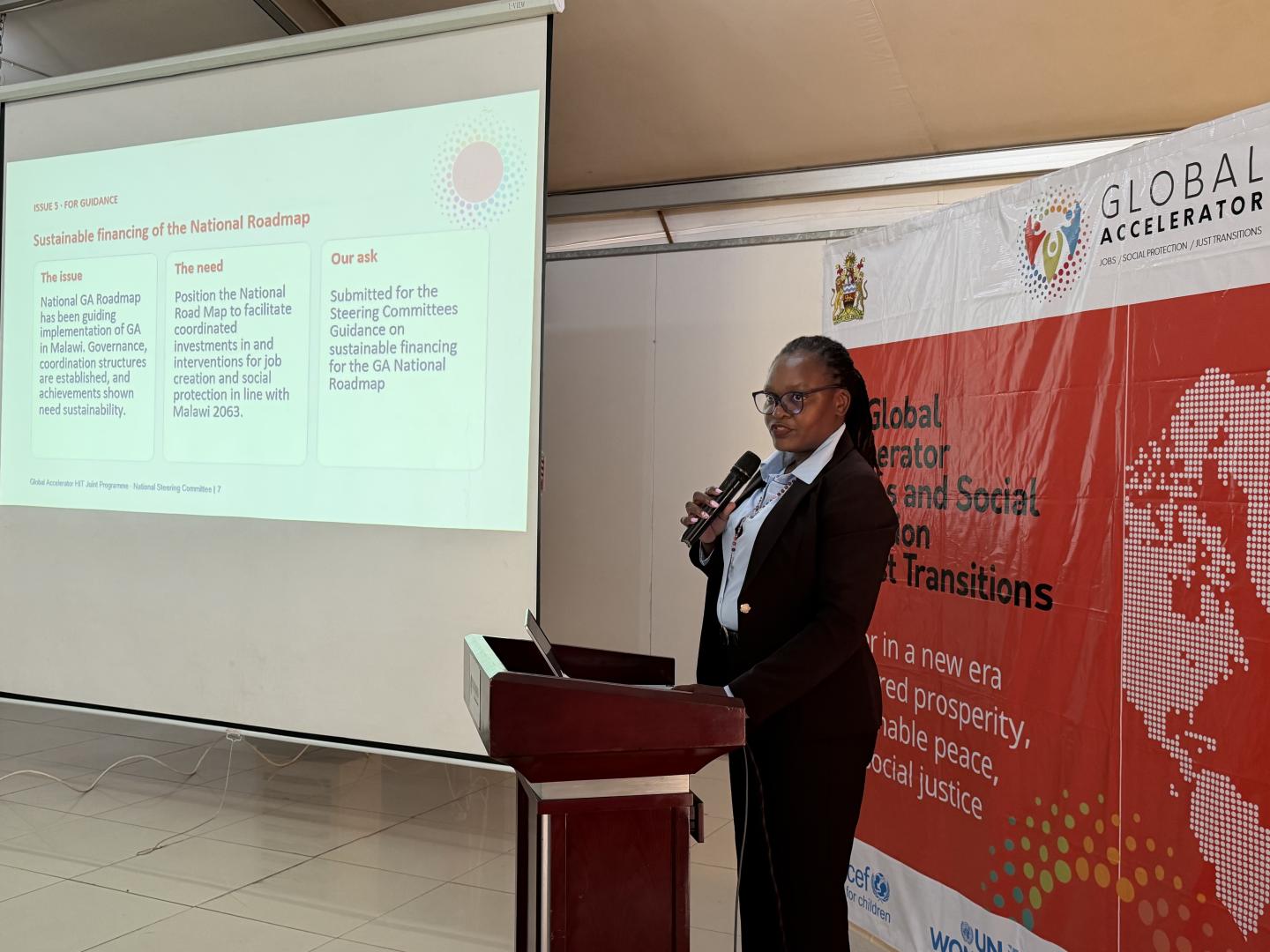
A shared commitment to Malawi 2063
The meeting concluded with a renewed commitment to ensuring that the Global Accelerator's achievements contribute directly to the ambitions of Malawi 2063.
The National Steering Committee agreed to strengthen resource mobilisation and improve results-based monitoring as the programme transitions towards greater government ownership.
For Malawi, the message emerging from the Steering Committee was unequivocal: the Global Accelerator's greatest legacy will not be measured solely by the projects it delivered, but by the national systems, institutions and partnerships that continue creating decent jobs and expanding social protection for years to come.