Uzbekistan
The Global Accelerator roadmap in Uzbekistan aims to promote formalization through an enabling business environment, expand social protection coverage to 300,000 individuals, and improve services for 720,000 low-income persons.
Key figures
Implementing agencies
- ILO
- UNDP
- UNICEF
- UN Women
- World Bank
The Global Accelerator uses ILOSTAT and UN data to provide internationally comparable data across the countries engaged, which is based on government data. To view the data from the government, click here.
Roadmap
Roadmap
Roadmap in implementation
Endorsed in June 2025
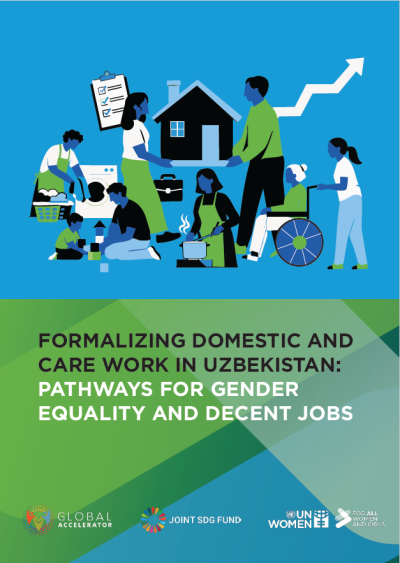
Read the roadmap
Governance
- Ministry of Economy and Finance
- National Agency for Social Protection
- Ministry of Employment and Poverty Reduction
- Federation of Trade Unions of Uzbekistan
- Confederation of Employers of Uzbekistan
- Resident Coordinator’s Office
- Development partners
Priorities
Global Accelerator and M-GA highlights
- The new Social Insurance Law was approved in December 2025, with the new maternity benefits launched in January 2026 and cash sickness benefits in July 2026.
- An entrepreneurship programme reaching around 10,000 women was implemented together with the Ministry of Employment and Poverty Reduction (MEPR).
- An academic course on actuarial modelling is being introduced in the 2026-27 academic year to equip students with actuarial skills when entering the labour market and also for the development of skills of national institutions through direct participation of staff and internship offers. The course will be implemented by the National University of Uzbekistan.
- Public employment services and the Ministry of Employment and Poverty Reduction have adopted standardized tools for entrepreneurship training, enabling transparent and scalable support to women and informal workers.
- A national assessment on care cooperatives and SSEs identified opportunities and needs for developing care cooperatives in Uzbekistan, informing the adaptation of ILO’s Think.Care Coop and Start.Care Coop tools to the national context. NASP, the Ministry of Employment and Poverty Reduction, FTUU, and NGOs in the care sector have strengthened their capacity to support inclusive, gender-responsive, sustainable, and community-based care services through cooperatives.
- The Business Development Bank has integrated non-financial advisory services into its operations, improving the productivity and formalization outcomes of financed enterprises.
- The country’s first systemic mapping of barriers preventing women, youth, people with disabilities, families with children, from accessing social protection has been done, and it will directly shape two forthcoming reforms: targeted fixes that help close the remaining access gaps, and an investment case for progressively universal child benefits.
- The collection and analysis of updated and reliable social protection data covering all schemes and benefits to support evidence-based policy making, national debate, and monitoring of progress in extending social protection coverage in the country is being finalized.
- Research on drivers of informality in the catering sector fed directly into Presidential Resolution No. 246 (December 2025), while the E-Contract digital platform and joint outreach campaigns have already reached over 100,000 people with accessible information on formalization and quick and easy e-contracting tools.
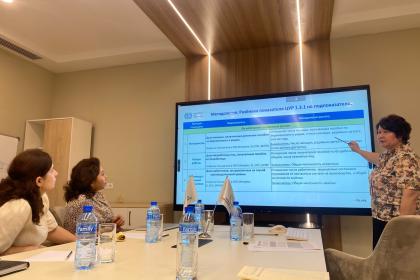
- Employment counsellors were trained to support jobseekers by applying ILO's interactive training tools in four regions. Training tools have been improved to reflect local contexts and a trainer of the MoEPR was trained to continue employment counsellor training.
- A short-term solution to the gaps in work-injury insurance coverage in the construction sector was agreed by tripartite constituents. Following the examples of Japan and Indonesia, Uzbekistan explores the establishment of a similar construction-site-based insurance.
Projects
3 projects USD 3,075,000
Project
Financing
Status
Funding
Pension and social insurance reform implementation and institutional strengthening
ILO · UNICEF · World Bank
2025–2027
M-GA
Pathfinder track · Round 2
Ongoing
UN: USD 500,000 World Bank: USD 275,000
Accelerating decent jobs and social protection for a just transition to formality in Uzbekistan
ILO · UNDP · UNICEF · UN Women
2025–2027
GA
High-impact track · Round 1
Ongoing
UN: USD 1,800,000
Improving social security of vulnerable populations
ILO · UNICEF · World Bank
2024–2026
M-GA
M-GA · Round 1
Ongoing
UN: USD 250,000 World Bank: USD 250,000
Partners
- Government Ministry of Economy and Finance; National Agency for Social Protection; Ministry of Employment and Poverty Reduction
- Research and Academia –
- Finance –
- Development partners –
Latest news
Read more news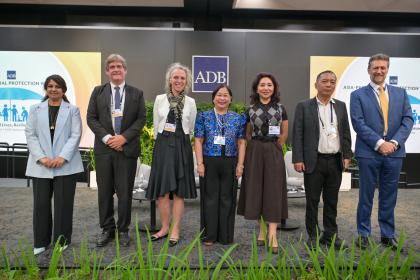
News
Asian Development Bank and United Nations join forces at Asia Pacific Social Protection Week to advance the Global Accelerator
09 October 2026
News
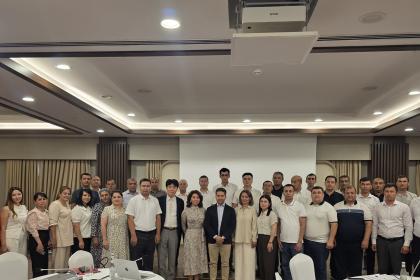
Countries affirm Global Accelerator as a key platform for advancing social justice at Global Coalition's Annual Forum
22 September 2026
ILO
News
Uzbekistan strengthens employment counselling with Global Accelerator
22 June 2026
ILO
News