
Government, workers and employers chart the path to Namibia's National Pension Fund
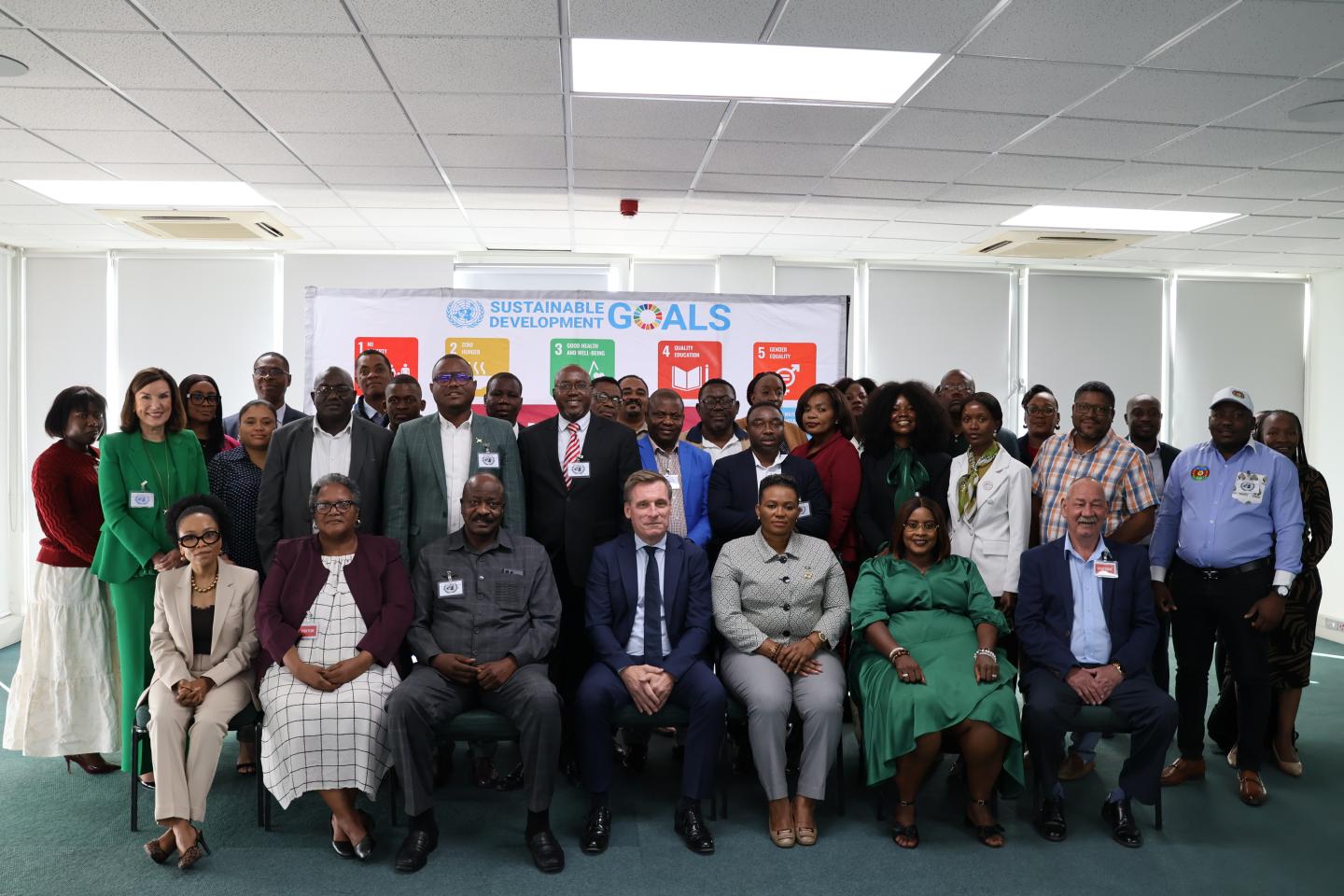
Windhoek, Namibia – Government, workers' and employers' organisations and the Social Security Commission (SSC) met in Windhoek on 15 September 2026 to build a shared understanding of the proposed National Pension Fund (NPF) and agree on what it will take to bring it into operation.
The tripartite consultations were facilitated by the International Labour Organization (ILO) through its Bureau for Workers’ Activities (ACTRAV) and the ILO Country Office for Zimbabwe and Namibia, at the request of Namibia’s workers’ organisations. They formed part of a three-day ACTRAV technical support mission on pension reform, held from 14 to 16 September 2026 under the United Nations Global Accelerator on Jobs and Social Protection for Just Transitions.
Beyond the consultations, the mission engaged with key stakeholders in social protection, finance and labour. This included a meeting with the Ministry of Justice and Labour Relations on Namibia’s ongoing pension reform process, covering developments relating to the National Pension Fund (NPF) and the National Medical Benefit Fund (NMBF). Discussions emphasised the importance of an inclusive, informed and rights-based approach to social protection reform, with a focus on stakeholder participation, social dialogue and the role of workers’ organisations in shaping the reform.
The Social Security Act of 1994 provides for a National Pension Fund to ensure income security in old age, but the Fund has not yet been operationalised. In January 2026, Government directed the SSC to implement the NPF and the National Medical Benefit Fund within an accelerated timeframe.
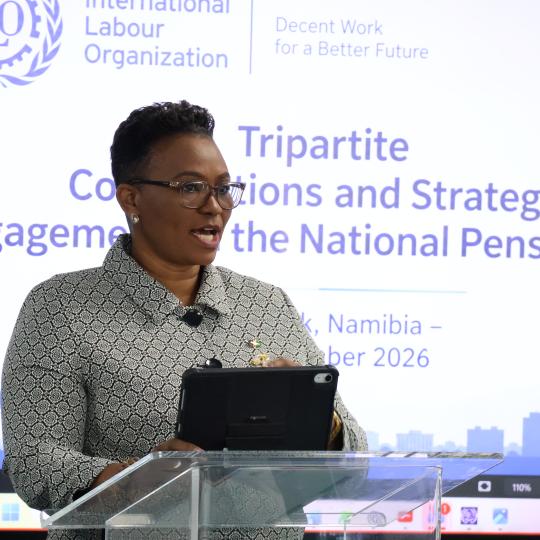
"The central question before us now is no longer whether Namibia needs a National Pension Fund. The question is how we ensure that we bring it into operation in a manner that is financially sustainable, legally sound, socially inclusive and trusted by the people it is intended to serve," said Ms. Aune N. Mudjanima, Acting Executive Director of the Ministry of Justice and Labour Relations.
She acknowledged that the target date set by Dr Netumbo Nandi-Ndaitwah, the President of Namibia, had passed and said this should reinforce the collective determination to accelerate the remaining work. "Delays in social protection reforms are not merely administrative delays. They have consequences for workers, families and future generations," she said.
Anchored in international standards
The next phase of the reform is informed by an assessment of Namibia’s compliance with the ILO Social Security (Minimum Standards) Convention, 1952 (No. 102). Conducted by the Government with technical support from the ILO, the gap analysis identifies areas where Namibia already meets the Convention’s minimum standards and highlights legislative, institutional, and administrative reforms required to achieve full alignment. Government, employers and workers validated its findings at a tripartite workshop in July, and the final report is expected in October.
Alongside this, Government, the SSC and the social partners have been working to reform the Social Security Commission Act to modernise the law, strengthen governance and create the legal space for the full establishment and functioning of the NPF. The legislation is expected to clarify institutional mandates, the collection and management of contributions, benefit administration, accountability and oversight.
Getting the numbers right
Actuarial work supported through the Global Accelerator will test the long-term sustainability of the proposed Fund. An international actuary, working with a Namibian actuary, will model the level of contributions required, the benefits that can be sustainably provided, the Fund's long-term financial position, and the demographic, economic, and labour market risks it must anticipate.
The quality of that modelling depends on the underlying data. While the SSC holds contribution records and membership profiles, gaps remain on earnings distributions, employment patterns and coverage across sectors and categories of workers. The SSC is engaging the Government Institutions Pension Fund (GIPF), the Namibia Statistics Agency (NSA) and the Namibia Financial Institutions Supervisory Authority (NAMFISA) to secure coded, non-identifiable datasets in line with confidentiality and data protection requirements. Ms Mudjanima stressed that sound pension policy depends on exceptionally strong evidence.
Dialogue at the centre
Discussions covered the reform's main design questions: coverage, including workers in the informal economy; financing and contributions; adequacy of benefits; scheme design parameters and transition periods; governance arrangements; and compliance with ILO social security standards.
The Namibia Employers’ Federation (NEF) welcomed efforts to strengthen social protection and expand retirement coverage, particularly for Namibians currently outside formal pension arrangements. “For employers, it is important that the design of the NPF is informed by sound evidence, affordability, financial sustainability and good governance, while carefully considering the implications for employers, employees, employment creation, the wider economy and existing retirement arrangements,” said Dr Meameno Johannes, speaking on behalf of the NEF. Dr Johannes added that “meaningful social dialogue among Government, workers and Employers are essential in developing a pension system that is sustainable, inclusive and appropriate for Namibia.”
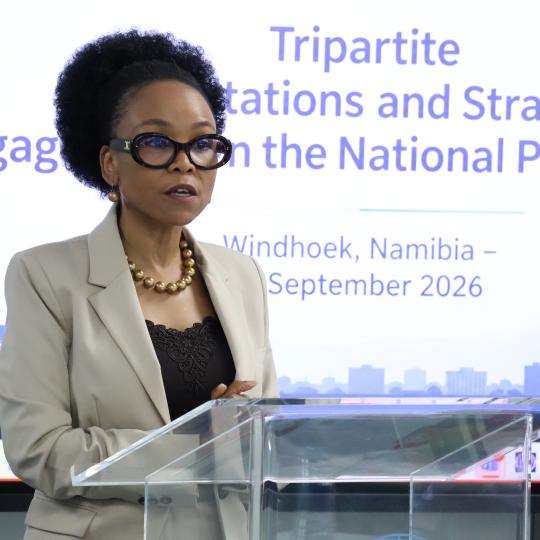
"A pension system is only as strong as the consensus behind it. When government, employers and workers shape the design together, on the basis of international social security standards and sound actuarial evidence, the result is a fund that people trust and that lasts," said Ms. Philile Masuku, Director, ILO Zimbabwe and Namibia Country Office, reaffirming the ILO's support for Namibia's reform under the Global Accelerator.
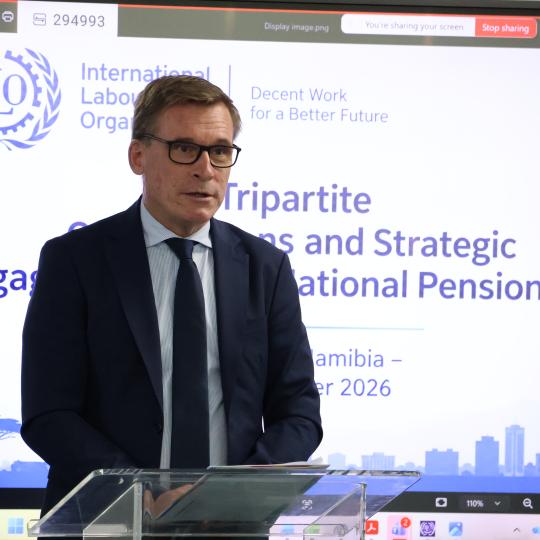
"Workers are the people this fund is meant to protect, so they must be at the table with the knowledge and the confidence to engage. Our role is to ensure that workers' organisations can take part in this reform as informed and equal partners," said Mr Oliver Ropke, Director, ILO ACTRAV.
Building public trust
Participants also heard that technical soundness alone will not guarantee the success of the NPF. Misinformation and partial information about the Fund have entered the public domain in recent months, and people have legitimate questions about who will contribute, what benefits they can expect and how their contributions will be managed and safeguarded.
To support clear and factual communication, the ILO will support a media training programme designed by its International Training Centre (ITCILO), scheduled for mid-October, for Government communicators, social partners and journalists.
From intention to implementation
Following the consultations, the ILO delegation met the UN Resident Coordinator to explore UN system support for social protection, including pension reform, and the role of the social partners in implementing Namibia’s Global Accelerator roadmap. The delegation also briefed the Parliamentary Standing Committee on Poverty Eradication, Labour and Industrial Relations on the outcomes of the consultations and their legislative and policy implications.
On the 16th of September, a capacity-building workshop was held for workers' organisations focused on strengthening their technical understanding of pension reforms and consolidating a joint trade union position and strategy.
Representatives of Government, workers' and employers' organisations, and the ILO at the tripartite consultations
"At its core, this reform is a social contract, a commitment between the State, employers and workers to protect Namibians throughout their life course," Ms. Mudjanima said. "What is required now is focus, urgency and execution."
The ILO will continue to work with the Government of Namibia, the Social Security Commission and employers' and workers' organisations as the reform moves forward. Through the Global Accelerator, this support includes finalising the Convention No. 102 gap analysis, the actuarial modelling of the proposed Fund, and training to support accurate public communication, so that the National Pension Fund is built on international social security standards, sound evidence and social dialogue, and delivers income security and dignity in old age for Namibian workers.