
Namibia launches national labour market information system to strengthen evidence-based decisions on jobs
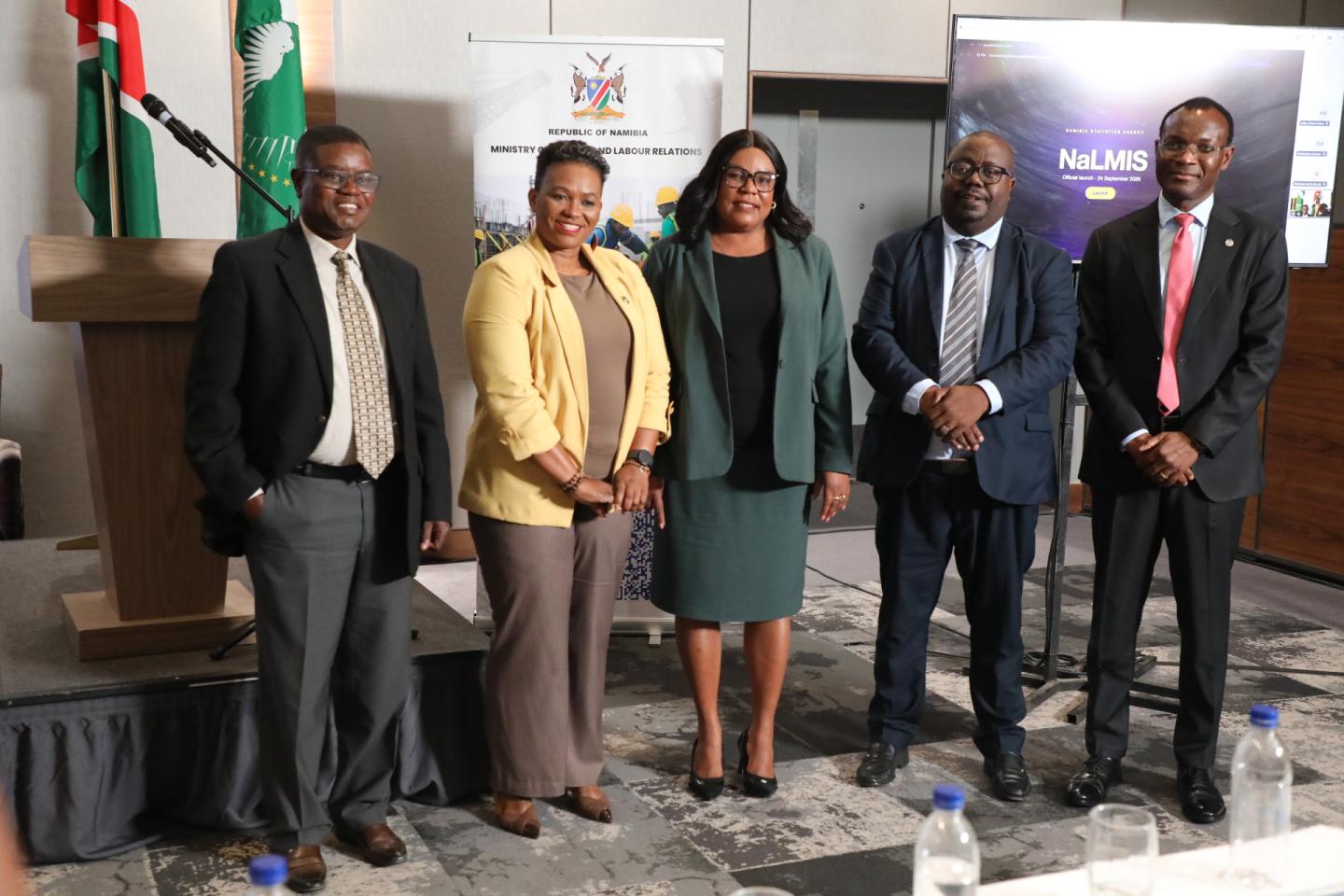
Windhoek, Namibia - The Namibia Labour Market Information System (NaLMIS) has been launched, which is an integrated national platform that brings together labour market information from multiple sources, including censuses, household surveys, and administrative records, providing a single point of access for analysis, planning, and evidence-based decision-making.
Developed by the Ministry of Justice and Labour Relations (MJLR) and the Namibia Statistics Agency (NSA) with technical support from the International Labour Organization (ILO), the system was officially launched by the Ms. Inecia Theresia Brandt, Deputy Minister of Justice and Labour Relations, in Windhoek on 24 September 2026.
The launch marks the culmination of a long journey. First conceived in the 1990s, the system took shape through a data availability assessment in 2014 and a Technical Working Group and Master Plan in 2019. Since 2021, the NSA and the Ministry, with ILO technical support, have worked on data modelling, system development, and integrating the 2023 Population and Housing Census data, resulting in a functional national platform ready for use.
“Accurate, reliable, and timely data is critical for informed policymaking, effective planning, and monitoring progress towards our employment goals,” said Ms. Brandt, describing the launch as a significant step towards making labour market information available to Policymakers, researchers, businesses, workers, students and the public. The launch of the NaLMIS is therefore not the end, but the beginning of a long-term effort to ensure that labour market data is effectively disseminated and utilized.

One platform for Namibia's labour market data
The NaLMIS already carries indicators drawn from the 2014 Labour Force Survey through to the 2023 Population and Housing Census, covering key indicators of the labour market, including the labour force, labour force participation, employment, unemployment, underemployment, sex, occupations, industries and wages. The information is presented at national, regional, and urban-rural levels.
A key principle of the system is that different sources complement rather than replace one another. Combining census and survey data with administrative records generated through routine institutional activities provides a more complete understanding of the labour market than relying on any single source.
The system is expected to support labour market research and analysis, employment services, career guidance, skills-gap identification and labour administration, as well as better access to information for jobseekers and employers.
Presenting the system's background, Mr Alex Shimuafeni, NSA Statistician-General and CEO described NaLMIS as a network of institutions, people and information rather than a single database. “Different sources, complementary strengths, one stronger evidence base,” he said, noting that keeping the platform relevant will require continuous investment in data, people, partnerships and technology.

Evidence for decent work and a just transition
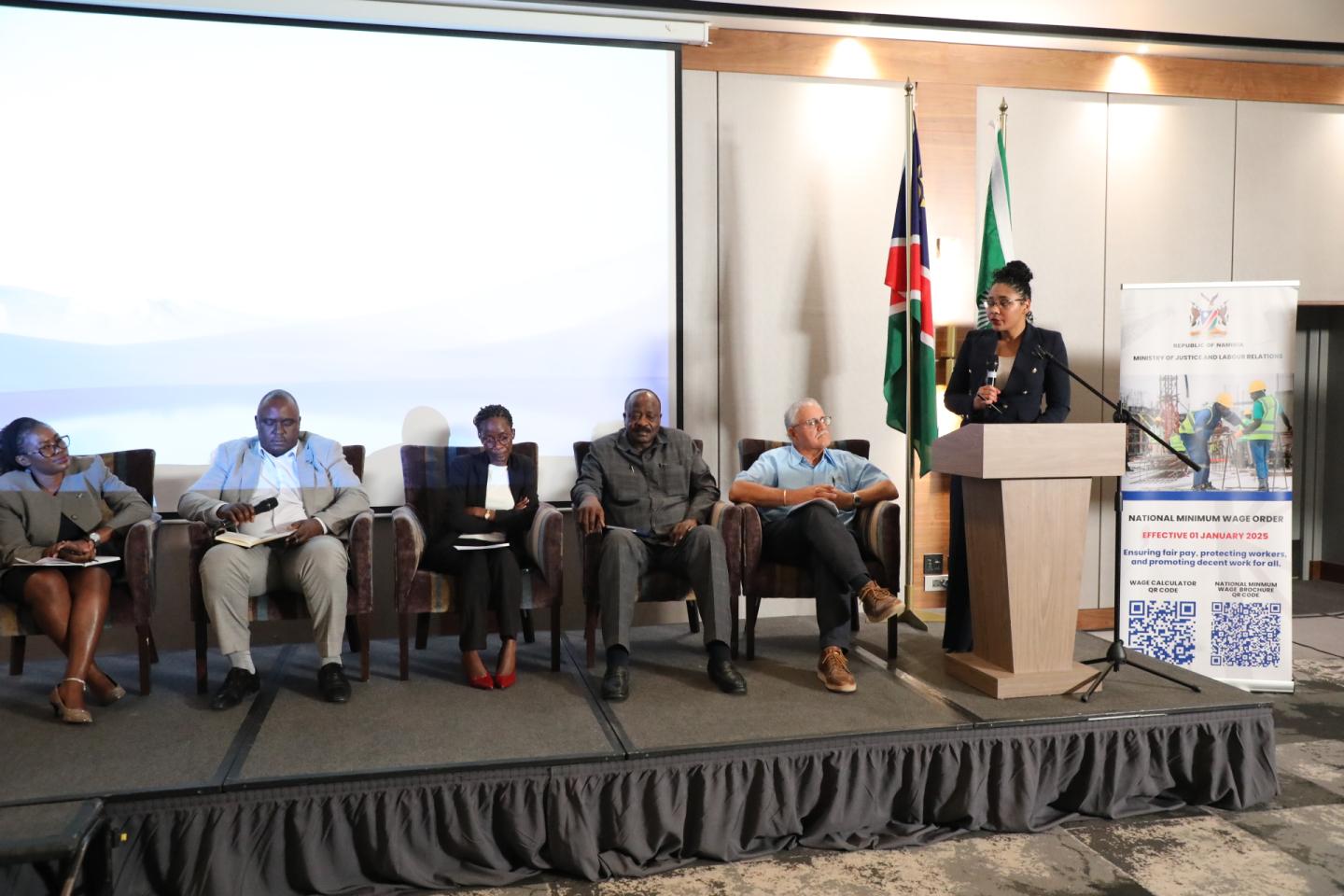
In her remarks, Ms. Philile Masuku, Director of the ILO Country Office for Zimbabwe and Namibia, highlighted that the NaLMIS is organised in such a way as to enable measurement of progress towards achievement of decent work and the Sustainable Development Goals. It can provide early signals of skills shortages, surpluses, mismatches between labour supply and demand; and key sectors driving job creation. “Sound labour market policy depends on sound labour market information,” she said, adding that the system is nationally owned and managed and designed to serve Namibia’s priorities.
A presentation on decent work indicators by the Ministry of Justice and Labour Relations showed that while data on employment opportunities is available, information on areas such as income, working hours, safety at work, social security and social dialogue remains limited or fragmented. NaLMIS offers an opportunity to close these gaps and strengthen monitoring of Namibia’s progress in implementing the Decent Work Agenda.
The work also connects with Namibia’s role as a Pathfinder country of the United Nations Global Accelerator on Jobs and Social Protection for Just Transitions, through which part of the ILO’s support was delivered. A strong labour market information system provides the evidence base needed to create decent jobs, extend social protection and advance a just transition. At regional level, the NaLMIS strengthens Namibia’s readiness to participate in the SADC Labour Market Observatory, supporting comparability of data on employment, skills and labour mobility across the region.
The beginning, not the end
Speakers agreed that the platform's value will depend on how it is used and sustained. This will require reliable, timely data; interoperability between administrative systems; close institutional collaboration; and continued investment in technology and skills. To take this forward, the Ministry of Justice and Labour Relations and the NSA are establishing a Technical Committee that will bring together key labour market institutions to map existing administrative systems and propose improvements.
Ms. Aune N. Mudjanima, Acting Executive Director of the Ministry of Justice and Labour Relations, called on all stakeholders to treat the NaLMIS as a shared national asset. “Its ultimate success rests on three pillars: the integrity of the data fed into it, the active collaboration of all stakeholders, and, most crucially, our collective ability to translate this data into decisive executive actions,” she said.
The ILO reaffirmed its commitment to working with the Government of Namibia, employers’ and workers’ organizations and other partners as the NaLMIS is rolled out, so that better labour market information translates into better policies, better planning and better employment outcomes for all Namibians.