
Shaping investments for decent jobs and social protection: Global Accelerator countries share experiences at the Global Forum on Employment Impact Assessments for Decent Work
Global Accelerator countries are strengthening the use of employment impact assessments and economy-wide modelling to shape investments that create decent jobs and support the extension of social protection. A global forum in Turin offered an opportunity to share experiences and explore how to embed these approaches in national decision-making.
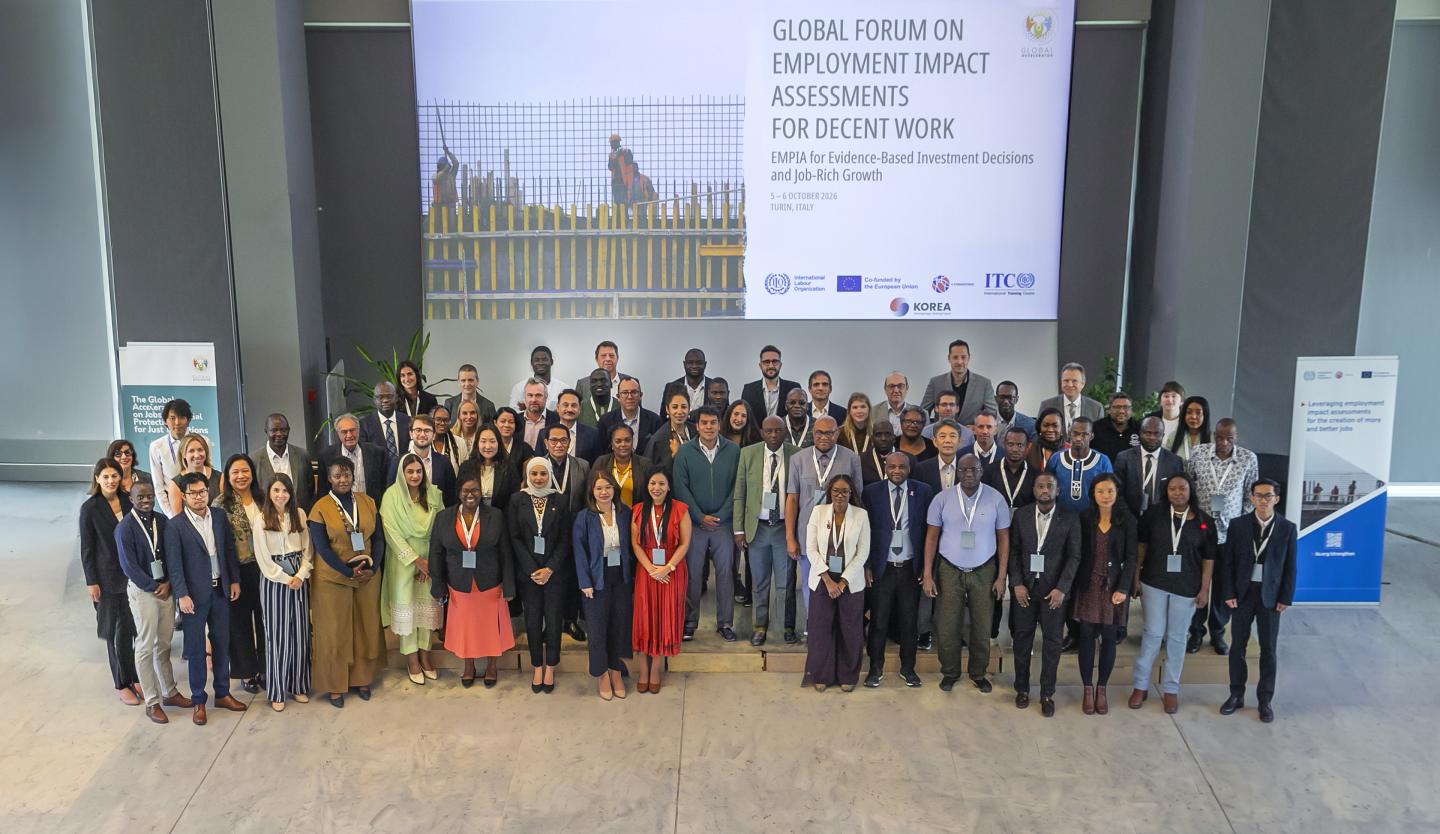
Turin, Italy – Public investment decisions affect the number and quality of jobs created, who benefits from them, and access to social protection—both through direct investment in social protection systems and through measures to extend coverage to workers in the sectors and value chains concerned. The Global Accelerator on Jobs and Social Protection for Just Transitions supports countries in translating national employment and social protection priorities into public investment decisions and strengthening the contribution of these investments to decent job creation and social protection extension.
The Global Forum on Employment Impact Assessments for Decent Work, held at the International Training Centre of the ILO on 5–6 October 2026, provided an opportunity to advance this agenda. Governments, social partners, financial institutions, experts, and development institutions examined how employment evidence can inform the design and selection of investments. The programme drew on methodologies, country applications and lessons learned, including prominently many from the joint European Union–ILO STRENGTHEN2 project, “Employment impact assessment to maximize job creation in Africa”.
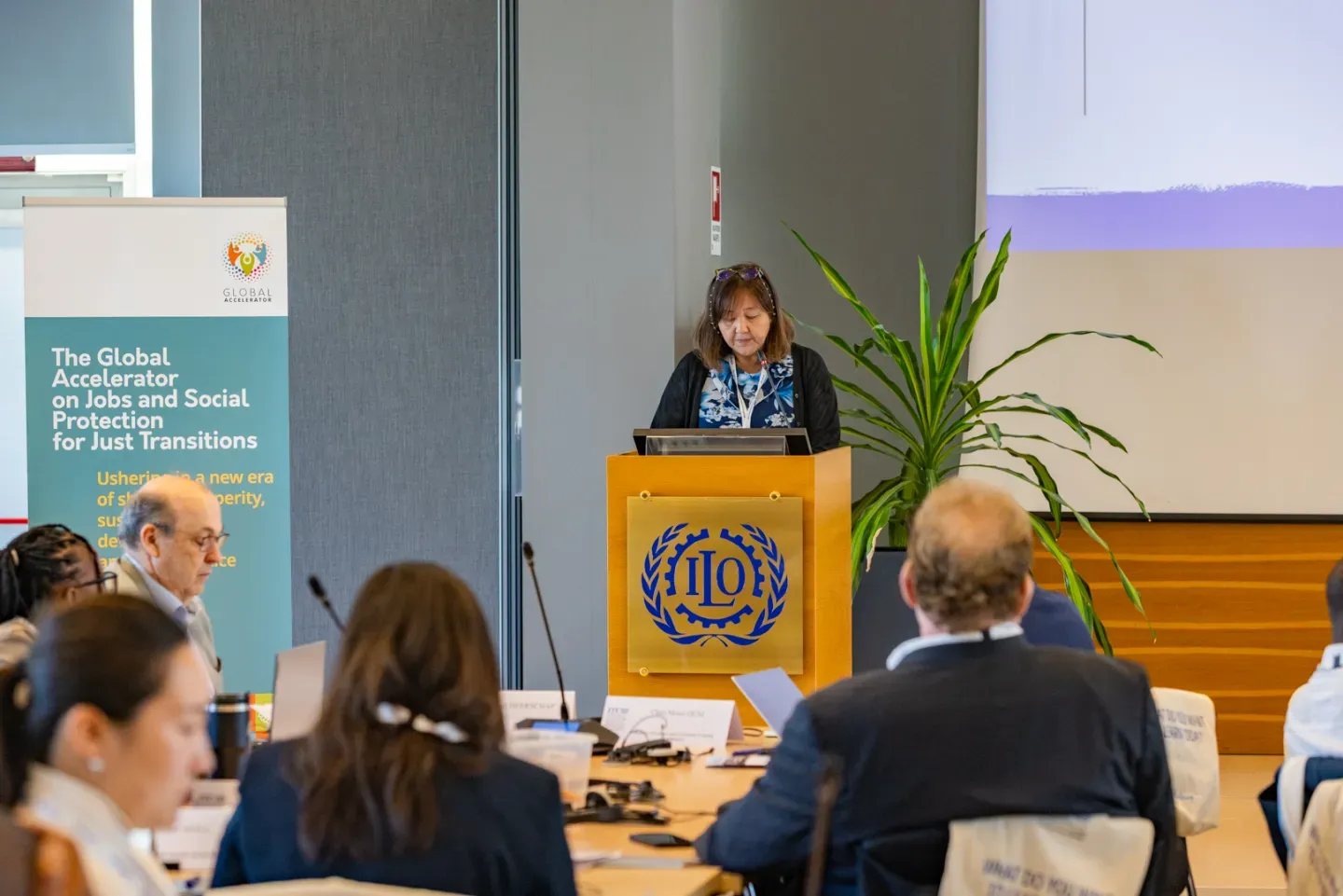
A central message emerged from the two days: employment outcomes need to inform decisions about where and how to invest from the outset. Considering these outcomes early allows governments and financing partners to compare investment options, improve project design, and identify the accompanying policies needed to generate more and better jobs.
Employment Impact Assessments (EmpIAs), including with the Structural Model for Sustainable Development (SMSD), offer practical ways to inform these decisions. EmpIA examines employment effects, including the number and quality of jobs associated with policies and investments. The SMSD extends this by linking economic activity with labour market and household outcomes, allowing countries to assess policy and investment scenarios and their implications for employment, incomes, inequality and social protection. This evidence can help identify where investments need to be accompanied by skills development, employment measures or expanded social protection to achieve more inclusive outcomes.
Using this evidence requires both technical capacity and institutional arrangements that connect analysis with decision-making. The country exchanges highlighted different pathways towards this goal. The Republic of Korea has an established, legally anchored EmpIA system, while Cambodia and Namibia are exploring how to embed employment impact analysis in planning, investment appraisal and budgeting through their engagement under the Global Accelerator. Rwanda and Senegal are also working to incorporate employment considerations into public investment selection. These experiences are also relevant for Guinea and Zambia, where plans under the Global Accelerator include exploring how decent employment and social protection objectives can be integrated into the design and implementation of major public investment projects to strengthen their employment and social outcomes.

The ILO project "Delivering on national commitments: Korea's support to the implementation of the Global Accelerator" is helping countries build the capacity to apply these approaches. In Namibia, technical training for government officials and social partners has been combined with discussions on institutional arrangements for using EmpIA in policymaking, including a proposed coordination function within the labour ministry and/or National Planning Commission. In Malawi, support has similarly brought institutions together to strengthen capacity for assessing employment effects and advance the integration of EmpIA into public investment processes. These efforts connect analytical skills with the institutional changes needed for evidence to influence decisions.
In Cambodia and the Philippines, the Korea-funded project supports SMSD work to strengthen analysis of policy and investment choices. The programme combines training, national model development, and applied research linked to Global Accelerator Roadmaps priorities, helping build the capacity to assess how economic policies and investments affect employment and social outcomes.
The project's support to the participation of Cambodian, Namibian and Philippine delegations in the Forum is connecting this ongoing technical assistance with international peer exchange. Cambodia and Namibia contributed to the country panel, sharing their experiences and discussing the practical challenges of moving from individual assessments towards sustained institutional use.
The Forum identified national capacity, stronger data systems, and continued peer exchange as priorities for expanding the use of employment evidence. For the Global Accelerator, these priorities reinforce the importance of building lasting institutional capacity to guide policies and financing towards decent jobs, wider social protection coverage, and just transitions.
An Employment Impact Assessment Community of Practice (CoP) was also launched during Forum, providing a platform for continued knowledge-sharing, exchange and collaboration among stakeholders working on EmpIA. Interested stakeholders are invited to join the Community of Practice, where they can connect with other practitioners and access further information and resources from the Global Forum.
