Cambodia
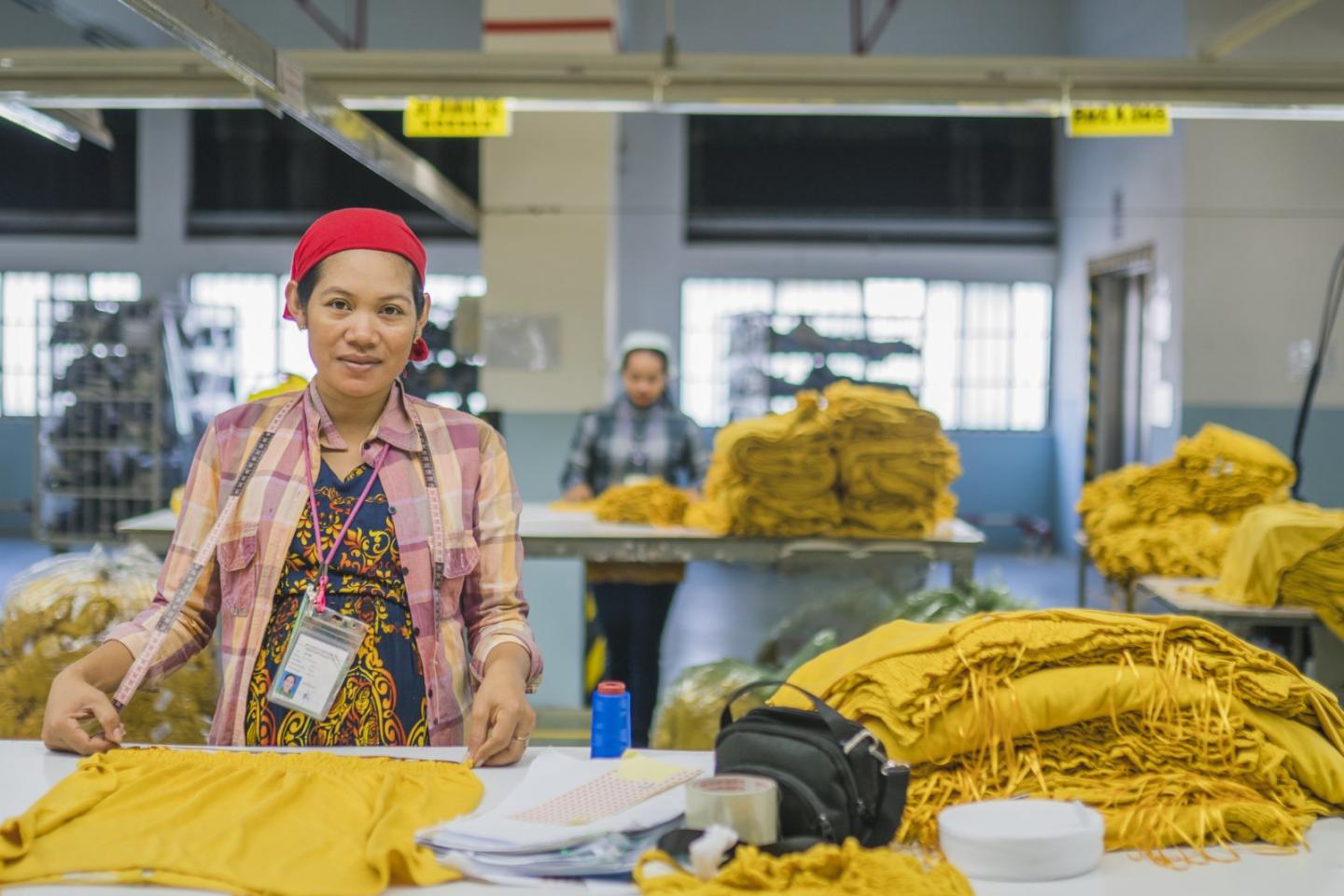
Cambodia is creating decent jobs and expanding social protection systems to drive sustainable and inclusive economic growth in line with the country’s Pentagonal Strategy Phase I, which was designed to enable its graduation from least developed country status by 2029 and to lay the groundwork for the Cambodia Vision 2050.
Key figures
Implementing agencies
- ILO
- UNDP
- UNICEF
- World Bank
The Global Accelerator uses ILOSTAT and UN data to provide internationally comparable data across the countries engaged, which is based on government data.
Roadmap
Roadmap
Roadmap in implementation
Endorsed in December 2024
Read the roadmap
Governance
- Ministry of Economy and Finance
- Ministry of Labour and Vocational Training
Priorities
Global Accelerator and M-GA highlights
- To enhance local capacities for the tracking of social protection expenditure, supported the development and roll-out of the Commune/Sangkat Budget Monitoring app. This has helped institutionalize routine local budget monitoring, reduce programmatic fragmentation, and empower local authorities to make independent, evidence-based funding decisions.
- Analytical work has been undertaken on the Voluntary Health Insurance (VHI) scheme for self-employed workers, to provide evidence for its sustainability and explore its transition from a voluntary to mandatory scheme. The voluntary health insurance scheme has expanded coverage to around 850,000 self-employed workers and their dependents.
- Supporting the phased implementation of the Digital Social Protection Platform and the Social Protection Registry. The institutional capacity, data governance and interoperability of Cambodia’s various social protection schemes is being strengthened, to lay the foundations for national scale-up and improve their efficiency and accountability.
- Supported the official endorsement and execution of the Graduation-Based Social Protection (GBSP) sub-decree. The GBSP increases productivity and creates sustainable pathways out of poverty by helping vulnerable households build livelihoods and strengthen resilience. Over 4,000 ‘Identification of Poor’ households (70% women) were enrolled to receive skills training and cash transfers for productive assets.
- A key achievement under the skills agenda has been the strengthening of Cambodia’s capacity to develop a more evidence-based, demand-driven and inclusive skills system in support of decent work and economic diversification. National stakeholders have advanced the review and reformulation of the National Employment and TVET Policies for 2026–2035, strengthened capacity in evidence-based policymaking and measuring skills mismatches, and established the foundations for a national graduate tracing system for the TVET system.
- Identifying sectors with high job creation and diversification potential, to support the ongoing revision of the National Employment Policy and the TVET Policy (2026–2035), embedding forward-looking and evidence-based planning into national labour market institutions.
- M-GA is supporting strengthening the responsiveness of the TVET system through improved engagement with industry and gender-responsive institutional and delivery frameworks, alongside better integration of cross-cutting skills, including cognitive, “green” and behavioural skills.
- Under the M-GA, ILO and World Bank carried out a survey to expand the quality, scope and country coverage of global data on active labour market programmes. A structured comparative assessment of eight key activation programmes and institutions has been undertaken.
Projects
2 projects USD 2,300,000
Project
Financing
Status
Funding
Better livelihoods and human capital through improved service delivery in social protection and skills
ILO · UNICEF · World Bank
2024–2026
M-GA
M-GA · Round 1
Ongoing
UN: USD 250,000 World Bank: USD 250,000
Decent jobs and social protection expansion for sustainable and inclusive economic growth in Cambodia
ILO · UNDP · UNICEF
2024–2026
GA
High-impact track · Round 1
Ongoing
UN: USD 1,800,000
Partners
- Government Ministry of Economy and Finance; Ministry of Labour and Vocational Training; General Secretariat of the National Social Protection Council; National Social Security Fund; Ministry of Industry, Science, Technology and Innovation; Ministry of Social Affairs Veterans and Youth Rehabilitation
- Research and Academia –
- Finance –
- Development partners –
Latest news
Read more news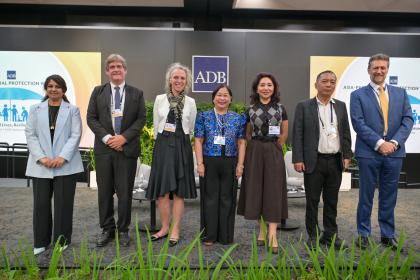
News
Asian Development Bank and United Nations join forces at Asia Pacific Social Protection Week to advance the Global Accelerator
09 October 2026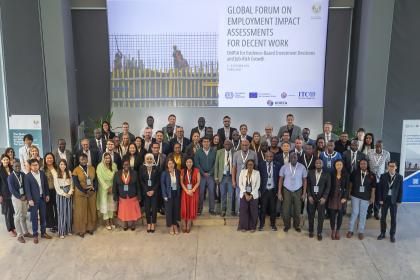
News
Shaping investments for decent jobs and social protection: Global Accelerator countries share experiences at the Global Forum on Employment Impact Assessments for Decent Work
05 October 2026
News
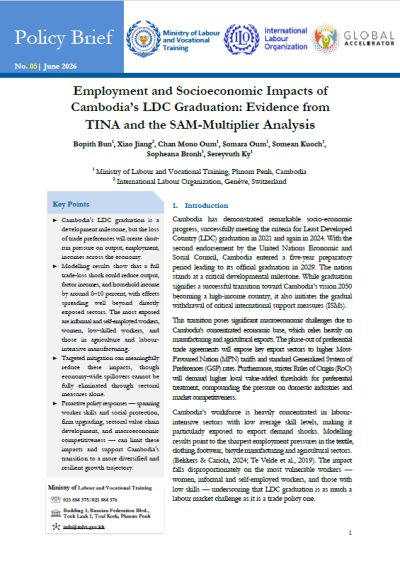
Cambodia launches a new policy brief under the Global Accelerator on employment and socioeconomic impacts of LDC Graduation
04 August 2026
ILO

News