Say it so people understand: Namibia trains communicators and journalists to tell the social protection story
Windhoek, Namibia - When news of a proposed national pension fund reaches a domestic worker through a radio broadcast, uncertainty can quickly follow: Is she eligible? Are her savings safe? And who can explain what the reform means for her future?
For millions of workers, the answer to questions like this shape whether a reform feels like protection or just another unfulfilled policy promise. Closing that gap between policy and people was the focus of a two-day media training on social protection reforms in Namibia, held on 14 and 15 October 2026.
The training was hosted by the Ministry of Justice and Labour Relations in partnership with the International Training Centre of the International Labour Organization (ITCILO), and facilitated by Mr Massimiliano Leone, Senior Communications Officer at ITCILO. The training was supported under the implementation of the Global Accelerator on Jobs and Social Protection in Namibia.
Why communication matters for reform
Namibia is working to extend social protection to more workers and their families, including those in the informal economy. Reforms of this kind touch business, pensions, jobs and household income. They succeed only when key parties and contributors understand them, trust them, know how to take part and how they will benefit.
When information is unclear, rumours fill the gap. A single misleading post can spread faster than an official statement, leaving workers anxious and reforms harder to deliver.
The training set out to change that, on both sides of the story.
In his initial remarks, Leone stressed that accurate reporting depends on understanding why reforms are needed, how they are developed, and how national policies connect to international labour standards and ILO conventions. Too often, he noted, that the wider context gets lost.
"Journalists very often struggle to get to the big picture of things," he said.
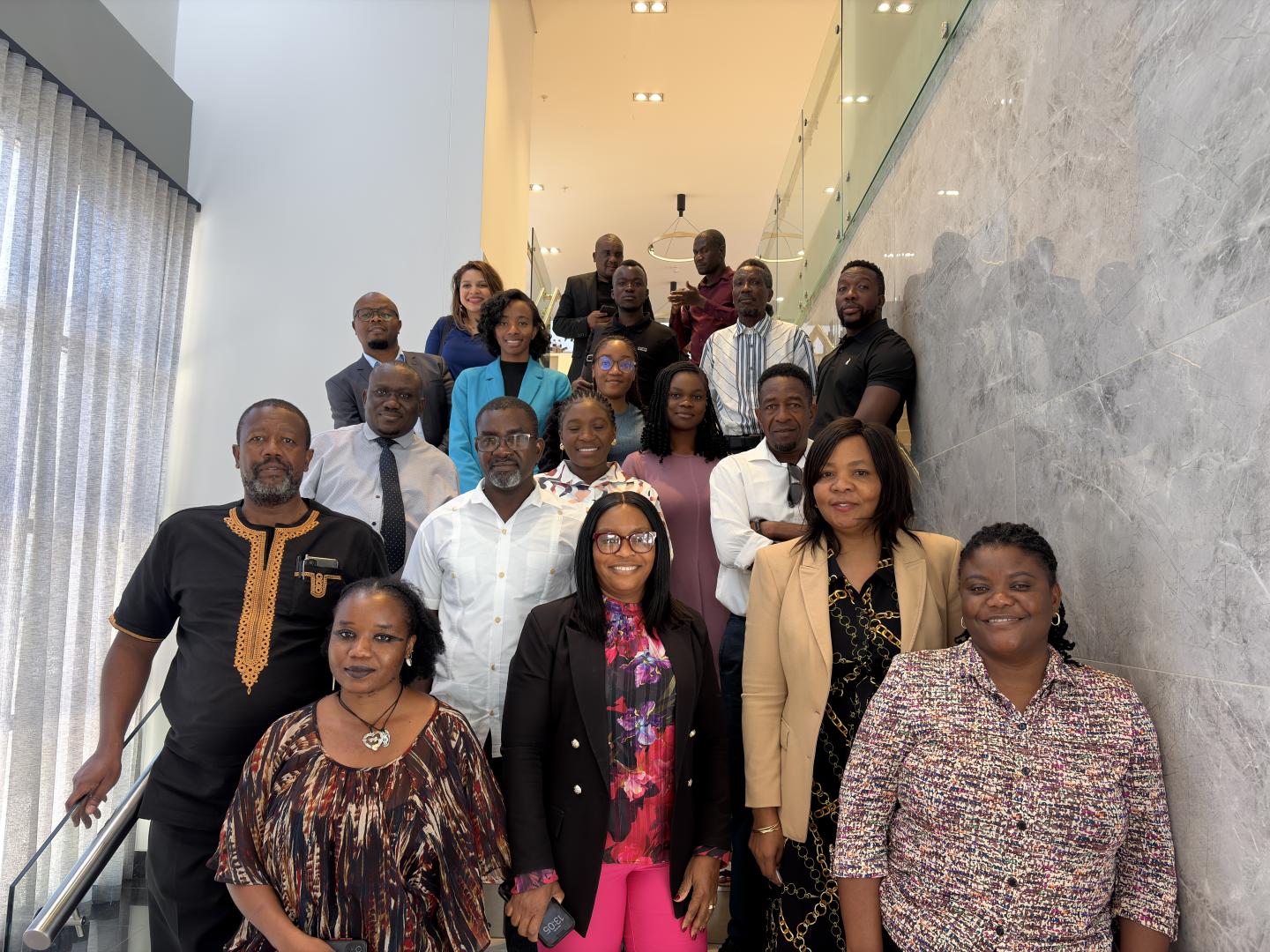
Day 1: From policy language to people language
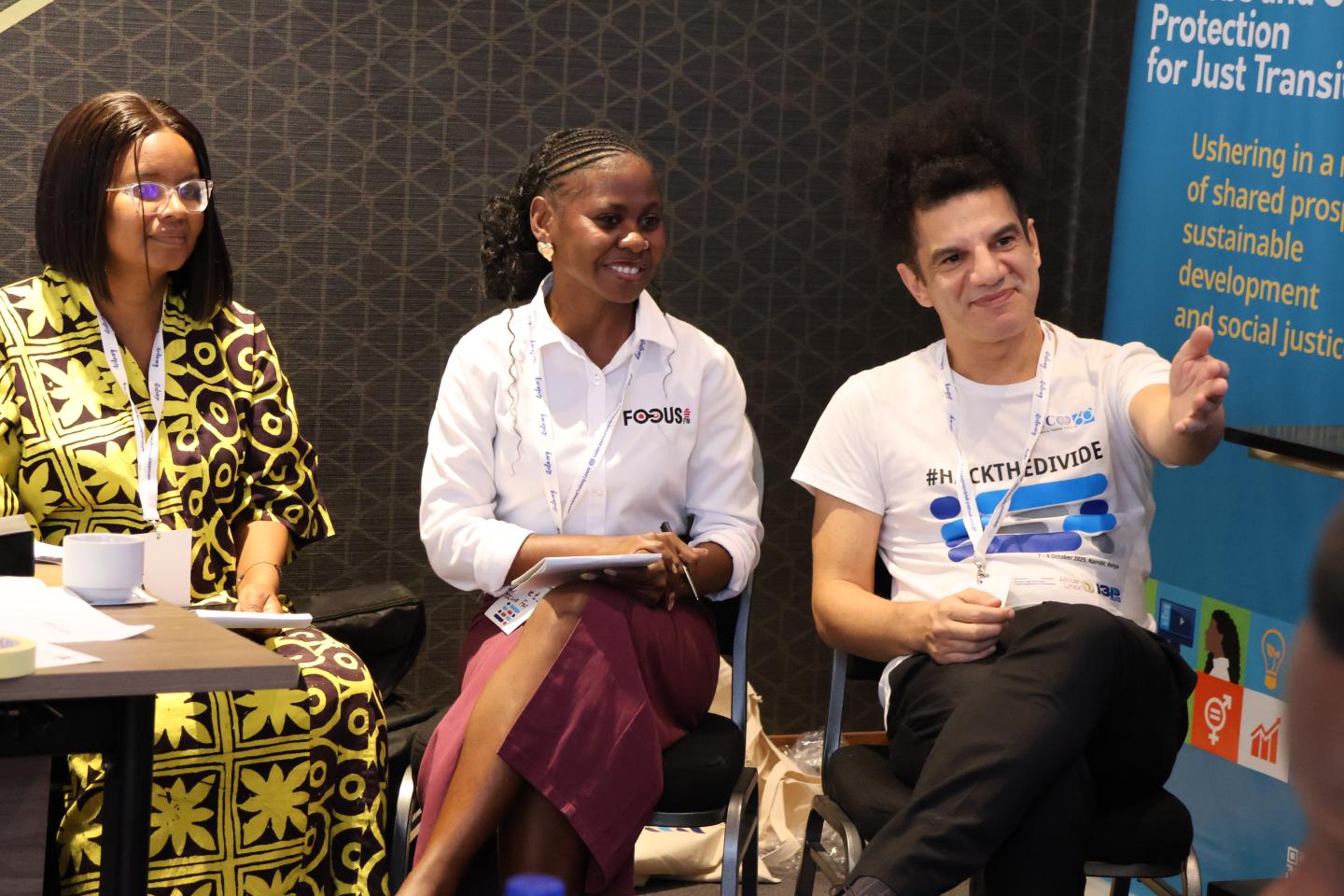
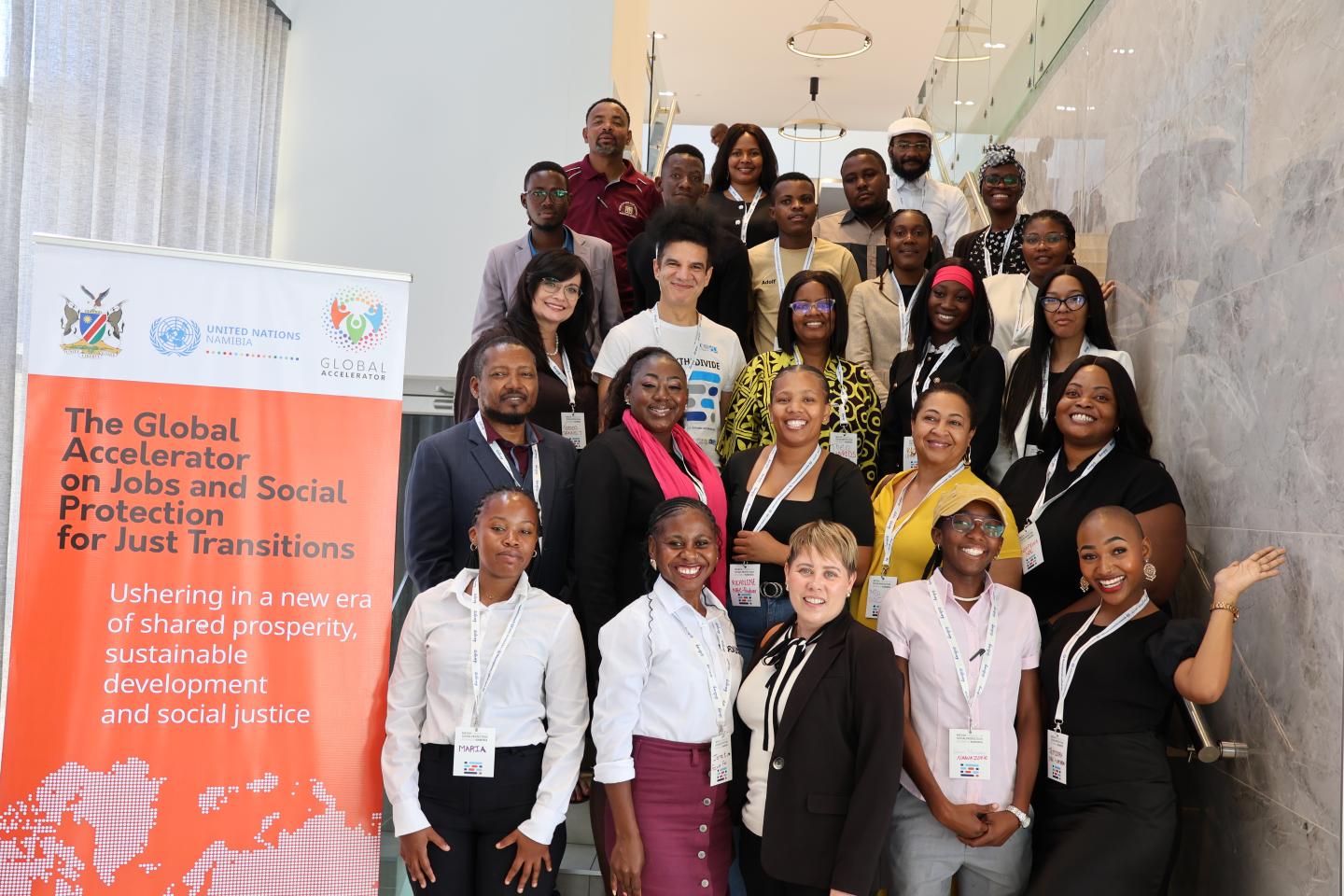
On the first day, 25 communication professionals from government offices, ministries and agencies, social partners and development partners stepped into a live simulation.
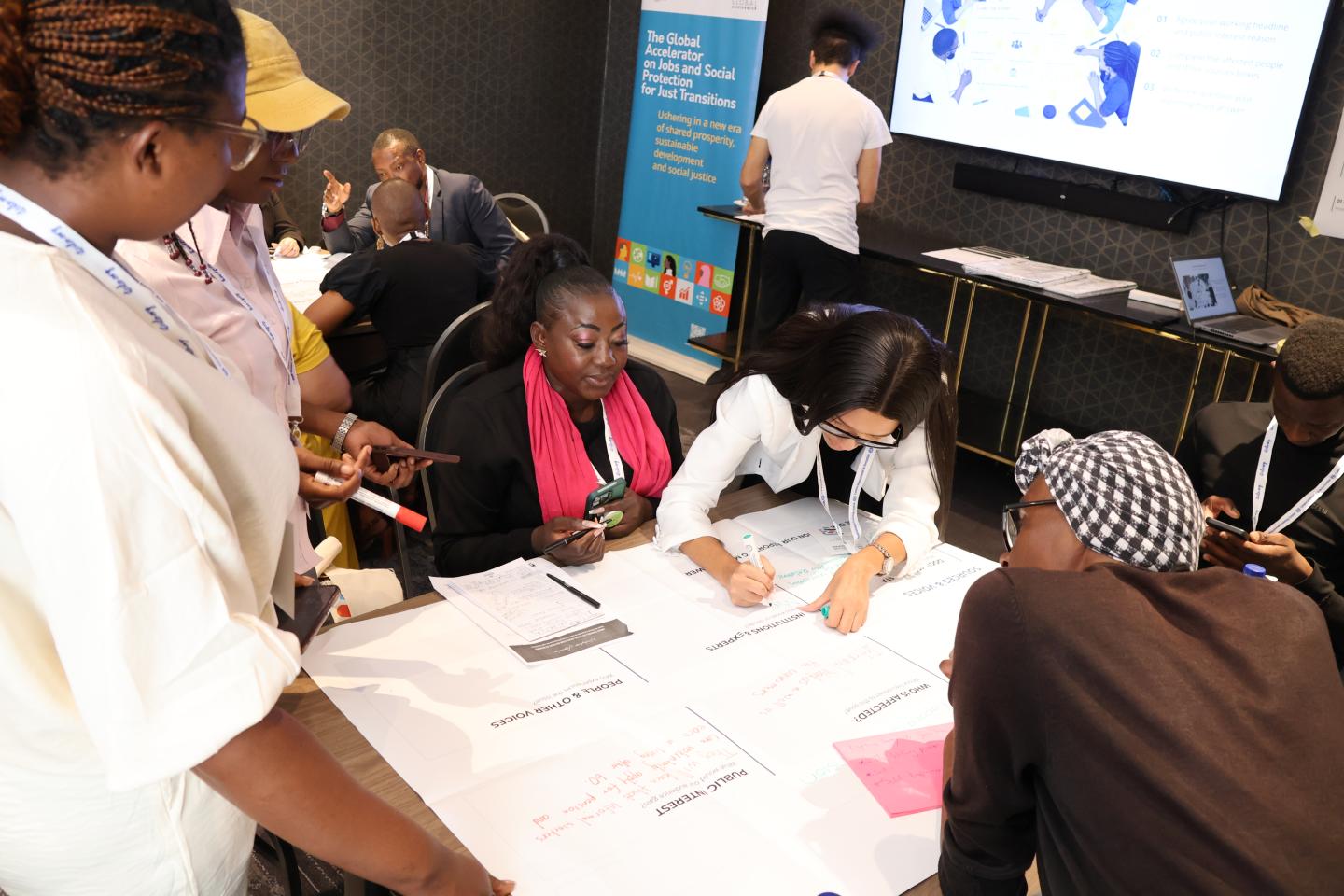
Working in teams, they handled a realistic reform scenario that kept shifting. New information arrived, stakeholders pushed back, journalists called for comment, and misinformation began to circulate. Teams mapped who was affected, rewrote complex messages in plain language and prepared spokespersons for difficult questions.
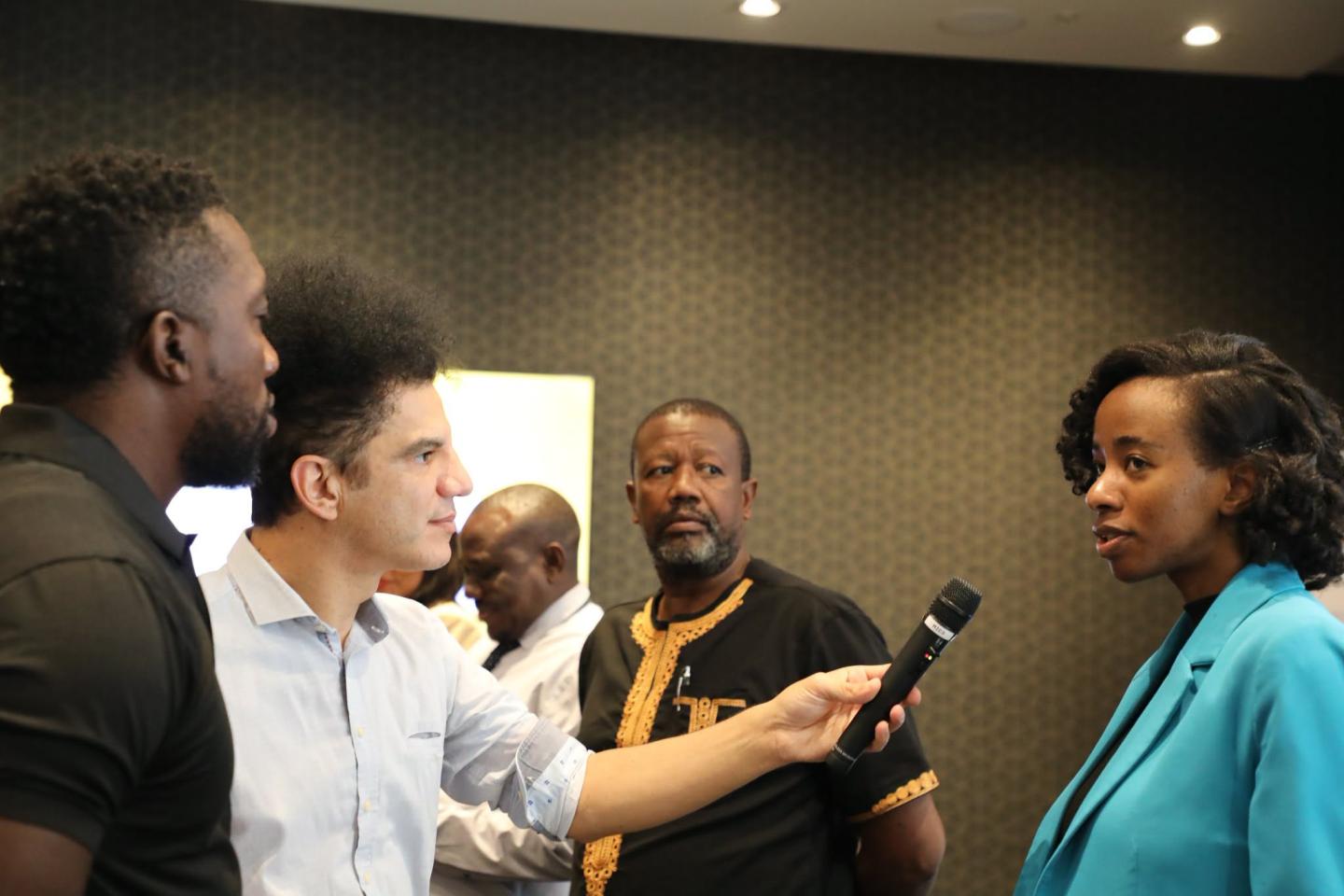
"We know our policies inside out, but we sometimes forget that the public does not. I learned to start with what people are worried about, not with what the law says," said Mr Wilson Shikoto, Chief Public Relations Officer, Ministry of Finance.
For social partners, the day underlined that clear communication is part of social dialogue itself.
"Workers and employers can only take part in reforms if they understand what is on the table. Clear, accurate information is what makes social dialogue meaningful," said Ms Hilma Namupala, Focal Point: Labour Migration and Communication, Trade Union Congress of Namibia (TUCNA).
Day 2: Inside the newsroom
On the second day, 18 journalists from media houses across Namibia formed editorial teams to work on simulations to filter information into meaningful and truthful messages for the public. They received a mix of official statements, data, social media claims and potential sources, and had to work out what was true, who was affected and why it mattered.
In the interview lab, they practised asking questions that clarify, challenge claims and test information. The day closed with each team pitching its story to peers and facilitators.
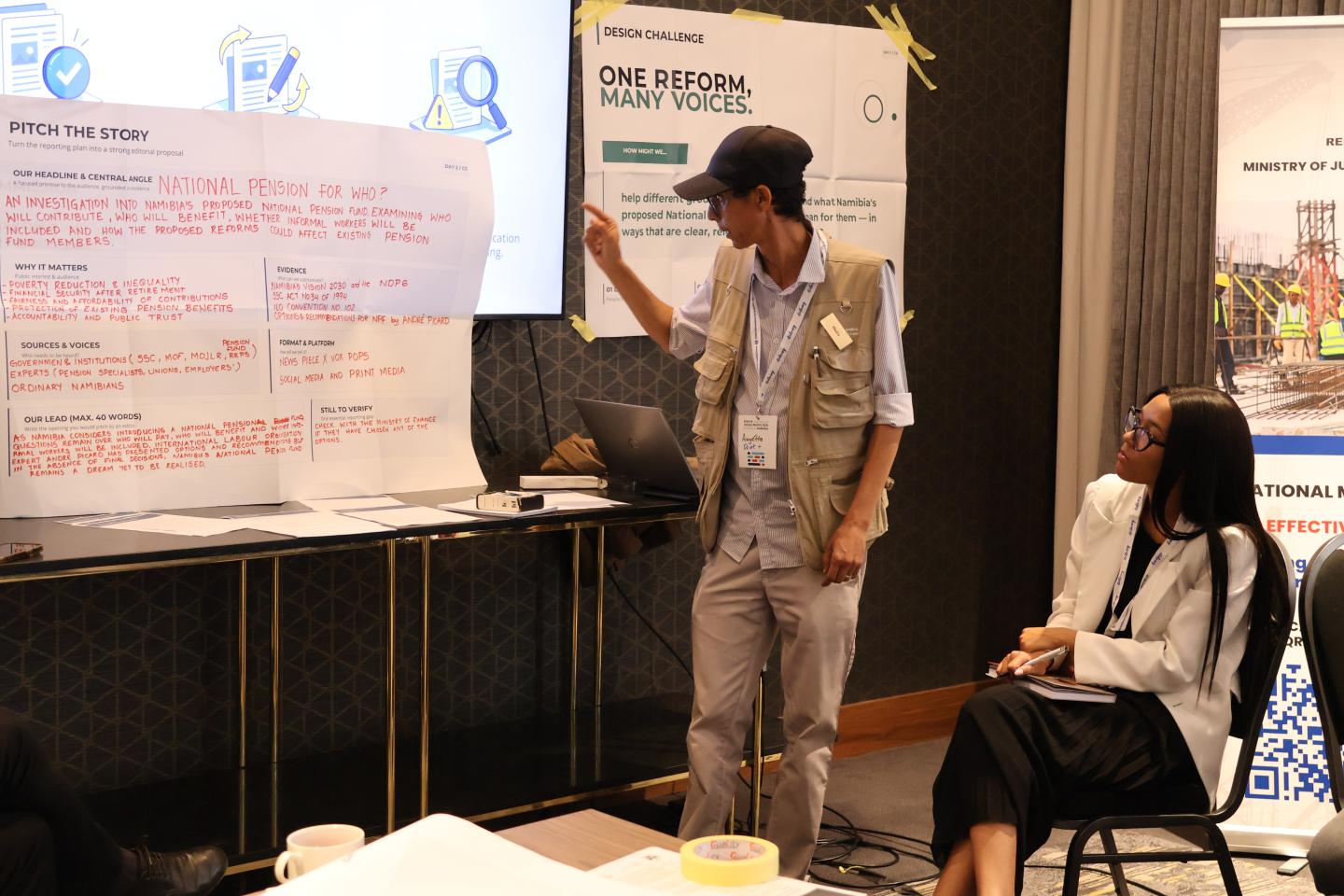
For many in the room, the focus on the proposed national pension fund made the training immediately relevant.
"This training helped me understand the proposed national pension fund and what it will mean for ordinary Namibians. That is the story our audiences need," said Ms Richolene ǂOuses, Producer, Namibian Broadcasting Corporation (NBC).
"Journalism is never something you master. Workshops like this take us back to the basics: who, what, where, when, why, how and how much," said Mr Augetto Graig, Senior Journalist, Namibia Media Holdings (NMH).
Part of a bigger effort
The training forms part of the Global Accelerator Joint Programme in Namibia, supported by the United Nations Joint SDG Fund. Through the programme, the ILO, FAO and UNDP work with the Government of Namibia and social partners to create decent jobs and extend social protection, with a focus on just transitions in the world of work, the economy and society.
Strengthening how reforms are communicated and reported helps ensure that this work reaches the people it is meant to serve.
Participants left with practical tools, from audience maps to verification checklists, and story ideas ready to pursue. Because a reform that people understand is a reform people can trust.